
Bird Poop Cleaner for Cars: Soften First, Then Lift
Choose a car-safe bird poop cleaner, soften dried droppings without scrubbing, and know when a leftover mark needs inspection rather than more cleaner.
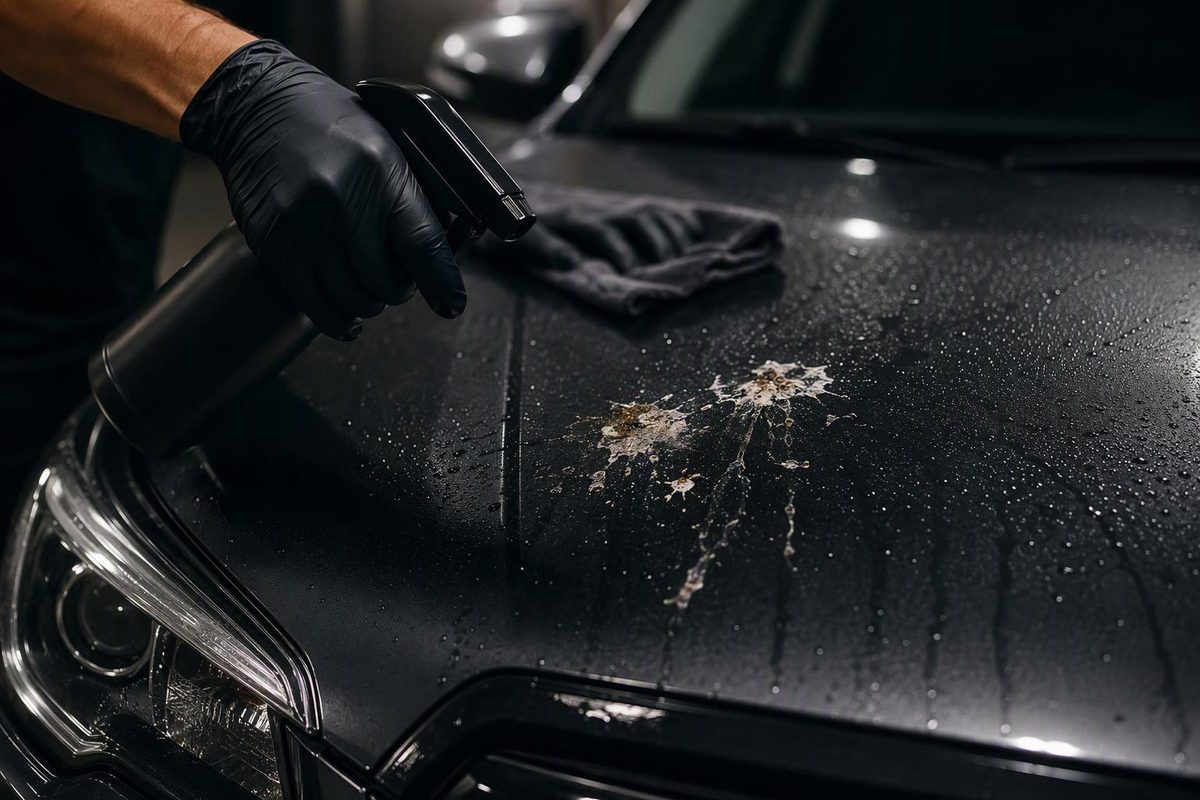
For ordinary glossy car paint, start with water and a mild car shampoo, or use an automotive detailer spray explicitly labelled for bird droppings. Dedicated automotive bird-dropping wipes are a convenient alternative when you are away from a hose. Follow your vehicle’s finish-care instructions; Tesla’s Model 3 manual, for example, specifies mild car shampoo with cold or lukewarm water. Tesla’s exterior-care instructions
You do not need to start with stronger chemistry. Soften the deposit before lifting it, and never rub it dry. Autoglym warns that dry droppings can scratch paintwork and recommends prompt removal because deposits can leave permanent blemishes. Autoglym’s wipe instructions
Choose the cleaner by the job
| Situation | Practical choice | What to check |
|---|---|---|
| At home, with water available | Mild automotive shampoo and water | Use the shampoo’s labelled hand-wash dilution, not an improvised stronger mix. |
| One isolated dropping on otherwise clean glossy paint | Detailer spray specifically listing bird-dropping removal | Confirm compatibility with your paint and any coating. |
| Away from home | Dedicated automotive bird-dropping wipes | Let the wipe soften the deposit before moving it; discard after use. |
| Matte or satin paint, vinyl wrap or paint-protection film | Cleaner approved for that exact finish | Check the finish manufacturer’s care instructions rather than relying on a general “paint-safe” claim. |
Two documented product options: Meguiar’s Quik Detailer A3316 lists bird-dropping removal and suitability for clear coats and single-stage paint. Autoglym Bird Dropping Wipes instruct you to place the wipe over the dropping, allow it to soften, then remove and discard it. These are options with manufacturer-documented uses, not a comparative performance ranking. Meguiar’s product information · Autoglym’s directions
If the surrounding panel is visibly gritty or muddy, choose a wash rather than wiping across it. Tesla’s Model 3 cleaning instructions require flushing away grime and grit before contact washing with a clean soft cloth and mild car shampoo. Tesla’s exterior-care instructions
Remove fresh or dried droppings without scrubbing
Gather clean water, your chosen cleaner, clean soft cloths or dedicated wipes, and a separate clean microfiber towel for drying. Keep anything contaminated with droppings away from your clean drying towels; our car-cleaning rag guide covers towel selection and care.
- Work out of direct sunlight. Let a hot panel cool before applying cleaner. Use cold or lukewarm water, not hot water. Tesla’s exterior-care guidance cautions against washing in direct sunlight and using hot water. Tesla’s cleaning cautions
- Rinse loose contamination first, if water is available. Wet the dropping and surrounding area without dragging a cloth through nearby dirt.
- Soften the deposit. For a dry, stubborn dropping, lay a water-moistened soft cloth over it for about 10 minutes, keeping it moist. Autoglym recommends this contact time for stubborn deposits. For a chemical cleaner or dedicated wipe, use its own directions instead—do not borrow the ten-minute water-soak time. Autoglym’s removal guidance
- Lift gently. Use the wet cloth or wipe to pick up the softened material. Change to a clean cloth face before touching the panel again. If the crust resists, stop and soften it again; do not scrape it with a fingernail or scrub harder.
- Finish according to the cleaner’s directions. With shampoo, gently wash the affected area, rinse thoroughly, then dry with a separate clean towel. With a spray-and-wipe detailer or dedicated wipe, follow that product’s finishing instructions. Do not leave shampoo to dry on the panel.
Discard single-use wipes in a bin and wash your hands thoroughly after handling the mess. Autoglym advises handwashing because droppings can carry disease. Autoglym’s hygiene guidance
A remaining mark is a stop point
Inspect the clean, dry panel from several angles. Visible crust or smearing suggests material remains; repeat gentle cleaning only if you can still see residue.
A dull outline remaining after the deposit is gone may be finish damage rather than dirt. Autoglym describes bird-dropping damage that changes how the lacquer reflects light. More cleaner is not necessarily the answer. Autoglym’s explanation
If one careful repeat does not change the mark, stop. Have a detailer assess it before attempting compound, sanding or heat—especially on an unknown finish, matte paint, wrap or protective film. A bird poop cleaner removes contamination; it is not a guaranteed repair for damaged paint.