
Use Separate Cleaning Rags for Paint, Glass, Interiors and Dirty Work
Choose car cleaning rags by surface, prevent cross-contamination, wash microfiber correctly and handle oily or solvent-soaked cloths safely.
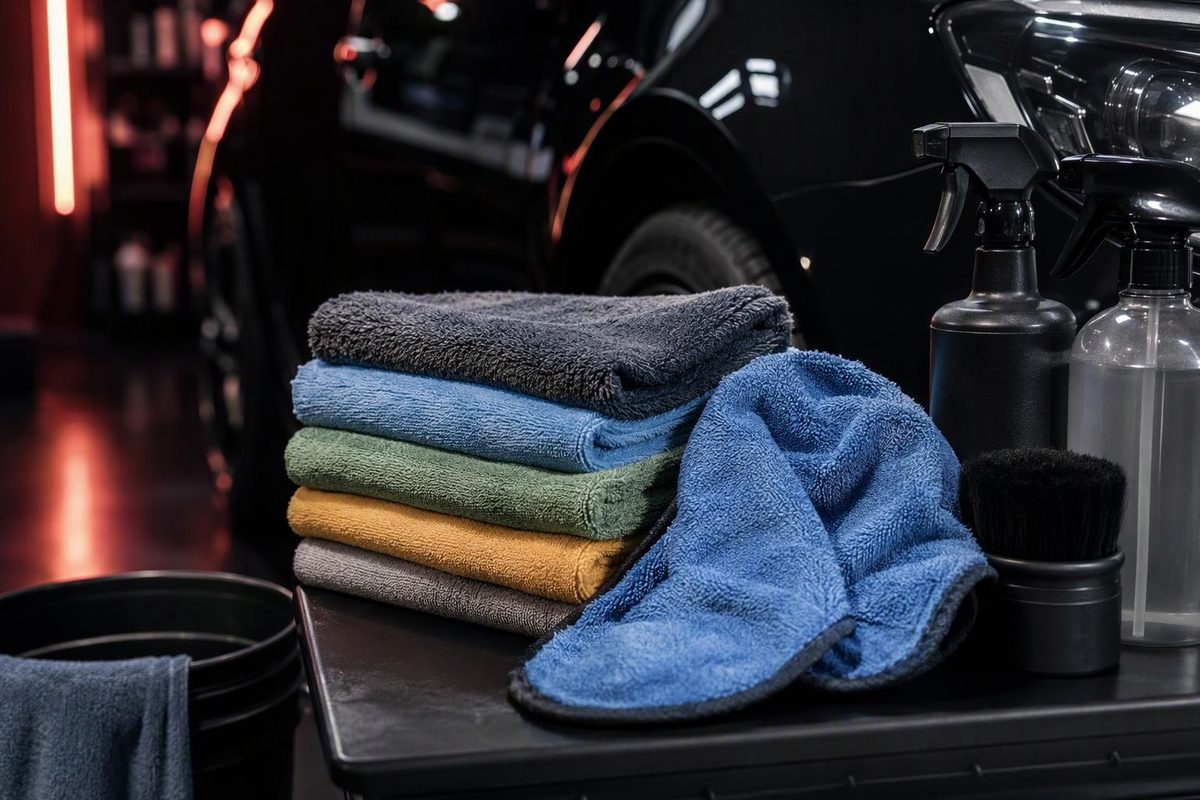
The best cleaning rags for a car are not one universal pack. Reserve clean microfiber for paint, use separate cloths for glass and interiors, and keep utility rags for wheels, door jambs and greasy work. Material matters, but condition matters more: a soft towel can still mark a surface if it contains grit, dried product or metal debris.
Build a four-group rag system
| Rag group | Suitable jobs | Keep it away from |
|---|---|---|
| Paint | Drying; removing detail spray, wax or polish | Wheels, engine bays, floors and heavy grime |
| Glass and displays | Windows, mirrors and approved screen cleaning | Dressings, waxes and greasy cleaners |
| Interior | Plastic, vinyl and finished leather | Wheels and dirty exterior panels |
| Utility | Tires, wheel wells, exhaust tips, door jambs and engine-bay surfaces | Paint, gloss-black trim, screens and instrument lenses |
Color coding helps, but labeled containers are clearer. Store clean cloths in covered bins so they do not collect garage dust. The Rag Company recommends sorting towels by job, keeping wheel towels away from paint-polishing towels and using enclosed storage (microfiber washing guidance).
Paint
Clean automotive microfiber is a practical default for drying and product removal. For example, 3M specifies one of its microfiber detailing cloths for clear coat, paint, chrome, glass and the removal of waxes, polishes and oily films (3M product details). That describes the intended use of that cloth; it does not make every microfiber towel safe in any condition.
Inspect both faces of a paint towel under good light. Demote it if it has a rough edge, embedded debris, a hard patch or residue that washing does not remove. If it falls on the ground, replace it with a clean towel. Consumer Reports similarly warns that a dropped wash tool can pick up particles that scratch paint (hand-washing guidance).
Do not wipe visible road grit with a dry rag. Rinse or wash it away first, or use a sufficiently lubricated process only when the contamination is light. The waterless-wash method explains when a panel is too dirty to wipe safely.
Glass, displays and interiors
A dedicated short-pile, waffle-weave or purpose-made glass cloth is easy to inspect and less likely to carry residue from wax or interior dressing. Try one lightly dampened cloth for cleaning and a second dry cloth for the final wipe. Recurring streaks can indicate a contaminated towel, not too little cleaner.
Check the owner’s manual before cleaning a display or instrument lens. Toyota’s general guidance says to switch off a touch screen, wipe it gently with microfiber lightly dampened with a specialized screen cleaner and finish with a dry microfiber cloth; it also warns against abrasives, ammonia-based cleaners and excess pressure (Toyota interior-cleaning guidance). Instructions for the specific vehicle take priority.
For the rest of the cabin, keep cleaner cloths separate from dressing cloths. A dressing-contaminated rag can smear glass or create unwanted dashboard gloss. For upholstery, verify both the material and cleaner directions; this microfiber guide for leather covers spot-testing and wiping finished automotive leather.
Dirty work
A stained but clean towel can move from paint duty to general interior work and eventually to wheels or door jambs. Mark demoted towels by cutting a corner or assigning a utility-only color. Once a rag has contacted brake grime, engine grease or metal polish, do not return it to a delicate-surface bin.
Use each rag without spreading dirt
- Remove loose contamination first. Vacuum interiors and rinse exterior grime where appropriate.
- Follow the cleaner label. It determines dilution, application method, dwell time and whether rinsing is required.
- Fold the cloth into quarters. This creates several identifiable working faces.
- Wipe with light pressure. Turn to a clean face when the current one looks dirty or begins to drag.
- Stop if contamination resists. More pressure is not a substitute for the correct cleaner, dwell time or agitation tool.
- Sort the used cloth immediately. Keep wheel and greasy utility rags away from paint and glass laundry.
Wash microfiber without coating or overheating it
Check the towel’s care label first. Then:
- Separate microfiber from cotton and other lint-producing laundry. Cotton lint can lodge in microfiber. Separate light and dark colors if dye transfer is a concern.
- Separate by contamination. Wash paint and glass towels apart from wheel, engine and heavily greasy rags. Towels loaded with wax, polish or sealant may also justify their own load.
- Use liquid detergent at the stated dose. Choose one without fabric softener. Adding extra detergent can leave residue instead of improving cleaning.
- Avoid fabric softener, dryer sheets and chlorine bleach unless the towel maker expressly permits them. Autofiber says softener leaves a film that reduces performance, while bleach can weaken fibers (Autofiber care instructions).
- Use the labeled wash temperature and rinse thoroughly. Do not assume every towel has the same limit.
- Air-dry or tumble-dry as the label permits. Avoid high heat. The Rag Company sets a 140°F maximum for its towels and specifies low/no-heat drying, but another manufacturer’s instructions may differ (manufacturer FAQ). Do not use dryer sheets.
- Inspect before reuse on paint. A towel should feel clean and pliable and absorb water rather than push it around. Persistent smearing, beading or hard spots are reasons to demote it.
Treat ceramic-coating leveling towels separately. Product instructions may prohibit their reuse on paint after coating residue cures. Gtechniq, for example, says not to wash and reuse coating towels because they may lose absorbency and scratch; it recommends downgrading them to utility work (Gtechniq microfiber guidance). Follow the directions for the exact coating.
Keep oily and solvent-soaked rags out of normal laundry
Do not put a rag wet with gasoline, paint thinner, an oil-based finish or an unknown flammable product into a laundry pile. Keep it away from heat and ignition sources, read the product label and safety data sheet, and obtain disposal instructions for that chemical. Never use gasoline as a cleaner.
Some drying oils generate heat as they cure, so rags containing oil-based paint, stain or varnish can ignite when piled together. NFPA advises spreading or hanging those rags outdoors away from buildings until dry, then placing the dried rags in a tightly covered metal container with water and detergent and checking with the local authority about disposal (NFPA oily-rag safety sheet). Do not apply that exact procedure to an unidentified chemical; its label, SDS and local rules control.
In the United States, EPA advises households not to mix hazardous leftovers and to ask their local environmental, health or solid-waste agency about collection options (household hazardous-waste guidance). Businesses have additional obligations. EPA’s federal exclusions for certain solvent-contaminated wipes are conditional and include closed-container, labeling, recordkeeping, accumulation-time and no-free-liquid requirements; state rules may be stricter (EPA solvent-wipe guidance).
A manageable setup does not require dozens of towel types. Buy enough cloths to expose a clean face early, assign them by surface, wash compatible groups correctly and remove questionable towels from paint duty.