
How to Clean Lightly Dusty Paint Without Dragging Grit Across It
Inspect first, lubricate one cool panel at a time, wipe with minimal pressure and expose a clean towel face. Stop if contamination resists or feels gritty.
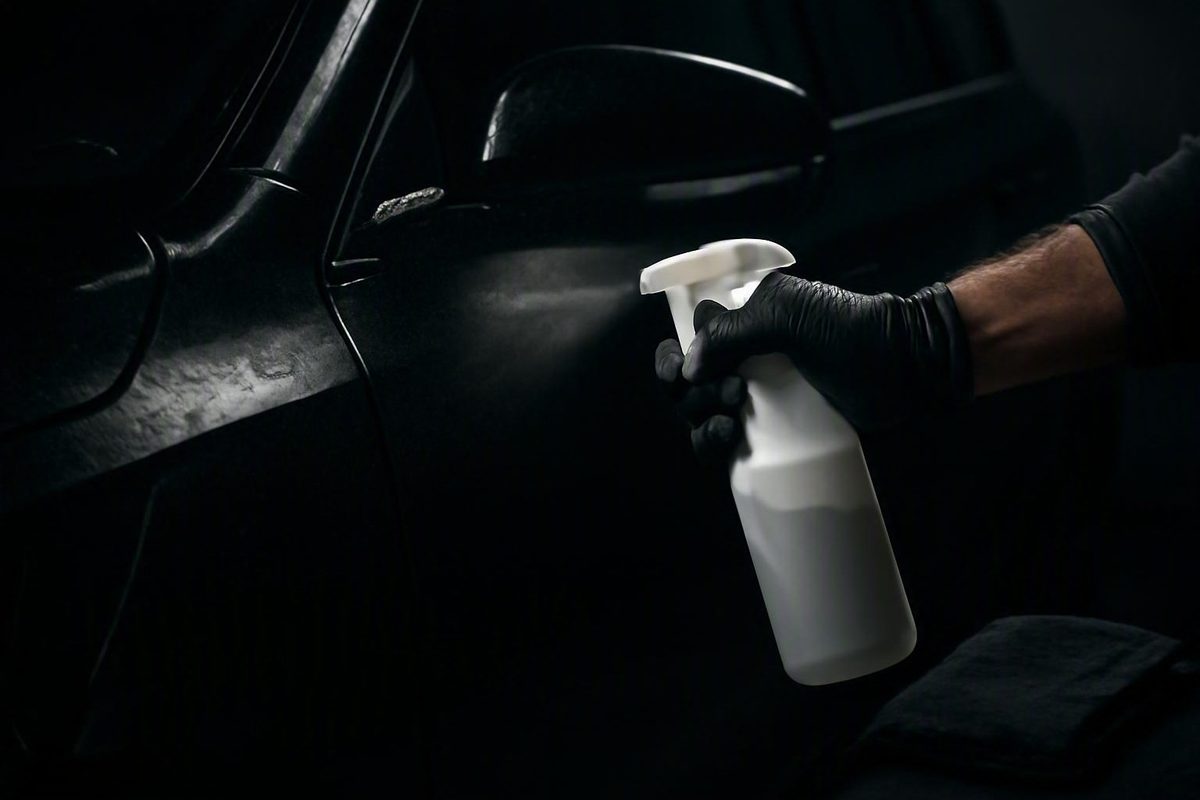
A waterless car wash method is useful when a vehicle needs light maintenance cleaning but a hose is unavailable, impractical, or restricted. It is portable and can suit apartments, cold-weather garages, travel, or quick cleanup between deeper washes.
Its safe working range is narrow: the vehicle should already be close to clean. A formulated cleaner and careful microfiber technique can reduce friction, but they cannot make sand, road salt, mud, ash, or caked grime safe to wipe across paint.
The practical rule is simple: inspect first, lubricate one cool panel at a time, wipe with minimal pressure, expose a clean towel face immediately, and stop if contamination resists or feels gritty.
This guide synthesizes the supplied manufacturer, retailer, editorial, and enthusiast guidance. It does not represent controlled comparative scratch testing, and it does not support any claim that contact washing can be made scratch-proof.
What a Waterless Car Wash Is—and What It Is Not
A waterless wash is a spray-and-wipe cleaning process that does not require a hose rinse. You apply a dedicated, formulated cleaner to a suitable exterior surface, loosen light contamination, and remove it with clean microfiber towels.
The formula performs work that a dry towel cannot. Detergents or surfactants help loosen contamination, while lubricating ingredients reduce friction between the towel and the surface. Exact chemistry varies: some formulas contain waxes, polymers, or gloss enhancers, while others are cleaning-only products. Do not assume that every waterless wash encapsulates dirt in the same way or leaves meaningful protection.
The method is primarily intended for:
- Loose dust
- Pollen
- Fingerprints
- Light, recently formed water marks that release gently
- Very light road film
- Small maintenance touch-ups
- Vehicles that have remained mostly clean since their last deeper wash
A waterless wash is not dry wiping. Dragging a dry microfiber towel across dusty paint provides little help in loosening contamination or reducing friction. Before the towel touches the vehicle, the entire contact area must receive the amount of cleaner specified by the selected product.
An archived 2015 waterless-wash page presented the method as an option for light dirt on cool paint, using a panel-by-panel, top-down sequence. That archived page should be read as historical third-party guidance, not as evidence of endorsement by any current publisher.
“Waterless” describes the vehicle-cleaning stage, not the entire lifecycle of the process. The method avoids a hose rinse on the car, but contaminated microfiber towels still need to be laundered before they return to the clean-towel supply.
Treat waterless washing as an interim maintenance option. It can restore the appearance of a recently cleaned vehicle or remove a light film of dust without setting up a full wash. It does not replace rinseless or conventional washing after substantial contamination has accumulated.
The Go, Caution, or Stop Inspection
The most important decision occurs before a towel touches the paint. Labels such as “lightly dirty” or “moderately dirty” are imprecise, so judge the contamination by its type, concentration, and apparent abrasiveness.
Begin with a touch-free visual inspection. Check:
- The roof and other horizontal surfaces
- The hood and trunk or tailgate
- Upper doors and fenders
- Lower doors and rocker panels
- Front and rear bumpers
- Areas behind the wheels
- Wheel arches
- The rear hatch or trunk area
- Exhaust surrounds
- Wheels, if you are considering cleaning them
Use useful, even lighting and inspect from more than one viewing angle. Treat any uncertain granular deposit as a stop signal rather than trying to identify it by touch.
Go: Proceed when the vehicle has a thin, reasonably uniform layer of loose dust or pollen, with no visible grit, caked deposits, or concentrated buildup. A garaged car carrying pollen after a short trip is a better candidate than a vehicle exposed to repeated rain and road spray.
Caution: Isolated bird droppings or bug residue require local assessment. Saturate or pretreat the spot only as the selected product directs, observe any label-specified dwell time, and try one gentle pass. If the deposit does not release, do not scrape it, press harder, or keep rubbing.
Stop: Do not begin direct waterless wiping when you can see:
- Thick or dried mud
- Sand
- Loose or embedded grit
- Substantial winter road salt
- Ash
- Construction or concrete dust
- Caked road grime
- Heavy buildup around wheel arches or rocker panels
- Unknown granular contamination
Retail guidance likewise limits waterless cleaning to minor dust, water spots, and spot maintenance rather than mud, tar, or material firmly stuck to the paint. It also distinguishes the cleaning role of surfactants from the friction-reducing role of lubricants, while noting that formulations vary (AutoZone’s waterless-wash explanation).
Do not let the condition of the cleanest panel determine the treatment of the entire vehicle. The roof may pass while the rocker panels fail. If that happens, either leave the failed sections untouched or change the wash method. There is no need to force every area through the same process.
Inspection continues throughout the wash. Stop immediately if:
- The towel catches or begins dragging unexpectedly.
- A towel face reveals visible grains or grit.
- The panel still looks granular after spraying.
- Soil remains after a light pass.
- Removal would require pressure or repeated scrubbing.
- You are no longer confident about what is on the surface.
These are escalation signals. Isolate the towel and switch to a rinseless or conventional wash rather than testing whether additional pressure will work. More product may soften certain residues, but it does not make abrasive debris safe to wipe.
Pressure-rinsing heavy debris first can reduce the amount of loose contamination remaining on the vehicle. Once a rinse is introduced, however, the overall job is no longer strictly waterless—and that is acceptable. Protecting the finish matters more than preserving the method’s label.
Supplies and Setup Before the First Spray
A basic waterless wash requires relatively little equipment, but its success depends heavily on towel condition, towel quantity, and product-specific instructions.
Gather:
- A dedicated waterless-wash product
- Several clean microfiber towels for the initial dirt-removal passes
- At least one clean towel reserved for residue removal or final buffing
- Separate towels for lower panels and dirt-prone zones
- Separate glass towels, if needed
- Dedicated wheel towels if the label permits wheel use and the wheels are suitable
- A bag or container that keeps used towels away from clean stock
Prepare more towels than you expect to use. Running out can tempt you to reuse a contaminated face or move a lower-panel towel onto cleaner paint.
Published towel recommendations vary. Adam’s gives product-specific examples of at least four towels for a midsize sedan and six for a larger truck or SUV; those figures are not universal requirements (Adam’s waterless-washing procedure).
Another manufacturer suggests roughly twelve towels depending on vehicle size. Again, that is a brand-specific working example, not a minimum for every wash (3D Car Care’s waterless-wash guide).
The actual requirement depends on:
- Vehicle size and shape
- Towel dimensions
- Folding method
- Amount and distribution of contamination
- Whether lower panels remain suitable
- How quickly each towel face becomes visibly dirty
- Whether separate towels are reserved for glass, wheels, and finishing
Organize the towels before spraying:
- Upper-paint group: Roof, hood, trunk, upper doors, and upper fenders
- Lower-panel group: Lower doors, rocker panels, lower bumpers, and areas behind the wheels
- Glass group: Exterior glass, if the product is approved for it
- Wheel group: Wheels only, if approved and lightly contaminated
- Finishing group: Residue removal or final buffing
Color coding can help, but physical separation matters more. Place each group in a clean stack or container and designate a separate location for used towels.
Inspect every towel before it enters the working set. Remove any towel with embedded particles, stiff residue, damaged fabric, exposed rough edges, or uncertain cleanliness.
Work on paint that is cool to the touch and outside direct sunlight. If conditions are causing rapid drying, move into shade, reduce the working area, or postpone the job.
Read the product label before starting. Confirm:
- Approved surfaces and finishes
- Whether the product is ready to use or requires preparation
- Whether the bottle should be shaken
- Whether to spray the panel, towel, or both
- How much product to apply
- Whether dwell time is permitted
- Whether residue should be buffed with a dry towel
- Whether the formula is cleaning-only or leaves wax, polymers, or gloss enhancers
Do not borrow dilution ratios, spray counts, or dwell times from another product. Conflicting generic instructions often reflect different formulations and delivery systems. The label for the product in your hand controls those details.
The Panel-by-Panel Waterless Car Wash Method
The following sequence deliberately prioritizes contamination control over speed.
1. Confirm that the vehicle and product are suitable. Repeat the go, caution, or stop inspection immediately before washing. Verify that the product label approves every surface you intend to clean. If some panels pass and others contain abrasive buildup, decide beforehand whether you will skip those sections or change methods.
2. Start with a relatively clean upper panel. The roof is a logical starting point, although a smaller upper section may be easier for a first attempt. Divide large panels into manageable working areas so the solution cannot dry while you are attending to another part of the vehicle.
3. Apply the label-directed amount of solution. Cover and lubricate the entire contact area. Some manufacturers direct users to saturate the panel; others call for misting the panel and towel or applying product to one of them. There is no responsible universal spray count.
The objective is not to flood the vehicle indiscriminately. It is to prevent a towel from touching an inadequately lubricated section. If the spray pattern leaves dry gaps, reduce the working area or correct the coverage before making contact.
4. Use only the permitted dwell time. If the label allows the product to dwell, wait only for the stated period and keep the solution from drying on the surface. Longer dwell time should not be treated as a way to make grit or difficult bonded contamination safe.
5. Make one gentle, straight pass. Place a clean microfiber face on the lubricated surface and move it in a controlled straight line with minimal pressure. Let the cleaner and towel collect the loosened material. Do not scrub or grind the towel into the paint.
Straight passes do not make trapped grit harmless.
6. Lift and inspect the towel. After the pass, lift the towel rather than dragging it into another area. Examine the contact face. If it shows contamination, rotate to an unused face before touching the paint again.
If you see grains, sharp particles, or unexpectedly heavy dirt, stop. The towel has revealed that the panel is outside the method’s safe working range.
7. Remove residue with clean material. Use a separate clean, dry towel or a verified uncontaminated face, depending on the product instructions. Buff lightly. This stage is residue removal, not polishing.
Stop and reassess instead of converting the finishing towel into another dirt-removal towel.
8. Continue from cleaner areas to dirtier areas. A practical order is:
- Roof
- Exterior glass, if approved
- Hood
- Trunk or upper tailgate
- Upper fenders and doors
- Mid-level side panels
- Lower doors and rocker panels
- Lower bumpers and rear dirt traps
- Wheel arches and exhaust surrounds
- Wheels, only if approved and suitable
Vehicle shape may require a different exact order, but the principle remains the same: do not load a towel with contamination from a dirty area and then carry it onto cleaner paint.
9. Stop when soil does not release gently. Resistance is not a request for more pressure. If one properly lubricated, light pass cannot remove the contamination, move to a rinseless process, a controlled rinse, or a conventional wash.
Manufacturer instructions commonly combine panel-by-panel application, straight wiping, frequent towel rotation, and separate residue removal. One current guide also recommends spraying both the surface and towel, while reserving muddy or sandy vehicles for a traditional wash; that application detail applies to the named formula rather than every product (Chemical Guys’ hose-free washing guide).
Lubrication, low pressure, and clean towel faces reduce opportunities to drag collected soil. They cannot guarantee scratch-free paint because contact with contaminated surfaces always retains some abrasion risk.
Microfiber Control: Folding, Rotating, and Preventing Cross-Contamination
Microfiber management is central to the method. During cleaning, the towel becomes the temporary storage place for material removed from the vehicle.
A common setup is the quarter fold:
- Lay the towel flat.
- Fold it in half.
- Fold it in half again.
- Treat each outward-facing section as a separate working face.
Counting both sides, this arrangement provides eight usable faces. Manufacturer guidance uses this folding method to make clean faces easier to identify and expose (3D Car Care’s towel workflow).
The point is not to keep one towel in service for as long as possible. It is to prevent a visibly contaminated face from returning to the paint. Use one face for a controlled pass or small suitable area, inspect it, and rotate as soon as contamination appears. Once every usable face has been soiled, place the entire towel in the used-towel container.
Keep the initial cleaning towel separate from the finishing towel whenever practical. The cleaning towel is expected to collect contamination; the finishing towel should encounter only light product residue.
Use strict cross-contamination rules:
- An upper-panel towel may move downward, but it should not return to upper paint.
- A lower-panel towel never returns to the roof, hood, trunk, or upper sides.
- A glass towel remains in the glass group.
- Wheel and exhaust towels never touch body paint.
- A visibly gritty towel is isolated immediately.
- A dropped towel is retired for the remainder of the wash.
- Used towels remain physically separate from clean stock.
Treat the rear of the vehicle cautiously. If the hatch, tailgate, or bumper carries concentrated road film, handle it as a dirt-prone area rather than assuming it belongs with cleaner upper panels.
There is no ideal universal towel count. Larger vehicles have more surface area, while dirtier—but still suitable—vehicles consume clean faces more quickly. If every prepared towel becomes contaminated before the car is complete, stop. A partial wash is preferable to finishing with dirty faces.
Afterward, isolate all used towels and launder them before reuse. Follow the towel maker’s and washing-equipment instructions rather than adopting an unsupported universal rule for detergent, water temperature, or drying. Once clean and dry, inspect each towel again before returning it to paint duty.
Special Contaminants and Surfaces
Suitability depends on both the contaminant and the material underneath it. A broad claim such as “exterior safe” should not replace checking the individual product label.
Bird droppings and bug residue: Saturate or pretreat the deposit as directed and allow only the approved dwell time. The goal is to soften the material so it releases with minimal force. Do not scrape it with a fingernail, towel edge, card, or improvised tool. If a gentle pass leaves bonded material behind, stop and use a compatible specialized process.
Tar, tree sap, and mineral deposits: These are not ordinary loose dust. Use a process designed for the specific contaminant rather than improvising a stronger mixture or scrubbing harder.
Glass and chrome: Some formulas permit use on exterior glass or chrome; others may smear or may not be approved. Confirm compatibility and keep glass towels separate from paint-cleaning towels.
Exterior plastic and rubber trim: Compatibility varies by formula and finish.
Matte paint, wraps, and paint-protection film: Use the product only if its label explicitly approves the relevant material and finish.
Waxes, sealants, and ceramic coatings: A waterless wash may be compatible with some protected surfaces, but approval is formula-specific. Similarly, a product marketed as leaving polymers or protection should not automatically be treated as a replacement for a dedicated wax, sealant, or coating.
Wheels: Manufacturer guidance is divided. Some products are expressly approved for wheels, while individual enthusiast guidance recommends avoiding waterless wheel cleaning because wheels commonly hold concentrated and potentially abrasive contamination. The latter is an experiential caution rather than proof of a universal rule (Team-BHP’s user-generated waterless-wash guide).
A conservative decision combines label approval with actual wheel condition. If the formula permits wheel use and the wheel carries only a light layer of loose dust, clean it after the body with dedicated towels. If the wheel is gritty, heavily coated, or difficult to assess, use a conventional wheel-cleaning process.
Whatever the surface, never move a towel from wheels, exhaust surrounds, wheel arches, or gritty rocker panels back to body paint.
Waterless vs. Quick Detailer, Rinseless, and Conventional Washing
These methods overlap in convenience, but they are not interchangeable. Product names can be inconsistent, so examine the preparation and process rather than relying only on front-label terminology.
| Method | Basic equipment | Suitable contamination | Basic process | Escalation trigger |
|---|---|---|---|---|
| Quick detailer | Quick-detail spray and clean microfiber towels | Fingerprints, isolated smudges, and extremely light dust | Apply as directed, wipe, and buff | More than a minimal touch-up or any visible grit |
| Waterless wash | Dedicated ready-to-use or label-prepared product and several microfiber towels | Loose dust, pollen, light marks, and very light maintenance contamination | Lubricate one panel, wipe gently, rotate towel faces, and remove residue without a hose rinse | Grit, resistance, substantial road film, or soil requiring pressure |
| Rinseless wash | Diluted rinseless solution in a container, solution-saturated wash media, and drying towels | Light contamination and, depending on the product and technique, conditions beyond a conservative waterless limit | Transfer more wash solution with saturated media, then dry without a final hose rinse | Heavy abrasive debris, caked grime, or contamination that should first be flushed away |
| Conventional wash | Water source, automotive wash solution, wash media, and drying equipment | Heavy road grime, mud, salt, sand, and contamination requiring flushing | Rinse or prewash, clean with lubricated wash media, rinse, and dry | Bonded contamination requiring specialized decontamination |
A quick detailer is generally a touch-up product for fingerprints, minor smudges, or extremely light dust. A dedicated waterless wash claims a broader cleaning role, although labels vary and some older material uses “quick detailer” more loosely.
A waterless wash is fundamentally a spray-and-wipe process without a hose rinse. It usually puts less liquid on the vehicle than a rinseless process, making initial contamination judgment and towel rotation especially important.
A rinseless wash normally begins with a product diluted in a container. Wash media are saturated with the solution and used to transfer more liquid to the surface. The vehicle is then dried without a conventional final rinse. Although some commercial pages conflate the terms, rinseless and waterless washing use meaningfully different liquid-delivery methods.
Enthusiast discussions commonly favor rinseless washing once contamination exceeds dust or a very light film, partly because saturated media deliver more solution. That preference is a conservative risk-management approach, not controlled proof that every rinseless product and technique causes less marring than every waterless process (Adam’s forum comparison).
Conventional washing is the appropriate escalation for abrasive or caked contamination that should be flushed away before sustained contact. Heavy mud, sand, salt, construction dust, and dense road grime exceed the sensible cleaning capacity of a spray-and-wipe method.
The methods complement one another: use a waterless wash for suitable maintenance cleaning, a rinseless wash when more solution and saturated media are appropriate, and a conventional wash when accumulated debris should be removed before contact.
Scratch Risk, Common Mistakes, and Realistic Tradeoffs
A waterless wash can cause micro-marring or scratches. Any contact wash can move contamination across a surface, and the available evidence does not support a credible scratch-proof promise.
Risk depends on:
- The abrasiveness and amount of contamination
- The condition and softness of the paint
- The quantity and behavior of the product
- Towel cleanliness
- Applied pressure
- Number of passes
- Whether the solution remains wet
- Whether collected dirt contacts the paint again
The main avoidable mistakes are:
- Wiping abrasive contamination. Sand, salt, ash, mud, and visible grit exceed the method’s conservative limit.
- Applying too little product. Incomplete coverage creates dry or poorly lubricated contact zones.
- Pressing hard. Pressure increases the force applied to material trapped between the towel and paint.
- Scrubbing bonded deposits. A deposit that does not release gently needs another process.
- Using a dirty or dropped towel. The fabric may contain particles that are difficult to see.
- Returning lower-panel towels to upper paint. This moves higher-risk contamination to cleaner areas.
- Working after the product begins drying. Dry residue can require additional wiping.
- Buffing with a contaminated towel. A finishing pass is still paint contact.
- Continuing after clean faces run out. Stop rather than reuse dirty material.
- Assuming more product permits harder wiping. Lubrication does not neutralize grit.
Straight, controlled passes are preferred because they make the contact path easier to manage and inspect. This is a procedural precaution, not proof that straight wiping prevents scratches when abrasive material is present.
If something goes wrong:
- Stop wiping immediately.
- Lift the towel instead of dragging it farther.
- Place it in the used-towel container.
- Reinspect the panel under useful lighting.
- Check the towel face for grains or unexpectedly heavy soil.
- Do not rub the area with bare fingertips while visible grit remains.
- Switch to rinseless or conventional washing if contamination is uncertain or abrasive.
- Resume waterless cleaning only on other panels that independently pass inspection.
Waterless washing has genuine practical benefits. The product and towels are portable, the process does not require a hose rinse, and it can be convenient where water access is restricted. It also allows a suitable isolated area to be cleaned without setting up a complete conventional wash.
The limitations are equally important. The method has less capacity to carry contamination away, relies heavily on accurate inspection and disciplined towel use, and still produces laundry. Poorly matched products or working conditions can leave streaks or residue. Warm panels and direct sunlight may also reduce working time.
Much of the available guidance comes from manufacturers, retailers, service businesses, affiliate publishers, and enthusiast forums. One automotive publication tested products on taped-off sections and full panels of an editor’s vehicle, assessing factors such as performance and ease of use, but it did not report controlled, repeated measurement of long-term paint marring (Car and Driver’s waterless-wash test overview).
That evidence can inform product use, but it does not establish that waterless washing is scratch-free. Precise claims about water savings, cost per wash, cleaning speed, environmental superiority, or durable protection also require disclosed assumptions and comparative testing. Portability and the absence of a hose rinse are directly observable; broader lifecycle conclusions are more complex.
Can a waterless car wash cause swirl marks or scratches?
Yes. Abrasive contamination caught between microfiber and paint can cause fine scratches or micro-marring. Risk rises when the vehicle is too dirty, the formula is under-applied, pressure is excessive, towel faces are reused, or bonded material is scrubbed.
Complete coverage, minimal pressure, straight passes, and immediate towel rotation can reduce opportunities for dirt dragging, but they cannot make the process scratch-proof. Commercial car-wash guidance likewise acknowledges possible streaking, swirls, and scratches when the product or technique is poorly matched to the vehicle’s condition (Andy’s Auto Wash on practical tradeoffs).
How many microfiber towels do I need for a waterless wash?
There is no universal number. Vehicle size, towel dimensions, folding technique, contamination, and the use of separate towels for lower panels, glass, wheels, and buffing all affect the requirement.
Prepare more clean towels than you expect to use. Rotate a face as soon as it becomes visibly contaminated, retire the towel when all usable faces are dirty, and stop if the clean supply runs out. Manufacturer examples ranging from a few towels to roughly a dozen are planning references, not safety guarantees or universal minimums.
Should I spray the panel, the towel, or both?
Follow the selected product’s label. Some formulas direct users to spray the panel generously, some call for applying product to the towel, and others instruct users to spray both.
These instructions should not be combined into a universal rule because formulas, concentrations, and spray systems differ. Whatever the prescribed method, the complete contact area must be adequately lubricated before the towel touches it.
Can I use a waterless wash on ceramic coatings, wraps, glass, and wheels?
Possibly, but only if the individual formula is approved for the intended material. Compatibility with ceramic coatings, waxes, sealants, matte finishes, vinyl wraps, paint-protection film, glass, chrome, exterior plastic, rubber, and wheels varies.
Even when the label permits wheel use, assess the contamination independently. Light loose dust may be manageable with dedicated wheel towels, while embedded brake residue, road grit, or heavy buildup calls for a conventional wheel-cleaning process. Never transfer wheel, exhaust, or rocker-panel towels back to paint.
When should I choose a rinseless or conventional wash instead?
Choose a rinseless wash when contamination exceeds a conservative spray-and-wipe limit but does not require heavy debris to be flushed away. A rinseless process normally supplies more liquid through solution-saturated wash media, making it a practical intermediate option for many maintenance situations.
Choose a conventional wash for mud, sand, substantial road salt, ash, construction dust, caked grime, or any contamination that should be rinsed away before contact. Forum discussions reflect different personal tolerances but commonly recommend rinseless washing or controlled rinsing once a vehicle is genuinely dirty; those accounts are experiential rather than controlled scratch testing (Auto Geek’s discussion of dirty-car alternatives).
Use the waterless method only when the vehicle is lightly contaminated, the product label approves the intended surface, and enough clean microfiber faces are available. Lubricate one cool panel at a time, wipe gently in straight passes, and rotate towels immediately. Treat resistance or visible grit as a stop signal. When the car is sandy, salty, muddy, caked with grime, or simply difficult to judge, choose a rinseless or conventional wash instead of forcing a spray-and-wipe method beyond its limits.