
Is Traditional Paste Wax Worth the Extra Work?
For planning purposes, several weeks is a cautious expectation for an appearance-focused carnauba wax on a regularly used vehicle.
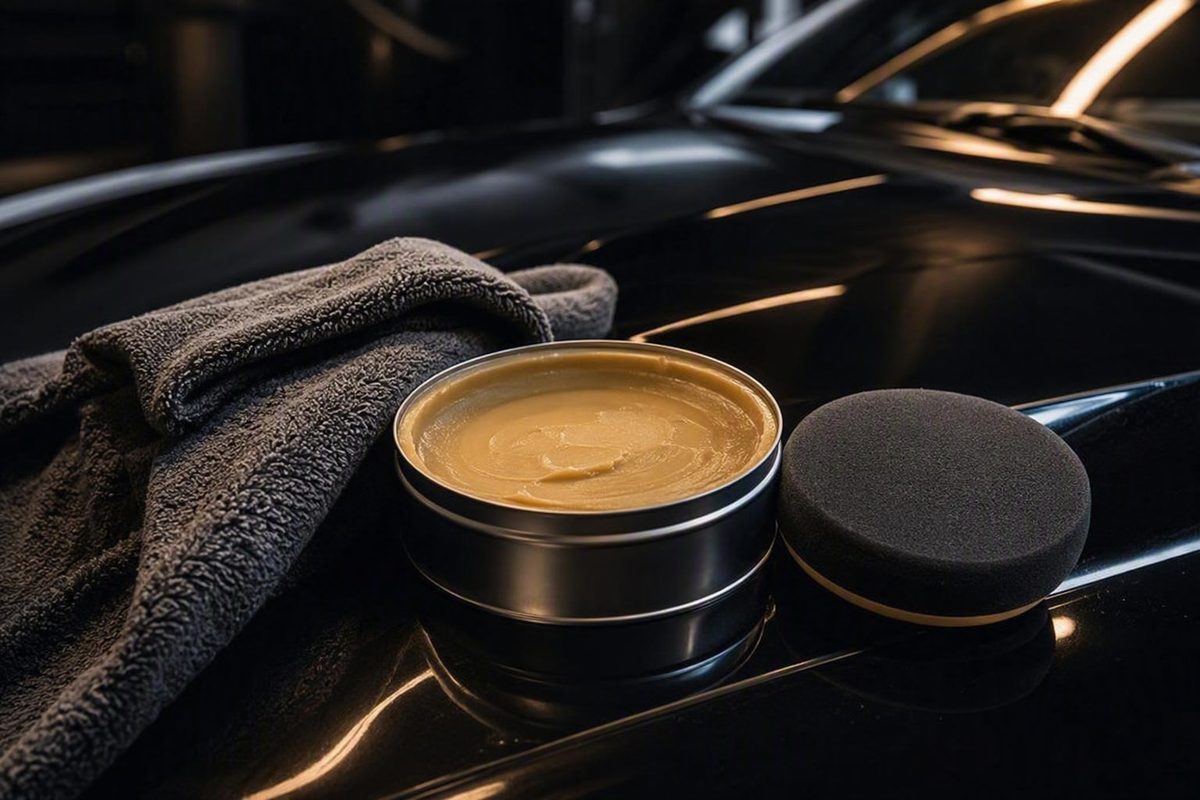
Carnauba paste wax still has a place in modern detailing, but not because paste is automatically purer, glossier, or more durable than every liquid wax. Its strongest case is experiential: it offers a traditional, hands-on finishing process and an appearance many owners describe as warm, deep, or wet-looking.
The tradeoff is maintenance. A traditional carnauba paste is a temporary finishing layer, not permanent paint protection or a substitute for paint correction. It commonly takes longer to spread and buff than liquid or spray products, and its useful life may range from weeks to months depending on the formula, vehicle use, storage, weather, and washing routine.
Whether the extra work is worthwhile therefore depends on the vehicle, the complete formula, the approved surfaces, and how much time you want to spend maintaining the finish. A garage-kept weekend car and an outdoor daily driver do not necessarily need the same product.
What carnauba paste wax actually is
Carnauba is a natural wax obtained from the leaves of a palm associated with northeastern Brazil. Raw carnauba is hard and brittle rather than ready to spread across automotive paint, so manufacturers formulate it with other ingredients to make usable paste, liquid, and spray products. Chemical Guys’ overview describes the raw material as brittle and yellow-brown and notes that automotive carnauba is commonly blended with natural or synthetic ingredients. See its explanation of carnauba’s origin and formulation.
Commercial carnauba pastes are commonly blends rather than pure carnauba. Depending on the product, the formula may include:
- Other natural waxes
- Synthetic polymers
- Oils or botanical extracts
- Solvents or emulsifiers
- Fragrances and colorants
- Ceramic ingredients
- Graphene-related additives
The word carnauba identifies an ingredient family; it does not disclose the percentage of carnauba in the finished product or predict how that product will perform.
A useful first distinction is between finishing wax and cleaner wax:
- A dedicated finishing wax is intended for clean, prepared paint. It adds appearance and a renewable surface layer but does not provide meaningful correction.
- A cleaner wax combines some cleaning or polishing action with protection. Depending on the formula, it may contain chemical cleaners, mild abrasives, or both.
Do not assume every firm paste is a finishing-only product. Read the description and technical information. Some products explicitly state that they contain no cleaners or abrasives, while others are marketed as one-step cleaner waxes.
Marketing terms such as white carnauba, yellow carnauba, Brazilian, grade one, premium, and high purity also need context. None of these phrases, by itself, discloses the percentage of carnauba in the finished product. Nor does any one of them prove greater gloss, easier removal, or longer protection on automotive paint.
It is equally important to separate three product categories that often appear together in search results:
- Traditional automotive carnauba paste: An automotive finishing wax centered on the conventional paste-wax application and appearance.
- Hybrid automotive paste: A paste combining carnauba or other waxes with synthetic polymers, ceramic ingredients, graphene-related ingredients, or other modern additives.
- Furniture or workshop paste wax: A product intended for wood, floors, tools, or machinery. It may contain solvents or pigments not intended for automotive finishes.
A hybrid is not inherently worse or less legitimate than a traditional paste. It is simply a different formulation. Likewise, a workshop wax containing carnauba is not automatically an automotive wax.
What it can—and cannot—do for automotive paint
Carnauba paste wax is commonly chosen for appearance. Owners, manufacturers, and reviewers often describe the result as warm, deep, wet-looking, mirror-like, or color-enhancing. Those descriptions help communicate the intended aesthetic, but they remain subjective. Paint color, correction quality, lighting, viewing angle, and the condition of the underlying clear coat can all affect what a person sees.
At a practical level, a finishing wax leaves a temporary sacrificial layer on a prepared surface. Depending on the formula, that layer may alter:
- Perceived gloss and color depth
- Surface slickness
- Water beading or sheeting
- How readily some light contamination adheres
- The tactile feel of the paint
The layer is renewable, which is part of the appeal. When its observable effects diminish, the owner can clean the vehicle and apply the wax again.
What finishing wax does not do is repair paint. Some formulas may make extremely fine swirls less obvious temporarily by filling minute irregularities or changing the way light reflects, but that is concealment rather than correction.
Compounds and polishes have a different job. On paint suitable for correction, they affect the surface to reduce or remove correctable defects. A finishing wax follows that work: it enhances the prepared surface and adds a replaceable layer. If scratches or oxidation remain visible before waxing, do not expect the paste to erase them afterward.
Claims about UV resistance, water-spot prevention, contaminant resistance, defect filling, or unusually long durability should be treated as manufacturer or seller claims unless supported by credible comparative testing. Results can vary substantially with formula, preparation, environment, and maintenance.
Comparative evidence is limited. In its 2026 wax comparison, Road & Track reported that Meguiar’s Gold Class Carnauba Plus—a carnauba-and-polymer paste—produced deep, warm gloss, enhanced color, and particularly tight water beads. The publication named it its best paste, but it was the only product in the test that the source categorized as a traditional carnauba wax, despite its polymer-containing formula. Its durability estimate came from reviewer experience rather than a documented controlled, long-term trial, and the article contains affiliate links. Read the methodology and product observations.
Water beads are useful observations, but they are not a complete protection test. Tight beads show that a surface is behaving hydrophobically at that moment.
Paste wax versus liquid wax, sealant, and ceramic protection
Paste and liquid describe physical formats, not complete chemical categories. Either can contain carnauba, synthetic polymers, or a mixture of ingredients. Consistency alone does not reveal concentration, gloss, or longevity.
Paste wax commonly requires more effort because the user must load an applicator from a firm product, spread a very thin film, wait for the specified haze or drying point, and buff away the residue. Liquids generally spread with less resistance, while sprays are usually selected for rapid maintenance.
Beginner guidance is not entirely consistent. Paste can be easy to control because it stays in the container and can be loaded in small amounts without spilling. That may help prevent the mess associated with over-dispensing a liquid. On the other hand, completing an entire vehicle with paste usually takes more physical effort than applying a quick liquid or spray.
Modern liquids also challenge the assumption that paste necessarily lasts longer. Turtle Wax, for example, describes liquid wax as easier to spread and buff while acknowledging that modern polymer-containing liquids can offer durability comparable to paste. Its comparison also features a hybrid paste made with several traditional waxes plus ceramic and graphene ingredients, illustrating why format alone reveals little about composition. Review the paste-versus-liquid comparison.
Synthetic sealants and ceramic products are generally positioned as longer-lasting choices than traditional carnauba wax. That does not make them universally superior. They emphasize different priorities:
| Protection type | Best suited to | Main advantage | Main compromise |
|---|---|---|---|
| Traditional carnauba paste | Garage-kept classics, weekend cars, show preparation, and appearance-focused enthusiasts | Traditional application and an appearance often described as warm or deep | More labor and typically more frequent renewal |
| Hybrid paste | Buyers who like paste application but want synthetic, ceramic, or other added ingredients | Traditional format with formulation-dependent modern features | The word “hybrid” does not guarantee a specific durability gain |
| Liquid wax | Owners wanting conventional wax with easier spreading | Faster coverage and easier dispensing | Formula quality and service life vary widely |
| Spray wax | Rapid maintenance between larger details | Speed and convenience | Usually chosen for maintenance rather than the traditional paste experience |
| Synthetic sealant | Outdoor daily drivers and owners prioritizing service life | Generally positioned for longer-lasting protection | May not provide the particular appearance or ritual sought by paste-wax enthusiasts |
| Ceramic protection | Owners prioritizing longer-term surface behavior and less frequent application | Longer-lasting positioning and strong hydrophobic emphasis | Some products require more exacting preparation, compatibility checks, and application |
No format deserves to be declared universally best without like-for-like testing. A fair comparison would require equivalent paint preparation, standardized application quantities, matched environmental exposure, documented washing, and repeated measurements.
This guide synthesizes manufacturer, retailer, and editorial material supplied for review; it does not represent independent first-party product testing. Product specifications and seller instructions are therefore distinguished from reviewer observations and controlled evidence.
The practical question is not simply “paste or ceramic?” It is: How much application time, maintenance frequency, and formulation complexity fit the way this vehicle is used?
How to choose a carnauba paste wax without falling for the label
Start by deciding whether you want a finishing wax or a cleaner wax. If the paint is already polished and you want a final appearance layer, choose a dedicated finishing product. If you want mild cleaning and protection in one step, investigate a cleaner wax—but understand that its corrective ability will be limited and formula-specific.
Then use this label checklist:
- Disclosed additives: Are polymers, silicones, other waxes, oils, ceramics, graphene-related ingredients, solvents, pigments, or fragrances identified?
- Cleaner or abrasive content: Does the product explicitly contain—or exclude—cleaners and abrasives?
- Approved surfaces: Is it intended for gloss paint only, or also for fiberglass, chrome, glass, wheels, or other materials?
- Trim restrictions: Does the label warn against porous plastic or rubber?
- Matte and wrap compatibility: Are matte paint, vinyl wraps, or paint-protection film expressly approved?
- Coating compatibility: Can it be used over an existing sealant or ceramic coating?
- Haze and removal directions: Does it explain how long to wait and how to judge readiness?
- Cure requirements: Must the finish remain dry after application?
- Reapplication guidance: Is the interval product-specific, and are the relevant conditions explained?
- Fresh-paint restrictions: Does the manufacturer provide guidance for repainted panels?
- VOC labeling and safety documentation: Is VOC status stated, and is a safety data sheet available?
- Container size: Is the quantity clear enough to compare value?
PRO W-41 illustrates why detailed wording matters. Its listing identifies the product as a finishing wax for pre-cleaned surfaces and says it contains no cleaners or abrasives. Masterson’s Legend Paste Wax illustrates a different point: a premium product described as containing grade-one Brazilian carnauba may also include montan wax, oils, fruit extracts, and synthetic polymers. “Premium carnauba” does not mean “pure carnauba.”
The following is a market snapshot, not a performance ranking. The supplied listings were reviewed for publication on August 12, 2026; prices, quantities, inventory, sale status, and commerce controls can change and should be verified before purchase.
| Listing | Displayed price and quantity | Approximate displayed price per ounce | Important caveat |
|---|---|---|---|
| Chemical Guys Pure 3X | $24.99; quantity not unambiguous in the supplied category listing | Not calculated | The listing described white and yellow Brazilian carnauba and marked the product sold out |
| Finish Kare Carnauba Paste Wax | $25.30; listed weight 0.5 lb | $3.16 based on 8 oz | The page displayed two different SKUs, so the exact listing should be confirmed |
| PRO W-41 Yellow Wax Paste | $29.69; 14 oz | $2.12 | The page showed both a sold-out notice and an add-to-cart control; it also labeled the wax VOC compliant and free of cleaners or abrasives |
| Selected Autogeek pastes | $29.99 to $69.99, depending on product and size | Not calculated across mixed listings | The category included different sizes and formulas, as well as liquids, sprays, and hybrids |
| Masterson’s Legend Paste Wax | $129.99 displayed sale price; 12 oz | $10.83 | Manufacturer sales page; the formula also disclosed other wax, oils, extracts, and polymers |
Price per ounce can help identify an expensive formula, but it cannot show how many vehicles a container will cover without a standardized application quantity. It also says nothing by itself about carnauba concentration, removal effort, gloss, or durability.
The same caution applies to origin and grade terminology. Brazilian sourcing, a smaller container, or a premium price does not establish superior automotive performance.
There is no defensible overall “best carnauba paste wax” in the available evidence. Road & Track’s Meguiar’s selection is informative as one reviewer’s category choice, but it was not a controlled comparison among several polymer-free traditional carnauba pastes.
Prepare the paint before opening the wax
Wax showcases the condition of the surface beneath it more reliably than it fixes that surface. If the paint is dirty, contaminated, oxidized, or heavily swirled, changing between two similar finishing waxes is unlikely to transform the result.
Use this sequence:
- Wash thoroughly. Use an automotive wash soap rather than a household cleaner that may strip existing protection or behave unpredictably on automotive finishes.
- Rinse completely. Remove loose dirt and soap from seams, badges, mirrors, and trim.
- Dry the vehicle. Residual water can interfere with an even film and consistent product behavior.
- Assess bonded contamination. Lightly inspect the clean paint by touch using an appropriate method. If it still feels rough, further decontamination may be useful.
- Clay only when needed. Claying can remove bonded contamination, but it is not an automatic requirement before every wax application.
- Correct defects separately. If scratches, swirls, or oxidation require correction, use an appropriate compound or polish before applying a finishing wax.
- Inspect tools. Applicators and towels must be clean, soft, and free of grit or hardened residue.
For more detail on the wash and rinse stage, Car Cleaning Zone has a separate guide to spray-nozzle patterns and vehicle-washing technique. It is a washing resource, not a test of carnauba wax.
Be particularly careful with applicators stored after previous details. Dried wax, embedded grit, or accumulated debris can make a previously soft pad abrasive. CarParts.com warns that moisture can interfere with application, accumulated residue can make an applicator abrasive, and excess wax may lead to potentially damaging buffing force. Review its tool and application cautions.
Compatibility must also be confirmed before application. Do not rely on a broad statement such as “safe for all paint” to cover:
- Recently repainted panels
- Matte or satin finishes
- Vinyl wraps
- Paint-protection film
- Ceramic coatings
- Porous plastic trim
- Rubber seals
- Glass
- Unpainted wheels or specialty finishes
If the manufacturer does not expressly approve a surface, obtain product-specific guidance or test an inconspicuous area where appropriate. For fresh or repaired paint, follow the paint manufacturer’s or body shop’s instructions rather than imposing a generic waiting period.
How to apply carnauba paste wax by hand
The product label is the controlling authority. Haze times, cure periods, temperature limits, applicator requirements, and layering instructions vary. A method that works well for one paste can make another difficult to remove.
A safe, repeatable general process looks like this:
- Choose the right setting. Work in shade or a covered area. The paint should be clean, dry, and cool—not hot from direct sun or a recently running engine.
- Prepare clean tools. Use a soft foam or microfiber applicator approved by the product manufacturer. Keep several clean microfiber towels available.
- Prime only if directed. Some sellers suggest lightly moistening an applicator, while others call for a dry pad. Follow the specific product rather than treating either method as universal.
- Load very little wax. Lightly touch or turn the applicator against the paste. The goal is a thin film, not a visible mound of product.
- Spread a barely visible coat. Cover one manageable panel or section with an even film. Use the application pattern specified by the manufacturer; consistent coverage and light pressure matter more than aggressively rubbing the surface.
- Let it haze or dry as directed. Some commercial guidance gives five to ten minutes as an example, but this is not a universal waiting period. Temperature, humidity, film thickness, and formulation can all affect removal behavior. Chemical Guys’ product guidance gives that range while directing users to follow the relevant product instructions.
- Buff gently. Remove residue with a clean microfiber towel using light pressure. Turn the towel frequently to expose a fresh side.
- Change towels as needed. Once a towel becomes loaded with residue, it may redistribute wax rather than remove it.
- Inspect from several angles. Check under different lighting for missed residue, smearing, or high spots.
- Clear appropriate seams carefully. If the product and surface permit it, use a clean, soft detailing brush to lift residue from badges or tight seams without scrubbing vulnerable trim.
- Observe the stated cure period. Keep the vehicle dry for any period specified by the product.
The instruction to apply a thin coat is not merely about saving product.
Working one panel at a time is a conservative default, but the label may specify a different sequence. Some products can be applied over a larger area before removal; others become difficult if left too long.
A second coat is optional and formulation-dependent. One seller recommends delaying the second application rather than applying it immediately, but that is product-specific advice—not proof that every wax gains measurable durability from layering. If a second coat is permitted, make sure the first was applied evenly and allowed to complete the manufacturer’s stated waiting or cure period.
How long it lasts and when to reapply
There is no reliable universal lifespan for carnauba paste wax. Available estimates range from several weeks to several months, and many come from manufacturers, retailers, or personal experience rather than controlled exposure testing. Some commercial guides are internally inconsistent.
For planning purposes, several weeks is a cautious expectation for an appearance-focused carnauba wax on a regularly used vehicle. It is not a guarantee, and a particular hybrid formula or lightly used garage-kept vehicle may behave differently.
Chemical Guys gives a general estimate of four to eight weeks while acknowledging that weather, washing frequency, and driving conditions affect durability. That estimate comes from a company selling car-care products, so it should be treated as manufacturer guidance rather than an independent service-life result. See the company’s stated interval and caveats.
See the review’s durability discussion. Another seller recommends a substantially longer, product-specific reapplication interval, illustrating why one schedule cannot be applied to every formula and vehicle.
Service life can change with:
- Traditional versus polymer-enhanced formulation
- Garage storage versus continuous outdoor parking
- Rain frequency and prolonged moisture
- Heat and intense sun exposure
- Annual and weekly mileage
- Road salt, industrial fallout, pollen, and other contamination
- Wash frequency
- Wash-soap strength and cleaning chemistry
- Aggressive towel or mitt use
- The quality of initial preparation and application
Do not use beading as the only replacement signal. Monitor several changes together:
- Water behavior compared with immediately after application
- Loss of slickness
- Diminished gloss or visual richness
- Increased retention of grime
- More difficult drying
- Recent rain, mileage, outdoor exposure, and wash history
The most useful reapplication schedule is vehicle-specific. Keep a simple log containing the application date, mileage, washes, outdoor parking, severe weather, and observed changes. After several cycles, that record will be more informative than a generic claim on a sales page.
Do not assume paste always lasts longer than liquid. A modern polymer-rich liquid may outlast a traditional carnauba paste, while a hybrid paste may behave differently from either. Formulation and exposure matter more than consistency alone.
Mistakes, residue problems, and surface-safety boundaries
| Symptom | Likely cause | Cautious remedy |
|---|---|---|
| Wax is difficult to buff | Coat was too thick, left too long, or applied outside label conditions | Start with a fresh microfiber towel and follow the manufacturer’s removal directions; avoid aggressive pressure |
| Residue dried almost immediately | Panel was hot, in direct sun, or product was spread over too large an area | Move to shade, let the panel cool, and work in smaller sections |
| Smearing or oily streaks | Paint was damp, product had not reached its specified removal point, or towel was saturated | Use a clean towel, confirm the surface is dry, and follow the product’s haze instructions |
| Fine marring appears | Applicator or towel contained grit, hardened residue, or abrasive debris | Stop, replace the tool, and inspect the paint before continuing |
| Residue keeps moving around | Towel is overloaded | Turn to a clean side or switch towels |
| White marks appear on trim | Wax contacted porous plastic or rubber | Follow the wax manufacturer’s removal guidance; do not begin with an unsupported solvent or hard scrubbing |
| Residue collects around badges | Too much product was applied near edges and seams | Use less wax around details and, where appropriate, lift residue with a clean, soft brush |
When residue is stubborn, resist improvising with strong solvents, household cleaners, or forceful scrubbing. Begin with the product manufacturer’s directions and a clean microfiber towel. If those steps do not work, ask the wax or surface manufacturer for compatible removal guidance.
Automotive wax can stain porous plastic trim. AutoZone’s hand-waxing guide recommends masking vulnerable trim or choosing a product specifically labeled compatible with the relevant surfaces. See its preparation and trim precautions.
Broad compatibility language should still be read narrowly. “Safe for automotive paint” does not automatically mean suitable for matte paint, rubber, porous trim, wraps, fresh paint, or an existing coating. Confirm each nonstandard surface separately.
Automotive and furniture paste waxes must also remain distinct. RMP Finishes, for example, markets a non-automotive paste for wood, floors, shop tools, and machinery. Its disclosed blend includes carnauba, beeswax, candelilla wax, and mineral spirits. A brown version contains pigment intended to add patina or alter appearance, while the company identifies a different product for food-contact items. Review the intended uses, ingredients, and color options.
More generally, a workshop paste should not be substituted for automotive wax unless its manufacturer expressly approves the exact surface and use.
Finally, consult the label and available safety documentation for ventilation, personal protective equipment, storage, and disposal. Formulas differ, so there is no responsible universal rule covering every solvent system or additive package.
The bottom line: Carnauba paste wax is a defensible choice for owners who value a traditional hand-applied finish and accept the added labor and renewal frequency. Choose it by formulation, approved surfaces, instructions, and realistic upkeep—not by price, purity language, or paste consistency alone. For an outdoor daily driver, a synthetic sealant or compatible hybrid may be a more practical foundation. In every case, careful preparation, an extremely thin coat, and product-specific directions matter more than marketing superlatives.
Frequently asked questions
How long does carnauba paste wax last on a daily driver?
A cautious planning expectation is several weeks, but actual service life depends on the formula, outdoor exposure, heat, rain, mileage, contamination, washing frequency, and wash chemistry. Some commercial recommendations extend considerably longer, which is why no single interval should be treated as universal.
Track the application date and subsequent washes and exposure. Reapply based on changes in water behavior, slickness, appearance, contamination retention, and use history rather than beading alone.
Can carnauba paste wax remove scratches or swirl marks?
No. A finishing wax does not remove scratches, oxidation, chips, or dents. It may temporarily make extremely fine swirls less visible by filling minor irregularities or changing light reflection, but the defects remain.
Actual correction requires an appropriate compound or polish on paint suitable for correction. Wax is applied afterward as an appearance-enhancing, renewable layer.
Can I apply carnauba paste wax over a synthetic sealant or ceramic coating?
Only when the instructions for both products permit the combination. Some wax manufacturers allow application over certain sealants, but compatibility with ceramic coatings and their maintenance systems cannot be generalized.
Follow the specified waiting or cure requirements for the base product, confirm that the wax is approved as a topper, and test a small area when the manufacturers recommend doing so. A wax labeled safe for automotive paint is not automatically compatible with every sealant or coating.
Will carnauba paste wax stain plastic or rubber trim?
It can stain porous plastic or leave difficult white residue. Rubber compatibility also varies by formula. Mask vulnerable trim before application or select a product explicitly labeled for the surfaces involved.
If residue appears, follow the wax manufacturer’s removal directions and start with a clean microfiber towel. Avoid aggressive scrubbing or an improvised solvent that has not been approved for the trim.
Does applying a second coat make paste wax last longer?
Not necessarily. Some sellers recommend a second coat and specify a waiting period, but the available evidence does not establish that layering universally improves durability.
Apply it only if the product permits layering, observe its stated waiting or cure requirements, and do not treat two thick coats as a substitute for one thin, even application.