
Which Hair-Removal Wax Fits the Area, Hair and Routine?
Soft wax interacts with both hair and skin, so another removal may increase redness, irritation, or injury. Repeat passes therefore warrant caution.
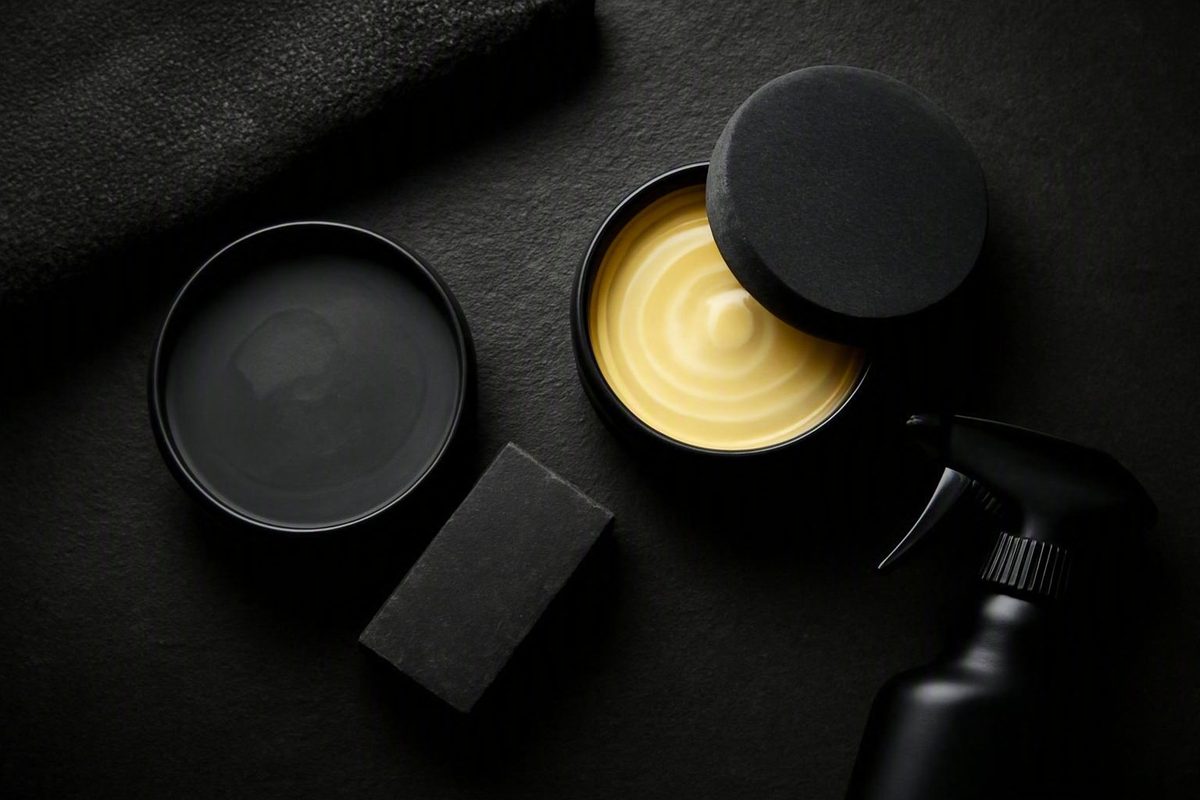
First, This Comparison Is About Hair-Removal Wax
That is the comparison covered here.
The immediate distinction is straightforward:
- Hard wax is applied warm in a relatively thick layer. It cools and sets, after which the wax itself is lifted and removed.
- Soft wax is spread in a thin layer and remains tacky. A cloth, paper, or non-woven strip is pressed onto it and pulled away with the wax.
Both methods remove hair from the root rather than cutting it at the skin’s surface. Their different application and removal methods make each more practical for certain areas and routines. Hard wax is commonly selected for precise work on smaller or delicate areas, while soft wax is commonly used to cover legs, arms, chests, and backs efficiently. Neither method is automatically better in every situation.
Terminology note for car owners: In automotive care, “hard wax” usually means a firm paste product. “Soft wax” is less standardized and may refer to a softer paste, dense liquid, or spray. These are not equivalent to the hair-removal categories discussed here. Automotive tests also show that consistency alone does not determine immediate finish or ease of use: some liquid products perform as well as or better than pastes in product-specific comparisons, while traditional firm pastes can require more application effort (Car and Driver’s car-wax testing).
The rest of this guide deals with body waxing until the final automotive FAQ. It compares methods rather than providing comprehensive medical or at-home treatment instructions.
Hard Wax and Soft Wax at a Glance
Hard and soft wax pursue the same objective through different handling methods. Hard wax becomes its own removal strip. Soft wax needs a separate strip to provide the structure for removal.
| Feature | Hard wax | Soft wax |
|---|---|---|
| Application thickness | Applied relatively thickly so the set layer can be lifted without breaking | Spread in a thin, even layer |
| Setting behavior | Cools or sets into a flexible, removable layer | Remains tacky rather than becoming self-supporting |
| Removal method | An edge is lifted and the wax itself is pulled away | A strip is pressed onto the wax and pulled away |
| Separate strip required? | No | Yes—usually cloth, paper, or non-woven material |
| Typical treatment areas | Face, underarms, bikini line, Brazilian area, and other smaller zones | Legs, arms, chest, back, and other broad zones |
| Coverage speed | Generally slower over large areas because the layer is thicker and must set | Generally faster for broad coverage because it spreads thinly |
| Repeat-pass considerations | Do not assume reapplication is safe merely because the wax is hard | Repeated stripping of one spot is generally discouraged because it may increase irritation or injury |
| Common hair guidance | Often recommended by practitioners for short or coarse hair | Often recommended by practitioners for fine hair |
| Main advantage | Precision and stripless removal | Fast coverage of large sections |
| Main limitation | Uses more material and time over broad areas | Greater skin adhesion makes repeated passes a concern |
The core mechanics are consistent across professional and consumer-health guidance: hard wax is applied thickly, allowed to harden, and removed directly, whereas soft wax is applied thinly and removed with a material strip (Healthline’s medically reviewed comparison).
Because hard wax must form a removable layer, it normally uses more product over the same surface area and requires time to set before each pull. That does not prevent its use on legs or other large areas, but it can make the process slower. Soft wax can cover broad sections more quickly because it is spread thinly before the strip is applied.
These are practical tendencies, not mandatory rules.
How Hard Wax Works
Hard wax is warmed until it reaches the consistency specified by its manufacturer. It is spread thickly enough to create a layer that can be lifted and removed as one piece. As it cools, it becomes firm or flexible enough to function as its own strip.
At a high level, the method involves:
- Cleaning the treatment area.
- Warming the wax according to its own instructions.
- Testing a small amount before treating the intended area.
- Applying a sufficiently thick layer in the direction of hair growth.
- Allowing the layer to set.
- Holding the skin taut.
- Removing the wax against hair growth.
These steps reflect manufacturer guidance for hard-wax application, including temperature testing and holding the skin taut during removal (Starpil’s waxing-method guide).
A separate cloth or paper strip is unnecessary because the set wax supplies the grip and structure needed for removal. Hard wax may be sold as a polymer film formula or a non-polymer blend, but those labels alone do not establish that one option is safer, gentler, or more effective.
The face, underarms, bikini line, and Brazilian area are common hard-wax applications. These areas are relatively small, irregularly shaped, or commonly treated with a greater emphasis on placement and precision than speed. Practitioner sources also frequently associate hard wax with short or coarse hair, although that is general service guidance rather than a universal biological rule.
The limitation is usually efficiency, not an absolute prohibition. Each patch needs a relatively thick application and time to set, so treating a large surface generally requires more product and time than spreading soft wax thinly over the same area.
Temperature requires particular caution. Wax formulas differ in how they melt, spread, and set, and room conditions can affect their handling. A temperature published for one product should not be adopted for another. Follow the selected product’s label and equipment instructions, and test the wax as directed before wider application.
Because the supplied evidence does not establish comprehensive contraindications, burn protocols, allergy guidance, or rules for treating injured skin, this section should not be treated as a complete at-home procedure. Anyone uncertain whether waxing is appropriate should consult the product directions and an appropriately qualified professional.
How Soft Wax Works
Soft wax remains tacky instead of setting into a self-supporting strip. A cloth, paper, or non-woven strip is pressed onto it, and that strip provides the structure needed to remove the wax and hair together.
The basic method involves:
- Beginning with clean skin.
- Warming the product if its instructions require it.
- Spreading a thin layer in the direction of hair growth.
- Pressing on the appropriate strip.
- Holding the skin taut.
- Removing the strip quickly against hair growth.
Healthline’s medically reviewed overview describes this thin application, strip placement, skin stabilization, and quick removal sequence, while also directing readers to follow product-specific heating guidance (Healthline’s soft-wax instructions).
Soft wax is commonly chosen for legs, arms, chests, and backs because broad sections can be treated quickly. Practitioners also frequently recommend it for fine hair. Results still depend on the individual formula, hair length and density, preparation, and removal technique.
Soft wax interacts with both hair and skin. It would be too categorical to claim that every application removes a specific amount or layer of skin, but the additional skin adhesion helps explain why repeat passes deserve caution. Applying and stripping soft wax from the same spot again may increase redness, irritation, or the possibility of skin injury. Albany Aesthetics’ practitioner guidance therefore advises against making multiple soft-wax passes over one area (Albany Aesthetics’ method comparison).
If a pass leaves a few hairs, repeatedly stripping already treated or visibly irritated skin is not a prudent default. Product directions, the condition of the area, and qualified professional guidance should determine what happens next.
Soft wax is not inherently inferior or unsuitable for every smaller area. Its defining practical advantage is thin, rapid coverage—not universal superiority for a particular hair type.
Which Wax Is Usually Chosen for Each Body Area?
Body area is a useful starting point because it affects placement, precision, and service time. It is not the only factor. Hair characteristics, previous reactions, formula performance, and practitioner technique may justify a different choice.
| Body area | Common choice | Why it is commonly chosen | Important qualification |
|---|---|---|---|
| Brows or face | Hard wax | Supports controlled applications on small, shaped areas | A practitioner may use soft wax selectively; precision and skin response matter |
| Underarms | Hard wax | Suits a compact area where hair may be dense or grow in different directions | Several smaller applications may be needed because growth patterns vary |
| Bikini line | Hard wax | Commonly preferred for precise treatment of a relatively delicate zone | Formula, temperature, and technique still affect the experience |
| Brazilian area | Hard wax | Frequently selected for stripless, controlled removal | This common practice does not prove that soft wax can never be used |
| Legs | Soft wax | Thin spreading and strip removal provide fast coverage | Hard wax can work but generally requires more material and time |
| Arms | Soft wax | Efficient for broad, relatively even sections | Hard wax may be selected for small patches or individual response |
| Chest | Soft wax | Enables rapid treatment of a large area | Hair density or skin response may lead a practitioner to combine methods |
| Back | Soft wax | Prioritizes speed over a wide surface | Hard wax remains possible where controlled placement is preferred |
These recommendations reflect recurring salon practice rather than controlled proof that one wax must always be used on a particular body part. One esthetician’s comparison, for example, favors hard wax for the face, underarms, and bikini line, soft wax for broad areas, and the use of both methods during the same session (Aesthetics by Mahreen’s comparison).
A mixed appointment can be the most practical approach. Someone might have soft wax applied to the legs for efficient coverage, followed by hard wax around the bikini line for more controlled placement. Using both avoids forcing one method to perform every task.
Use four questions to narrow the choice:
-
How large is the area? A broad area usually favors the speed of soft wax. A small or highly contoured area often favors hard wax.
-
How does the skin normally respond? Consider previous redness, discomfort, or other reactions.
-
Is the hair fine or coarse? Practitioner guidance commonly associates soft wax with fine hair and hard wax with short or coarse hair. These are starting points, not guarantees.
-
Is speed or precision more important? Soft wax usually has the advantage for rapid coverage. Hard wax often makes more sense when application boundaries and controlled placement matter more.
Pain, Sensitive Skin and Hair Type: What the Evidence Can Actually Support
Salons, wax manufacturers, and consumer-health publishers commonly characterize hard wax as gentler or less painful than soft wax, especially on smaller, sensitive areas. The usual explanation is that hard wax is intended to grip the hair while generally involving less skin adhesion than soft wax.
That claim needs clear limits. The supplied sources do not provide controlled, formula-matched studies proving that hard wax always causes less pain. Much of the guidance comes from commercial wax providers and practitioner experience. It is therefore reasonable to say that hard wax is commonly described or experienced as gentler, not that it has a universal pain advantage.
It is also inaccurate to say that hard wax touches only hair or can never affect skin. It is applied directly to the skin, and the outcome depends on the formula, temperature, application thickness, setting time, and removal technique. “Generally involves less skin adhesion than soft wax” is more defensible than “does not adhere to skin.”
Discomfort and irritation can vary with:
- Wax composition and condition
- Product temperature
- Hair length and density
- Application thickness
- The size and location of each patch
- Skin stabilization during removal
- Removal speed and direction
- Practitioner skill
- Previous reactions and the skin’s current condition
“Sensitivity” can also describe many different experiences. Someone who tends to become red after waxing may prefer hard wax, but selecting it does not guarantee an irritation-free result. Soft wax is likewise not automatically intolerable for everyone who describes their skin as sensitive.
Hair-type recommendations require similar restraint. Practitioner sources repeatedly associate hard wax with coarse or short hair and soft wax with finer hair, but formulas vary. A hard wax that becomes brittle too quickly may perform poorly regardless of hair category, while one soft-wax formula may grip differently from another.
Neither method should be credited with preventing ingrown hairs, breakouts, irritation, or future hair growth. The available comparisons do not establish those preventive effects.
Preparation, Temperature and Application Mistakes
Preparation cannot make waxing consequence-free, but it can help avoid basic handling problems.
Practitioner guidance commonly suggests allowing hair to reach approximately one-quarter inch before hard- or soft-wax treatment. This is a recurring service recommendation rather than a mandatory measurement for every formula or provider, so the selected product or practitioner may specify something different (Magical Waxing’s preparation guidance).
Before waxing:
- Start with clean skin.
- Avoid applying lotions or oils immediately beforehand unless the selected product specifically directs otherwise.
- Read the complete heating, preparation, and application instructions.
- Prepare the strips and tools required by the selected product.
- Test the wax temperature as directed before treating the intended area.
There is no single operating temperature for every hard or soft wax. A number taken from one brand’s instructions may be unsuitable for another formula. Product-specific directions—not appearance alone or instructions copied from a competing wax—should determine heating and readiness.
Application thickness is another common source of error. Hard wax must be thick enough to lift as a coherent layer; if it is applied too thinly, it may be difficult to grip or may break during removal. Soft wax is intentionally spread in a thin layer because the separate strip supplies the structure needed to remove it.
Other technique problems include:
- Using wax outside the selected product’s specified handling conditions
- Failing to stabilize the skin as the product instructs
- Removing the wax hesitantly or in the wrong direction
- Ignoring changes in hair-growth direction within the same body area
- Applying hard wax too thinly
- Applying soft wax too thickly
- Removing hard wax before it has set adequately or after it has become too brittle
- Making repeated passes over skin that is already irritated
- Treating one unsuccessful application as proof that the other wax category is always better
The evidence supplied for this comparison does not establish a comprehensive list of medical contraindications, medication or cosmetic-procedure interactions, burn treatment, skin-lifting protocols, or allergy care. Readers who are unsure whether waxing is appropriate for their skin or circumstances should consult the selected product’s directions and an appropriately qualified professional before proceeding.
Aftercare and the Final Choice
Waxed skin has been exposed to heat, adhesion, and rapid mechanical pulling. Practitioner aftercare guidance commonly recommends temporarily minimizing additional heat, friction, and unnecessary handling.
Recurring recommendations include:
- Avoiding very hot showers and saunas for a period after treatment
- Postponing strenuous exercise that creates substantial heat, sweat, or friction
- Wearing loose clothing over recently waxed areas
- Avoiding unnecessary touching or rubbing
- Delaying immediate or aggressive exfoliation
- Using a mild, fragrance-free soothing product if it is appropriate and well tolerated
These recommendations are documented in practitioner guidance, but aftercare schedules differ. They should not be presented as one medically proven timetable that applies to every person, product, and body area (Albany Aesthetics’ preparation and aftercare guidance).
Follow the instructions supplied by the product or practitioner and pay attention to how the area is responding. The evidence available here does not establish treatment protocols for burns, allergic reactions, skin lifting, or other injuries.
For the initial choice, use two practical defaults:
- Choose hard wax for a smaller area where controlled placement and precision matter more than speed.
- Choose soft wax when rapid coverage of a broad area is the priority.
Then refine the decision according to the specific formula, hair length and texture, previous skin response, confidence with the method, and practitioner experience. A theoretically suitable wax can still perform poorly if it is overheated, applied at the wrong thickness, allowed to set incorrectly, or removed poorly.
There is no need to insist on one wax for an entire appointment. Soft wax may be efficient on the legs or back, while hard wax may be more practical on the underarms or bikini area.
Does hard wax hurt less than soft wax?
It may for some people and treatment areas. Practitioner and consumer-health sources commonly characterize hard wax as gentler or less painful, particularly for smaller sensitive zones. The available comparisons do not, however, establish a universal pain advantage through controlled studies.
Discomfort can change with the formula, temperature, hair density, application thickness, removal technique, body area, practitioner skill, and individual response. Hard wax is better viewed as a commonly preferred option for sensitive areas than as a painless method.
Can hard wax and soft wax be used in the same appointment?
Yes. The methods can be matched to different areas during one appointment. For example, soft wax may cover the legs efficiently, while hard wax is used for the bikini line or underarms. Combining them can be more practical than choosing one method for every body area.
Can wax be applied twice to the same spot?
Do not assume a second pass is safe. Repeated soft-wax passes are generally discouraged because soft wax interacts with both hair and skin, and another removal may increase redness, irritation, or injury.
Some practitioner sources are more permissive about repeating hard wax, but the available evidence does not establish that reapplication is universally safe. The product directions, body area, condition of the treated skin, and professional guidance should govern the decision. Skin that is already visibly irritated should not be repeatedly treated.
How long should hair be before hard or soft waxing?
Approximately one-quarter inch is recurring practitioner guidance for both methods, but it is not a universal requirement. Follow the instructions for the selected formula or the preparation requirements supplied by the practitioner (Magical Waxing’s hair-length guidance).
What does hard vs soft wax mean for cars?
Firm paste wax can require more effort to spread and buff, while liquid and spray formats generally emphasize speed and convenience. This does not prove that harder automotive wax is always glossier, more protective, or longer-lasting. Formulation, preparation, application, curing, environmental exposure, and the individual product all matter.
In one subjective side-by-side comparison, paste and liquid products produced broadly similar visual results, while a liquid product ranked near the top for appearance and surface feel. The test did not establish format-based longevity, but it illustrates why consistency alone is an unreliable performance shortcut (One Man and His Mustang’s wax comparison).
For cars, compare the manufacturer’s intended use, application process, compatibility, and credible product-specific testing. Conclusions about depilatory hard and soft wax do not transfer to automotive products.
The verdict: Hard wax sets into its own removable layer, while soft wax requires a separate strip. Hard wax is commonly useful for precise treatment of smaller or delicate areas; soft wax is efficient across legs, arms, chests, and backs. The better option is situational. Formula instructions, temperature control, preparation, and execution matter more than declaring either category universally superior.