
A Practical Guide to This SiO2 Maintenance Spray
Apply it sparingly to cool panels with clean microfiber towels, and wash instead when visible dirt or grit is present.
The short answer: what this product does and who it suits
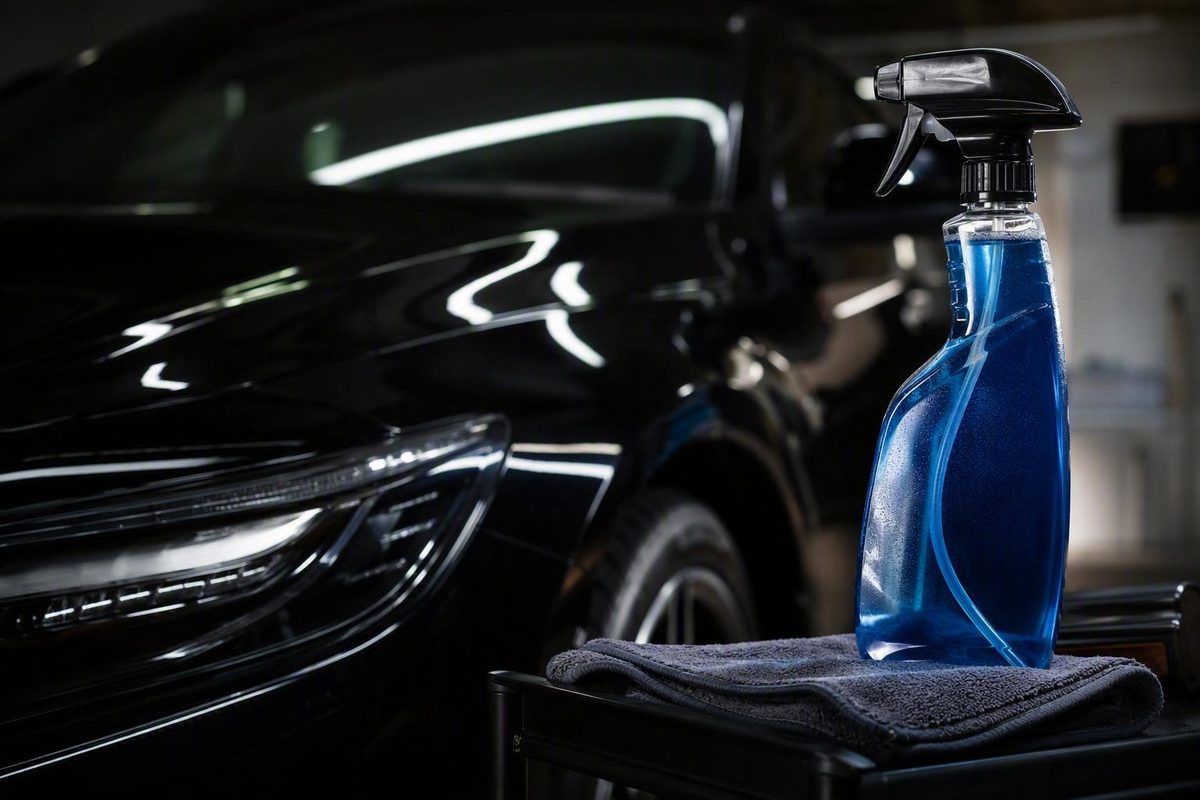
Meguiar’s Hybrid Ceramic Detailer is a ready-to-use, SiO2-enhanced quick detailer and maintenance topper for automotive exteriors. It is designed to remove light, fresh contamination, restore a just-washed appearance and supplement existing protection. It is not a paint polish, a substitute for washing a dirty car or a true long-term ceramic coating.
The product is best suited to owners who already keep their vehicles relatively clean. Appropriate jobs include removing fingerprints, addressing an isolated fresh mark, completing a finishing wipe after a wash and maintaining paint protected by wax, sealant or a coating. Meguiar’s claims that the formula promotes gloss and water beading while enhancing existing protection, but the available evidence does not quantify those effects.
The documented retail bottle has these specifications:
| Specification | Detail |
|---|---|
| Bottle size | 26 US fl oz / 769 mL |
| Product number | G200526 |
| UPC | 070382014872 |
| Formula | Ready to use |
| General role | Quick detailer and protection topper |
| Documented surfaces | Automotive exterior paint, exterior trim and chrome |
These identifiers, the ready-to-use designation and the supported surfaces appear in the official Meguiar’s product listing.
It is a reasonable fit if you want:
- A convenient spray for a nearly clean vehicle.
- Help removing fingerprints or similarly light, fresh marks.
- A quick cosmetic refresh between regular washes.
- A maintenance topper over wax, sealant or a coating.
- A spray that can be spread and buffed with microfiber towels.
- An optional drying aid, provided you understand that wet-panel use is primarily reviewer-reported rather than the main documented direction.
It is a poor fit if you need:
- Heavy cleaning of road film, mud, salt or widespread dirt.
- Removal of bonded or embedded contamination.
- Correction of scratches, swirls, oxidation or etched water spots.
- A durable standalone wax or sealant.
- A professional or long-term ceramic coating.
Gloss, slickness and visible water beading are supported mainly by manufacturer claims, retailer feedback and subjective reviewer observations. The evidence does not establish a measurable gloss increase, a water-contact angle, an optimal dosage or a dependable protection period.
Verdict: Buy Meguiar’s Hybrid Ceramic Detailer if you want convenient light maintenance for an already clean and protected car. Do not buy it expecting the cleaning power of a wash, the defect removal of a polish or the durability of a dedicated coating.
This assessment is an evidence synthesis rather than a first-hand or controlled product test. It draws on official directions, retailer listings, customer sentiment and anecdotal demonstrations. Volatile prices and ratings below reflect the supplied listings as reviewed on August 14, 2026 and should be rechecked before purchase.
What “hybrid ceramic detailer” means—and what it does not mean
The product name combines three ideas:
- Detailer describes its main job: convenient maintenance and very light spot cleaning.
- Hybrid ceramic refers to the SiO2-based technology used in the formula and its marketing.
- Protection describes its intended ability to supplement a surface rather than establish a professional coating system.
The presence of SiO2 does not automatically turn a spray-and-wipe detailer into a long-term ceramic coating.
A detailed enthusiast account likewise characterizes the product as an SiO2-enhanced quick detailer rather than a coating. That reviewer reports gloss, slickness and short-term water behavior but does not provide controlled measurements or a defined durability period in the Auto Geek review of Hybrid Ceramic Detailer.
The practical differences between common product categories are:
| Product category | Primary job | What it does not necessarily do |
|---|---|---|
| Quick detailer | Maintain nearly clean paint conveniently | Replace washing, polishing or durable protection |
| Spray wax or sealant | Establish or renew more substantial standalone protection | Correct scratches or other paint defects |
| Ceramic coating | Form a separate, longer-term protection system | Clean dirty paint or correct defects |
| Polish | Abrade or refine paint to correct certain defects | Function primarily as a maintenance topper |
| Decontamination product | Remove bonded or embedded contamination suited to its chemistry or method | Correct defects within the paint itself |
These categories describe different jobs rather than a universal performance ranking. A quick detailer may be the most convenient choice before a show or after a wash. A sealant may make more sense when standalone protection is the priority.
Meguiar’s own range explanation makes the distinction clear. Hybrid Ceramic Detailer is presented as a maintenance product for a vehicle that already has protection. Hybrid Ceramic Spray Wax is demonstrated during washing, while Hybrid Ceramic Liquid Wax is positioned for establishing or layering protection in the Meguiar’s UK Hybrid Ceramic range demonstration.
A sensible product sequence is therefore:
- Wash the vehicle properly when dirt and grit require it.
- Decontaminate if necessary when deposits remain bonded after washing.
- Polish where appropriate if the goal is to correct paint defects.
- Apply wax, sealant or a coating to establish underlying protection.
- Use the detailer later for light maintenance and finish enhancement.
Hybrid Ceramic Detailer does not remove scratches, swirls, oxidation, etched water spots or other paint defects. It may make the finish look glossier or make some imperfections less visually distracting under particular lighting, but that is not correction. The underlying defect remains.
Retail categories can add confusion. One supplied seller classifies the product as a “ceramic coating,” yet the same listing describes it as a between-wash detailer that enhances waxes, sealants and coatings. Store categories are navigation aids; they do not override the documented application method or intended role.
The sound interpretation is straightforward: a “hybrid ceramic detailer” is a quick-maintenance spray marketed with SiO2-based protection. It is not a professional coating in a trigger bottle.
Detail, wash, or decontaminate? Use this contamination check
Do not select a spray-and-wipe product solely according to how many days have passed since the last wash. Assess the actual surface. A garage-kept car may need only fingerprint removal after a week, while one wet drive can leave road film across several panels.
Use this three-level check before reaching for the bottle.
Level 1: Detailer-appropriate
The spray may be suitable when the vehicle is otherwise clean and the contamination is extremely light, limited and fresh. Examples include:
- Fingerprints around a door, hood or trunk opening.
- A small fresh mark on an otherwise clean panel.
- Very light surface dust on a garage-kept vehicle.
- Minor residue noticed immediately after a proper wash.
- A few isolated spots that have not become stubborn deposits.
Meguiar’s positions the product for light, fresh contamination such as dust and fingerprints between regular washes. It does not claim heavy-cleaning or decontamination capability.
Even at this level, inspect the panel carefully. If particles appear granular or the surface feels gritty, do not assume that adding detail spray makes wiping risk-free. The available evidence contains no controlled scratch test or quantified lubrication result.
Level 2: Wash first
Wash the car—or use an appropriate rinse-and-wash process—when you find:
- Visible grit or sand.
- Road film across multiple panels.
- Widespread or substantial dust.
- Dried mud.
- Winter salt or similar road contamination.
- Heavy dirt along rocker panels and lower doors.
- Enough contamination to soil a towel quickly.
- A vehicle that is plainly dirty rather than nearly clean.
The conservative rule is simple: if the detailer is being considered mainly to avoid a wash that the car visibly needs, wash the car.
A separate application demonstration also limits the product to very minor contamination and advises washing when the vehicle is dirty enough to need it. Its informal observations are useful for illustrating technique, though the video includes product-shelf links and does not constitute a controlled safety test in the independent application demonstration.
One enthusiast reviewer expressed concern that wiping dust could produce micro-marring. That is a caution, not proof that the product damages paint. Conversely, no supplied controlled comparison proves that every spray-and-wipe application is scratch-free. The evidence supports conservative selection of suitable panels rather than an absolute promise in either direction.
Level 3: Decontaminate, correct or seek specialist treatment
A quick detailer is not the appropriate solution when the problem is bonded to or within the finish. Examples include:
- Rough deposits that remain after washing.
- Stubborn mineral or water-spot deposits.
- Embedded contamination.
- Oxidized paint.
- Etched marks.
- Scratches and swirls.
- Overspray or industrial fallout.
The right next step depends on the problem.
A fast pre-application decision
Before spraying, ask:
- Is the vehicle generally clean?
- Is the mark light, fresh and isolated?
- Can I see or feel grit?
- Would a towel become visibly dirty after one small section?
- Did the problem remain after a normal wash?
If the first two answers are yes and the others are no, detailer use may be reasonable. If grit or broad contamination is present, wash first. If the issue persists after washing, identify the deposit or defect before choosing a treatment.
The product is useful because it makes appropriate maintenance quick—not because it removes the need for washing.
How to apply it to dry paint without streaks
The best starting point is cool, nearly clean paint and a light application.
Preparation
Gather at least two clean microfiber towels:
- One towel or towel face for spreading.
- One clean, dry towel or face for the final wipe.
Additional towels may be needed for a large vehicle. Stop using any towel that becomes visibly dirty or heavily loaded with product.
Move the car into shade and allow the panels to cool. Inspect lower sections separately because they may be dirtier than the roof, hood and upper doors.
Shake the bottle thoroughly before use. The directions describe formula separation as normal, so visible layering alone does not show that the product has spoiled. Shake it again during a long job if it has been standing.
Panel-by-panel application
-
Confirm that the section is suitable for wiping. Do not proceed over visible grit, substantial road film or heavy dust.
-
Shake the bottle. Remix the separated formula before application.
-
Choose a manageable section. Work on one door, half a hood or a similarly controlled area rather than spraying the entire vehicle.
-
Apply a light mist. Begin sparingly. The panel does not need to be drenched.
-
Spread gently with microfiber. Use controlled, overlapping passes and light pressure. The objective is distribution, not scrubbing.
-
Inspect the towel and paint. If the towel collects significant dirt, stop and wash the panel instead.
-
Wipe the section dry. Turn to a clean, dry towel portion or use a second microfiber towel. Continue only until visible residue clears.
-
Move to the next section. Rotate to fresh towel faces regularly.
Enthusiast reviewers report using only a few sprays per panel, but that is anecdotal practice rather than an official fixed dosage. Panel size, trigger output, temperature and towel absorbency vary, so there is no supported universal spray count.
“Start with less and add only if needed” is more useful than prescribing a rigid number.
Adjusting the method to panel size
A whole door may be manageable in cool shade. Large hoods and roofs are often easier to handle in halves or quarters. Mirrors, pillars and bumpers can be treated separately so that overspray does not sit while another area is being worked.
Near badges, seams or textured trim, use a particularly light application. For greater control, spray the towel rather than the panel.
Towel technique
Folding a towel into quarters creates several identifiable working faces. Use one face to spread the spray, then turn to a clean, dry face for the final pass.
Avoid increasing pressure to remove haze. If residue does not clear easily, first try a fresh dry towel. If necessary, apply a small amount of product to another towel, redistribute the affected area and wipe it dry.
Use towels reserved for paint rather than ones that have handled wheel dirt, abrasive polish or unrelated chemicals. This is conservative detailing practice rather than a product-specific guarantee against marring.
Mistakes to avoid
- Applying to hot paint.
- Working in direct sunlight.
- Using dirty or saturated towels.
- Applying enough product to soak the panel.
- Misting the entire vehicle before wiping.
- Working an area too large to clear promptly.
- Wiping across visible grit.
- Continuing after a towel becomes visibly dirty.
- Pressing harder to remove excess residue.
- Expecting the spray to remove defects or bonded deposits.
The desired result is a thin, even application that clears with a dry microfiber towel. If repeated passes are needed, use less product on the next section.
Using it as a drying aid or protection topper
Dry-panel maintenance
The conventional method is to use the product on a cool, nearly clean exterior. Mist one section, spread the product with microfiber and wipe the area dry.
This method aligns most directly with the directions and the product’s role as a between-wash detailer. It also makes it easier to judge how much has been applied and whether residue remains.
Drying-aid use on wet paint
Some detailers apply a few sprays to a freshly washed, wet panel and remove the product and water together with a clean drying towel. One enthusiast reviewer reports using Hybrid Ceramic Detailer this way successfully, but the method and “few sprays” dosage remain anecdotal rather than universally validated in the reviewer’s wet-panel account.
To try this method conservatively:
- Complete a proper wash and rinse.
- Work in shade on cool panels.
- Begin with one wet panel.
- Apply a very small amount.
- Dry with a clean microfiber towel.
- Inspect the surface for smearing.
- Reduce the dose if residue remains.
Do not apply the product to dirty rainwater or use drying-aid technique as a substitute for washing. The panel should be freshly washed so the drying towel is not being used to move road contamination across the finish.
Because the official directions focus on conventional section-by-section application, test wet-panel use on a small area before adopting it across the whole vehicle.
Applying it over existing protection
Manufacturer and retailer materials position Hybrid Ceramic Detailer as an enhancer for existing waxes, sealants and coatings. The useful concept is topper, not replacement.
A topper may refresh immediate surface characteristics such as:
- Perceived gloss.
- Slickness.
- Water beading.
- A freshly detailed appearance.
- Ease of routine maintenance.
It does not automatically become the underlying durable protective layer.
Immediate beads after application show only how the surface behaves at that time. They do not establish the condition of the base coating or predict how long the topper will remain after weather exposure and repeated washing.
No controlled protection period is available for Hybrid Ceramic Detailer.
Evidence about Meguiar’s related Hybrid Ceramic Wax should also remain separate. Similar branding does not prove identical formulas, application characteristics, streaking behavior or durability.
What results can you realistically expect?
The evidence falls into three layers. Keeping them separate prevents an attractive immediate result from being mistaken for proven long-term performance.
1. Manufacturer and retailer claims
Meguiar’s and retailers describe the product as an SiO2-based spray that:
- Removes light, fresh contamination.
- Boosts gloss.
- Promotes water beading.
- Adds protection between washes.
- Enhances existing waxes, sealants and coatings.
- Helps restore a just-washed appearance.
These claims are useful for understanding intended use, but repetition across retailer pages does not amount to independent confirmation. Product listings often reproduce or paraphrase the same marketing material.
No supplied source quantifies the claimed improvement. There is no verified percentage increase in gloss, standardized cleaning score, measured contact angle or established protection period.
2. Customer sentiment
AutoZone displayed a rating of 4.6 out of 5 from 333 ratings, with 92% of reviewers recommending the product, in the listing reviewed on August 14, 2026. Customer feedback emphasized easy application, shine, slickness and water beading, while some feedback mentioned price, residue or a desire for longer-lasting shine. These are changeable sentiment indicators rather than objective performance tests, as shown on the AutoZone product listing.
Amazon displayed 4.7 out of 5 from 2,255 ratings and a price of $19.99 in the supplied listing reviewed on August 14, 2026. Ratings, sellers, availability and prices can change, and the marketplace feedback does not establish a measured durability result on the Amazon listing.
Walmart displayed 4.7 out of 5 from 111 ratings and a price of $19.99 in its supplied listing reviewed on August 14, 2026. Walmart also labels some summarized item features as AI-generated, so those summaries should not be treated as independent testing on the Walmart listing.
High ratings indicate that many customers were satisfied with the product in their own circumstances. They do not prove cleaning power, hydrophobic performance or a defined service life.
3. Independent anecdotal observations
Individual accounts commonly report:
- A glossy finish.
- A slick feel.
- Straightforward spray-and-wipe application.
- Successful wet or dry use in personal routines.
- Visible short-term water beading.
- Convenient use over existing protection.
The independent demonstration cited earlier showed tight beads and runoff when water was applied with a hose. That supports the narrow observation that the treated surface beaded water immediately after application. The demonstration lacked an untreated control, contact-angle measurements, repeated washes and outdoor durability testing.
A separate enthusiast comparison favored the Hybrid Ceramic range over Meguiar’s Ultimate products. However, it involved one prepared hood, supplied no numerical measurements and included a disclosed section-placement error. It is an interesting user test, not proof of an objective product hierarchy.
What immediate beading does—and does not—show
Immediate beading shows that water forms droplets on the surface at that moment. It does not establish:
- Months of protection.
- A particular contact angle.
- Resistance to road contamination or chemicals.
- Performance after repeated washing.
- Superiority over another detailer.
- The health of an underlying coating.
- Equal results on every paint system.
Tight beads may look appealing, but they are not a complete protection assessment.
Drawbacks and mixed feedback
The available evidence suggests several limitations:
- Residue or streaking: Retailer feedback mentions occasional residue, and the official directions provide a corrective procedure for light streaking.
- Uncertain longevity: Reviewers do not establish a precise lifespan, while some customers want the shine to last longer.
- Price sensitivity: A price near $20 may feel high to buyers prioritizing long-duration standalone protection.
- Category expectations: Anyone expecting wax-like or coating-like durability may be disappointed even if the product works properly as a detailer.
- Fragrance: One enthusiast reviewer disliked the scent, but fragrance is subjective.
- Dust-removal concern: The supplied evidence does not resolve whether wiping very light dust under all conditions will or will not cause micro-marring.
Ease of use and immediate appearance are better supported than long-term durability. A realistic expectation is convenient application followed by reported gloss, slickness and visible short-term beading—not a guaranteed protection period or proven superiority over competing products.
Streaking, separation, and surface compatibility
Light streaking does not necessarily mean the product has failed. It may simply mean that the remaining film needs to be redistributed and removed with a cleaner, drier towel.
How to fix streaks or haze
Use this sequence:
-
Stop adding product to the panel. More spray can make a heavy film harder to clear.
-
Try a clean, dry microfiber towel. Use a fresh face and light passes.
-
If residue remains, spray a small amount onto the towel rather than the panel. This gives better control.
-
Redistribute the affected area gently. Work on a small section instead of rewiping the entire panel.
-
Buff dry with another clean towel face. Stop once the visible residue has cleared.
Meguiar’s directions specifically anticipate light streaking and recommend applying product to the towel before repeating the spreading and drying process. The same directions describe separation as normal and support use on paint, exterior trim and chrome on the official product page.
Possible practical contributors to residue include:
- Applying too much product.
- Working on a hot panel.
- Working in direct sunlight.
- Allowing the spray to sit too long.
- Attempting too large a section.
- Using a damp or saturated towel.
- Reusing a towel face already loaded with product.
- Applying unevenly around badges, seams or trim.
These are troubleshooting possibilities rather than proven universal causes. Temperature, humidity, paint condition and towel choice may also affect the result.
Do not assume that every application will be streak-free. The existence of official troubleshooting instructions confirms that light residue can occur.
What separation in the bottle means
If the contents appear layered after storage, shake the bottle thoroughly. Separation is described as normal, and shaking before use is part of the directions.
That does not mean every old or damaged container remains usable. Reject a leaking bottle or one with compromised packaging. Ordinary separation by itself, however, is not evidence that the product has spoiled.
Documented surfaces
The supplied product materials support affirmative use on:
- Automotive exterior paint.
- Exterior trim.
- Chrome.
Apply conservatively around edges, seams and textured areas where residue may be harder to remove.
Surfaces that remain unresolved
The supplied evidence does not adequately establish compatibility with:
- Exterior glass.
- Windshields subject to wiper use.
- Matte or satin paint.
- Vinyl wraps.
- Paint-protection film.
- Every type of unpainted plastic.
- Specialized aftermarket finishes.
This does not prove that the product will damage those materials. It means that a universal compatibility promise would be unsupported.
Check the instructions supplied by the vehicle, wrap, film or finish manufacturer. If authoritative guidance is unavailable and you still choose to proceed, test a small inconspicuous area first and inspect for haze, staining, darkening, gloss alteration or difficult residue.
Price, identifiers, and whether the 26 oz bottle is worth buying
The documented bottle is 26 US fl oz / 769 mL, with product number G200526 and UPC 070382014872.
Walmart uses G200526SRP in its product title for a 26-ounce bottle.
Some supplied retailer titles mention 16 ounces, but their headings, specifications, product number, imagery and URLs support a 26-ounce bottle. When listing elements conflict, verify the bottle image, stated capacity, product number and UPC before ordering.
Amazon references are also inconsistent: the supplied URL uses one ASIN while other page elements point to another. Do not rely on ASIN alone to authenticate this product. Confirm the physical specifications and current seller instead.
Captured US price range
The supplied US listings reviewed on August 14, 2026 displayed prices from approximately $19.99 to $22.99 for 26 ounces:
- $19.99: about $0.77 per fluid ounce.
- $21.99: about $0.85 per fluid ounce.
- $22.99: about $0.88 per fluid ounce.
The upper figure came from a third-party retailer that listed the 26-ounce bottle at $22.99 with UPC 070382014872 on its Meguiar’s Hybrid Ceramic Detailer page.
These prices are dated context, not evergreen promises. Promotions, regional availability, delivery charges and seller changes can alter the amount paid.
A meaningful cost-per-vehicle figure cannot be calculated from the available evidence. There is no supported coverage estimate or verified number of applications per bottle, while vehicle size, trigger technique and application amount will affect consumption.
Is it good value?
The bottle may be worthwhile if:
- You maintain your vehicle frequently.
- The car is usually kept clean.
- You value quick panel-by-panel application.
- You already use wax, sealant or a coating.
- You want a detailer that can also be tried as a drying aid.
- Immediate appearance matters more than a proven long service life.
It may offer weaker value if:
- The vehicle is normally dirty enough to require washing.
- You need paint correction.
- Your priority is durable standalone protection.
- You already own a suitable maintenance topper.
- You expect the ceramic label to guarantee coating-level durability.
- A dedicated spray wax or sealant is available locally at a similar price and better matches your objective.
A garage-kept weekend car may provide frequent opportunities for light maintenance. A daily driver routinely covered in road film may provide fewer appropriate opportunities, making wash supplies or a dedicated protective product a more useful purchase.
Compare products by role:
- For quick cleanup and finish enhancement, Hybrid Ceramic Detailer is a logical candidate.
- For more substantial standalone protection, compare spray waxes and sealants.
- For long-term coating performance, shop in the coating category and account for the preparation required.
Shopping checklist
Before purchasing, verify:
- Capacity: 26 US fl oz / 769 mL.
- Product number: G200526.
- UPC: 070382014872.
- Packaging: Bottle and trigger are intact.
- Listing consistency: Image, capacity and product number agree.
- Seller: Current seller and fulfillment details are acceptable.
- Price: The current total is reasonable for your market.
- Purpose: You want a detailer and topper, not a polish or coating.
Overall, Meguiar’s Hybrid Ceramic Detailer makes the most sense for maintaining an already clean, protected vehicle, addressing very light fresh contamination or assisting drying according to reviewer practice. Apply it sparingly to cool panels with clean microfiber towels, and wash instead when visible dirt or grit is present.
Choose it for convenience and its favorably reported immediate finish—not because “ceramic” guarantees coating-level durability. Verify the 26-ounce G200526 bottle and current price before purchasing.
Frequently asked questions
Is Meguiar’s Hybrid Ceramic Detailer a real ceramic coating?
No. It is best classified as a ready-to-use, SiO2-enhanced quick detailer and protection topper. It can supplement an existing wax, sealant or coating, but it should not be treated as a professional or long-term ceramic coating.
Its spray, spread and wipe-dry application method reflects a routine maintenance product rather than a separately prepared coating system.
Can Meguiar’s Hybrid Ceramic Detailer be used as a drying aid?
Reviewers report using it successfully as a drying aid on freshly washed, wet paint. Apply it sparingly to one wet panel, dry with a clean microfiber towel and inspect for residue before continuing.
This is reviewer-reported practice rather than the primary documented dry-panel direction, and no fixed spray count has been validated. Do not use the method on dirty rainwater or as a substitute for washing.
Can it be applied over wax, paint sealant, or a ceramic coating?
Yes. Manufacturer and retailer materials position it as a maintenance product that enhances existing waxes, sealants and coatings.
What should I do if the product leaves streaks or haze?
Stop adding product and wipe the affected area with a clean, dry microfiber towel. If residue remains, spray a small amount onto a fresh towel, redistribute the affected section gently and buff it dry with another clean towel face.
On the next panel, use less product, work on a smaller area and make sure the paint is cool and shaded. Replace any towel that has become saturated or dirty.
How long does the gloss and water beading last?
The available evidence does not establish a dependable protection period. Reviewers report immediate gloss, slickness and short-term water beading, but there is no controlled duration measured in weeks, months, washes or miles.
Longevity may vary with preparation, storage, weather, driving and wash practices. Judge the product primarily by its convenience and immediate maintenance result rather than assuming a guaranteed service life.