
Spray-On Carnauba Wax: A Fast, Thin Maintenance Layer
Learn when spray-on carnauba wax fits, how to apply it wet or dry, and how to prevent streaks, trapped grit and wasted product.
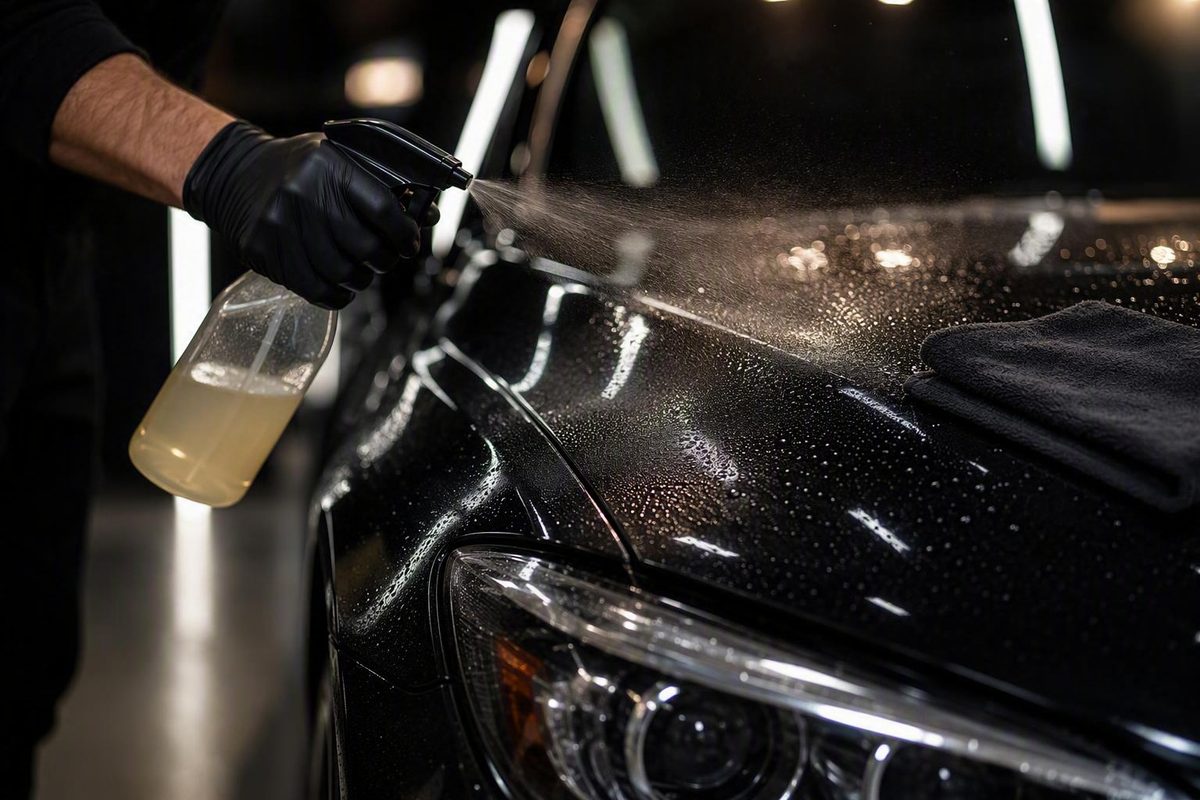
Spray-on carnauba wax is best treated as a quick maintenance product: apply a small amount to clean paint, spread it with microfiber and buff away the residue. It is a convenient way to refresh gloss and water behavior after a wash, but the word carnauba does not mean every spray has the same formula, application method or expected service life.
Some sprays are carnauba-infused blends rather than traditional wax in a spray bottle. For example, Turtle Wax describes ICE Spray Wax as both “carnauba-infused” and made with its Smart Shield technology. Read the exact bottle instead of assuming that all carnauba sprays behave like carnauba paste wax.
Where spray wax fits
Use it when you want:
- a quick finish after washing;
- a light maintenance layer between more involved waxing sessions;
- a drying aid, if the product specifically permits wet application; or
- an easy-to-spread option that requires less work than paste wax.
Griot’s Garage describes spray waxes as products that can be used during drying or as stand-alone enhancers between major wax applications. It separately recommends thin, even wax coats on a cool surface, which is a sound default unless the chosen label gives different directions (Griot’s Garage).
Do not mistake ordinary spray wax for a waterless wash. A dusty film that the label expressly allows is different from visible road grit, mud or sand. Wash the vehicle first when particles could be dragged across the finish.
Dry application: the safest default workflow
- Read the label. Confirm compatible surfaces, whether to shake the bottle and whether the product permits sun or hot-panel use. Do not copy another brand’s directions.
- Wash and dry the car. If the paint still feels rough after washing, waxing will not remove bonded contamination. Deal with the surface condition separately rather than rubbing harder.
- Work on cool paint where possible. Divide the vehicle into panels so the product cannot sit unattended.
- Mist sparingly. Start with one or two sprays on a panel, or spray the towel if overspray could reach glass, textured trim or a convertible top. Turtle Wax’s directions for its carnauba-infused ICE product specify one or two sprays per exterior panel (Turtle Wax). That quantity is product-specific, not a universal dose.
- Spread with a clean microfiber towel. Use light pressure and cover the panel evenly.
- Buff with a dry side or second towel. Inspect from more than one angle before moving on. If the towel becomes damp or loaded with product, change it.
Heavy application usually creates more residue to remove, not a better result. If the finish smears, first try a fresh, dry towel. Persistent streaks call for less product, a smaller work area or a cooler panel—not harder rubbing.
Wet application: only when the label allows it
A compatible spray wax can combine protection and drying. Mothers, for example, says its Super-Hydro Spray Wax can be used on a wet car as a drying aid and directs users to spray, wipe and buff (Mothers).
For that method:
- Rinse the washed car thoroughly.
- Remove most standing water if the label calls for it.
- Apply the specified amount one panel at a time.
- Dry with a clean towel, flipping or replacing it as it becomes saturated.
- Buff any remaining haze with a separate dry towel.
Do not infer wet-use compatibility merely because the product has a trigger sprayer.
Check the finish before covering the whole car
Avoid applying conventional gloss-enhancing wax to matte or satin paint unless both the vehicle maker and wax label approve it. Keep it off surfaces excluded by the label, and test an inconspicuous area if the trim or finish is unfamiliar.
Recently repainted panels need the body shop or paint-system manufacturer’s approval before waxing. A general hand-wash clearance does not automatically authorize paint protection products; see the separate guide to cleaning a car after body repair.
For future applications, follow the product’s stated interval and inspect the finish after washing. There is no reliable universal schedule for every spray-on carnauba formula, climate and storage pattern. If you want to set a broader routine, use the checkpoints in how often to wax a car.