
Find the Right Waxing Schedule for Your Car
For a conventional waxed daily driver, begin around every 3-4 months. Follow the label, then adjust for storage, climate, mileage, washing and observed condition.
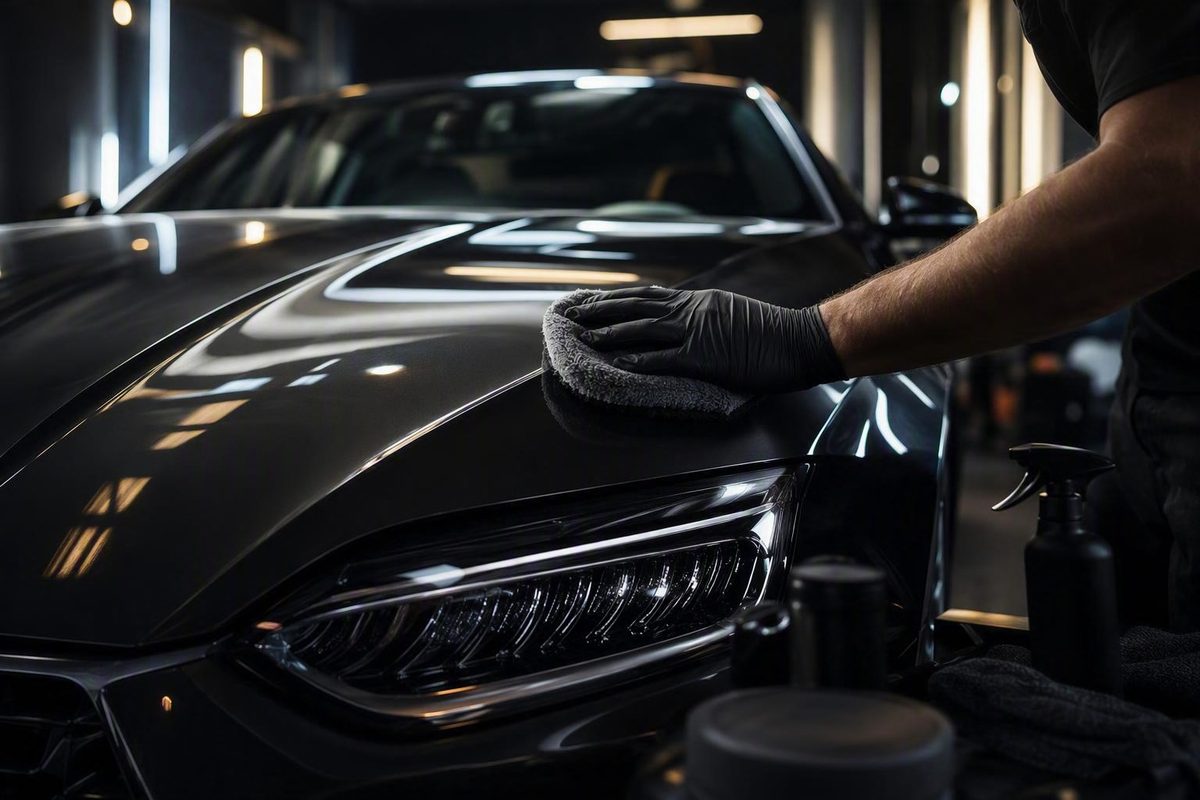
Editorial note: This guide synthesizes practical recommendations from automotive retailers, manufacturers, and detailing businesses rather than standardized independent durability tests. Car Cleaning Zone says its articles draw on hands-on detailing experience, but every product and painted surface should still be maintained according to its specific instructions (about Car Cleaning Zone).
The short answer: start with every three to four months
For a typical daily-driven car, waxing every three to four months is a sensible starting point. A broader range of three to six months appears across general car-care guidance, but neither interval is a guaranteed lifespan. Depending on the product and conditions, some cars may be adequately served by twice-yearly waxing while others may need attention as often as every eight weeks (J.D. Power’s overview of waxing intervals).
The directions on your wax take priority over any generic schedule. Products marketed as paste wax, liquid wax, cleaner wax, hybrid wax, synthetic wax, or ceramic-infused wax can differ in formulation and application requirements. The label may specify preparation, compatible surfaces, operating temperature, curing time, layering, and reapplication timing.
Use this table as an initial schedule, then refine it by inspecting the finish:
| Vehicle and conditions | Starting schedule | Inspection approach |
|---|---|---|
| Typical daily driver in moderate conditions | Every 3–4 months | Check after thorough washes and reassess near the three-month mark |
| Outdoor commuter exposed to strong sun, rain, contaminants, or high mileage | About every 2–3 months | Inspect monthly, but reapply only when the label and finish support it |
| Winter-driven vehicle exposed to sustained road salt and harsh weather | Protect before winter; reassess after about 6–8 weeks of severe exposure | Wash thoroughly when conditions permit and evaluate the finish before adding more wax |
| Garaged, lightly driven weekend car | About twice yearly may be enough | Extend the interval if the label permits and protection still appears to perform |
The daily-driver and garage schedules reflect general guidance that ranges from twice-yearly treatment to every few months (AutoZone’s waxing guidance). The shorter outdoor and severe-exposure intervals are practical inspection points, not promises that wax will expire on a particular date (GP Mobile Car Wash’s exposure-based schedule).
It is important to separate inspection frequency from application frequency. You can check the paint every month or two without waxing it that often. Inspecting after a wash lets you notice changes in water behavior, slickness, gloss, dirt accumulation, and drying effort. If the existing protection still behaves normally and the product does not call for renewal, another full application may be unnecessary.
The basic rule is:
Start at three to four months, follow the product label, inspect after washing, and adjust for the car’s actual exposure.
The four factors that determine your real schedule
A personalized schedule depends on four factors: product instructions, parking and climate, mileage and contaminant exposure, and washing practices.
1. Product instructions
Begin with the container or manufacturer’s technical directions. Confirm:
- Which surfaces are compatible
- Whether the paint must be dry
- The recommended operating conditions
- How much product to apply
- How long it must cure or haze
- Whether another coat is permitted
- When reapplication is recommended
Do not infer longevity solely from words such as “paste,” “liquid,” or “ceramic.” Two liquid products can use different formulations and require different maintenance. A ceramic-infused wax also remains a wax-style maintenance product; the name does not make it equivalent to a ceramic coating.
Application quality affects the result. Dirt and residue can interfere with bonding and even coverage. A hot panel may cause premature drying, while excessive product or incorrect curing can contribute to haze, streaks, difficult removal, or disappointing performance. A calendar cannot compensate for ignoring the application directions.
2. Parking and climate
Outdoor parking usually justifies earlier inspection. Strong sunlight, rain, dust, winter weather, road salt, coastal air, tree sap, and frequent bird activity all increase the demands placed on an exposed finish.
These conditions do not create a precise countdown. “Coastal,” “hot,” or “winter-driven” describes a group of exposures rather than a standardized test. Treat them as reasons to inspect sooner, not proof that every wax will fail by a fixed date.
Shelter works in the other direction. An enclosed or climate-controlled garage reduces direct weather exposure. A carport may limit sunlight and precipitation without excluding humidity, dust, or windblown contamination. Storage therefore helps determine the schedule, but does not establish it on its own.
3. Mileage and contaminant exposure
Driving exposes paint to road film, insects, airborne dirt, spray from other vehicles, and repeated wetting and drying. A high-mileage highway commuter may need attention sooner than a lightly driven weekend car, even if both are garaged overnight.
Look beyond the odometer. Construction zones, salted roads, muddy lanes, industrial fallout, insect-heavy routes, and coastal spray can be more demanding than the same mileage in mild conditions. Parking under trees can introduce sap and organic debris even when the vehicle is rarely driven.
Remove concentrated contamination appropriately rather than waiting for the next scheduled waxing session. A localized deposit does not automatically mean the entire car needs another coat.
4. Washing practices
Frequent washing creates more exposure to detergent and physical contact. Strong cleaners, aggressive scrubbing, dirty equipment, and some automatic-wash processes may shorten the practical maintenance interval, although the supplied guidance does not establish an exact loss rate for a particular wash method.
Use clean equipment, adequate lubrication, and a suitable automotive wash product. Rinse loose grit before touching the paint, then dry with clean materials and controlled pressure. Contaminated wash or drying tools can introduce fine marks through repeated contact (Chemical Guys’ preparation and application guidance).
If you wash weekly, inspect regularly—but do not turn weekly washing into automatic weekly waxing.
Build a record for your own car
Track one product on one vehicle instead of relying entirely on generalized estimates. Record:
- Application date
- Product name and type
- Surface preparation
- Approximate number and type of washes
- Outdoor, coastal, or winter exposure
- Changes in water behavior
- Changes in slickness, gloss, dirt accumulation, and drying effort
- The date and reason you ultimately reapplied
After multiple maintenance cycles, the record can reveal whether your current product and schedule suit the vehicle. That evidence is more useful than repeatedly changing products without noting the results.
Schedules for outdoor parking, winter driving, and garage storage
The following routines translate the general rule into practical scenarios. They remain starting points because most published interval recommendations come from commercial automotive businesses rather than standardized independent durability comparisons.
Typical daily driver in moderate conditions
Begin at every three to four months, then adjust after inspecting clean paint. This interval is commonly presented as a practical rule of thumb for daily-driven cars (GP Mobile Car Wash’s daily-driver guidance).
As the three-month point approaches, wash and dry the car before assessing it. If the finish remains easy to clean and dry, retains its expected slickness and gloss, and shows normal water behavior for that product, you may be able to wait. If several signs have weakened and the label permits reapplication, bring the next session forward.
Outdoor commuter
For a car parked outside and regularly exposed to strong sun, rain, tree debris, bird activity, road salt, or frequent highway mileage, inspect monthly and expect that reapplication may become appropriate around every two to three months.
Monthly inspection does not mean monthly waxing. Wash first and consider several signs together. If the paint is merely dirty or carrying wash residue, another layer of wax is not the first solution.
Inspect the whole vehicle rather than judging it from one panel. Horizontal surfaces collect overhead contamination, while lower doors and rocker areas encounter more road film. Uneven exposure does not necessarily require separate panel-by-panel schedules, but it can make one test area unrepresentative.
Winter-driven vehicle
When possible, apply suitable protection before sustained winter weather begins. Mild working conditions are generally more suitable than trying to prepare cold, salt-covered paint outdoors.
During continuing exposure to road salt, slush, and harsh weather, reassess after approximately six to eight weeks. Commercial seasonal guidance allows for intervals as short as every month or two in severe winter conditions, but these are inspection and maintenance estimates rather than guaranteed expiry dates (Simoniz’s seasonal waxing guidance).
Wash away salt and grime when conditions permit, dry the car, and inspect the finish. If temperatures fall outside the wax’s stated operating range, wait for a suitable environment rather than forcing an application onto cold or contaminated panels.
Garaged weekend car
A vehicle kept indoors, driven lightly, and washed carefully may be adequately served by twice-yearly waxing, provided the product directions support that interval and the finish continues to perform as expected (CarParts.com’s waxing-frequency overview).
Low mileage does not eliminate the need for inspection. Garage dust, occasional rain, cover contact, and infrequent but aggressive washing can still affect the finish. Check the car before a major driving season and after washing rather than applying wax solely because six months have passed.
Is seasonal waxing a good routine?
Seasonal dates can be useful reminders. A spring session can coincide with a post-winter wash, while an autumn application can prepare a vehicle for colder weather.
The seasons should not override the product. A shorter-lived wax should not be expected to last from spring to autumn simply because that schedule is convenient. Conversely, a sheltered car with normally functioning protection may not need another application on the first day of every season.
Use the calendar to prompt inspection. Let the label, exposure, and observed condition determine whether to reapply.
How wax type changes the reapplication interval
“Wax type” can refer to several overlapping attributes:
- Format: paste, liquid, or spray
- Formulation: carnauba, synthetic, hybrid, or ceramic-infused
- Function: finishing wax, cleaner wax, polish-and-wax, or all-in-one
- Protection system: wax, sealant, or ceramic coating
The rows below are not mutually exclusive durability classes.
| Product category or attribute | Approximate maintenance tendency | Often suits | Direction to follow |
|---|---|---|---|
| Traditional carnauba wax | Commonly presented as requiring more frequent renewal | Owners who enjoy regular hands-on maintenance | Follow the product’s own curing and reapplication instructions |
| Liquid format | Easy to spread; published longevity estimates vary widely | Owners wanting straightforward hand or machine application | Do not assume every liquid has the same formulation |
| Paste format | Some products are marketed for longer intervals than some liquids | Owners comfortable with slower application | Check whether it is a finishing wax or contains cleaners or polish |
| Hybrid wax | Combines natural wax with synthetic components | Owners seeking a blend of application and appearance characteristics | Treat “hybrid” as a formulation description, not a lifespan |
| Synthetic paint sealant | Generally positioned for longer intervals than traditional wax | Owners who prefer less frequent renewal | Follow sealant-specific preparation and curing directions |
| Ceramic-infused wax | Wax-style maintenance product using ceramic-associated ingredients | Owners wanting a compatible topper or easy application | Do not treat it as equivalent to a ceramic coating |
| Ceramic coating | Separate protection system with specialized maintenance | Owners prepared to follow coating-specific upkeep | Use the coating maker’s maintenance and compatibility guidance |
Carnauba and liquid wax
Carnauba and some liquid waxes are generally presented as shorter-lived options, but published estimates vary and are not independent service-life guarantees. One manufacturer’s commercial guide estimates one to two months for liquid wax and about one month for carnauba, while still emphasizing that formulation and conditions affect the result (Stoner Car Care’s wax comparison).
“Liquid” mainly describes how a product is delivered. One liquid may be intended for quick, frequent use, while another may contain synthetic components and carry a longer claimed interval. Read the exact label rather than assigning durability by consistency.
Paste wax
Paste wax is sometimes marketed as longer-lasting than liquid wax, but thickness in the container does not guarantee a longer-lasting film on the car. Formulation, preparation, applied amount, curing, weather, and washing all influence performance.
Identify the product’s function as well as its format. Some pastes are nonabrasive finishing waxes; others combine wax with cleaners or polishing ingredients. That distinction matters if you plan to use the product frequently.
Hybrid wax
Hybrid waxes generally combine natural wax with synthetic ingredients. They may be formulated to blend appearance, application characteristics, and durability, but “hybrid” does not establish a shared interval across brands.
Check whether the specific product is also described as a cleaner wax, all-in-one, ceramic wax, or polish-and-wax. Those terms indicate functions beyond simple finishing protection.
Paint sealant
A synthetic paint sealant is a separate product category, although casual descriptions sometimes blur the distinction between synthetic wax and sealant. Sealants are generally positioned for longer maintenance intervals than traditional wax, but no fixed service life applies to every formulation.
Do not assume that putting wax over a sealant must extend durability. It may change gloss, slickness, or water behavior, but the supplied evidence does not quantify a durability benefit. Follow the compatibility and curing instructions for both products.
Ceramic coating
A ceramic coating is a separate protection system with different preparation and maintenance requirements. Ceramic-infused wax is not an interchangeable substitute.
If the vehicle is coated, do not automatically impose a traditional waxing schedule. Confirm which shampoos, decontamination methods, drying aids, and toppers the coating manufacturer or installer permits.
How to tell whether the car actually needs more wax
Do not judge wax solely by elapsed time or by pouring water onto a dirty panel. Use a repeatable sequence.
1. Wash and rinse thoroughly
Remove loose dirt, road film, and ordinary wash residue. A dirty surface can make water cling, spread unevenly, or drain slowly even when protection remains.
Rinse thoroughly because residual surfactants can alter surface tension. If you assess water behavior before the final rinse, you may be evaluating the wash solution rather than the protective layer.
2. Dry the paint
Unless the product specifies otherwise, dry the vehicle with clean, suitable towels or an appropriate touchless method. This makes gloss and surface condition easier to evaluate without mineral-rich water obscuring the finish.
Note whether drying has become more difficult than it was after the wax was applied. Treat that as one clue, not proof of failure.
3. Reassess water behavior
Tight beading or rapid water movement may indicate that a hydrophobic product is still influencing the surface. Weaker beading, increased sheeting, pooling, or slower release can suggest declining performance.
Poor beading does not prove that every trace of wax is gone. Dirt, traffic film, detergent residue, bonded contamination, sealants, and coatings can alter water behavior. Although commercial guides often use a bead test, the result should be combined with other observations (Craig Road Car Wash’s wax-assessment method).
4. Compare slickness and gloss
On clean, dry paint, compare slickness with the vehicle’s own post-application baseline or use the product maker’s recommended inspection method. A noticeable decline can support the case for renewal.
Gloss is also useful as a comparison, but wax is not its only influence. Wash residue, mineral deposits, oxidation, scratches, and previous polishing can all change the appearance.
5. Consider dirt accumulation and drying effort
If ordinary dirt begins adhering more quickly or washing no longer releases it as easily, protection may be weakening. Greater drying effort can provide another clue if water no longer moves from the panel in the usual way.
Compare the vehicle with its own recent behavior rather than with another product demonstrated online.
6. Check for bonded contamination
Paint that feels rough or gritty after a thorough wash often points to bonded contamination rather than a simple need for more wax. Adding wax over that texture does not remove the particles.
If a tactile check is necessary, use very light contact only on clean paint and follow the decontamination product’s directions. Clay or another compatible method may remove embedded material, but unnecessary or poorly lubricated claying can mark the finish (Chemical Guys’ decontamination guidance).
7. Identify defects wax will not correct
It may temporarily alter how a minor defect looks, but it is not paint correction.
Some defects may call for suitable polishing; damaged or failing paint may need professional assessment. Do not keep adding wax in an attempt to repair a problem outside the product’s function.
A compact yes-or-no checklist
Before reapplying, ask:
- Has the label’s maintenance point arrived?
- Has the car faced unusually severe outdoor, winter, coastal, or high-mileage exposure?
- Have I washed, rinsed, and dried it before judging the finish?
- Has water behavior changed meaningfully from the post-application baseline?
- Have slickness or gloss declined?
- Is dirt accumulating faster or drying becoming harder?
- Does roughness suggest bonded contamination?
- Am I dealing with paint defects rather than worn wax?
If elapsed time, exposure, and several performance signs align—and contamination or paint defects do not better explain the symptoms—reapplication is reasonable. If only one ambiguous sign appears, investigate before adding more product.
Can you wax a car too often?
A true nonabrasive finishing wax differs from cleaner wax, wax-and-polish, all-in-one products, compounds, and abrasive application systems. You cannot judge whether a frequent schedule is appropriate until you know which product and pad you are using.
The supplied guidance does not show that repeatedly applying a true nonabrasive wax, by itself, removes sound clear coat. That does not make unlimited waxing useful or risk-free. Every session requires washing, wiping, and buffing; contaminated paint, applicators, or towels can introduce fine scratches through repeated contact.
Cleaner waxes require more caution because they may use chemical cleaners, mechanical abrasives, or both. A machine pad may also cut paint even when the product itself is described as nonabrasive. Forum guidance draws this distinction but is based largely on practical discussion rather than controlled testing (AutoGeek’s discussion of finishing and cleaner waxes).
Before adopting a frequent schedule, look for terms such as:
- Cleaner
- Polish
- Correction
- Compound
- Abrasive
- Paint restorer
- Swirl remover
- All-in-one
- Cut or cutting
- One-step
A manufacturer also specifically identifies one of its wax-and-polish products as abrasive and advises against treating it like an ordinary finishing wax (Simoniz’s product distinction).
Is waxing after every wash useful?
For most cars, no. Waxing after every wash is generally unnecessary when the existing protection continues to function. Another full application may consume product and increase paint contact without a demonstrated proportional benefit.
A compatible maintenance spray may refresh gloss or slickness between full applications. It should not automatically be considered equivalent to a complete paste or liquid wax treatment.
What about multiple coats?
Follow the product’s instructions for layering and cure time.
The practical goal is not the maximum number of coats. It is a clean surface, compatible product, thin and even application, correct cure, and careful removal.
Prepare and apply wax without creating avoidable problems
Good preparation does not require a full correction detail every time. The objective is to create a clean, compatible surface without unnecessary abrasion.
1. Wash thoroughly
Rinse loose dirt before making contact, then wash with clean equipment, adequate lubrication, and a suitable automotive cleaning product. Use a spray pattern and distance appropriate for painted surfaces. For wash-stage equipment considerations, see Car Cleaning Zone’s guide to spray nozzles, foam, and vehicle-washing patterns.
Pay particular attention to lower panels and areas behind the wheels, where road film collects. Rinse away shampoo and cleaner residue before continuing.
2. Inspect for bonded contamination
After washing, assess whether the paint still feels rough. If it is smooth and clean, clay treatment is not automatically required.
If bonded contamination remains, use a compatible decontamination method with appropriate lubrication and technique. Clay can remove embedded material, but it does not remove a scratch extending into the paint.
3. Separate decontamination from correction
Decontamination removes material attached to the surface. Polishing changes the surface to reduce certain correctable defects. Wax provides a finishing layer and appearance enhancement; it does not replace either process.
If the paint has visible scratches, swirls, oxidation, or haze, decide whether correction is appropriate before waxing. Do not undertake aggressive correction casually on damaged, repainted, or unfamiliar paint.
4. Dry unless the product permits wet application
Most conventional paste and liquid waxes are intended for clean, dry paint. Products specifically designed for wet application or use as drying aids are exceptions.
Dry around mirrors, badges, handles, and trim so trapped water does not run across the panel during application. Follow the exact product directions rather than transferring wet-use instructions from one wax to another.
5. Work on cool paint in shade
The panel should be cool to the touch and outside direct sunlight. AutoZone gives a general application range of 59–77°F, while another commercial guide broadens that recommendation to approximately 60–80°F; the individual label remains controlling (AutoZone’s application-condition guidance).
Shade alone does not guarantee a cool surface. A vehicle recently moved out of sunlight may remain hot, particularly if it has dark paint. Let the panels cool before beginning.
6. Apply a thin, even coat
Use a clean, product-compatible applicator and work section by section. This helps maintain even coverage and makes curing time easier to manage.
Excess product can be harder to remove and may leave haze, streaks, or residue. Apply only the amount directed and allow it to cure or haze for the manufacturer’s specified period.
7. Buff with clean microfiber towels
Use clean, soft microfiber towels intended for painted surfaces. Fold each towel to provide several clean faces and replace it when it becomes loaded with residue.
Use light, controlled pressure. If removal requires force, stop and check whether the panel was too hot, too much product was applied, the wax cured incorrectly, or the manufacturer specifies another removal method.
8. Respect surface-specific restrictions
Do not assume a conventional gloss-enhancing wax is compatible with:
- Matte or satin paint
- Textured plastic trim
- Vinyl wraps
- Paint-protection film
- Rubber seals
- Freshly repainted panels
- Damaged or peeling paint
- A coating with its own maintenance system
Commercial application guidance specifically warns that conventional wax may stain rubber, plastic trim, and textured surfaces (Jennychem’s application guidance). For matte finishes, wraps, film, coatings, or recently repaired paint, defer to the surface manufacturer, installer, coating maker, or paint shop. Those instructions override a generic waxing guide.
When spray wax, sealant, or ceramic coating makes more sense
Traditional wax is not the only maintenance option. The appropriate choice depends on what is already on the car, the vehicle’s exposure, and how much specialized upkeep you are willing to perform.
Choose traditional wax when you enjoy regular maintenance
Traditional wax suits owners who are comfortable inspecting and reapplying protection several times per year. It can also appeal to enthusiasts who enjoy hands-on application and want to choose products partly for appearance and feel.
The tradeoff is maintenance frequency. If repeated full applications become burdensome, another category may fit your routine better.
Use compatible spray wax between full applications
A spray wax may refresh gloss, slickness, or water behavior when the underlying protection still appears functional. It can be convenient after a maintenance wash.
Do not assume every spray supplies protection equivalent to a full paste or liquid application. Formulations differ, and some sprays are primarily maintenance aids. Confirm compatibility with any wax, sealant, coating, wrap, or film already on the vehicle.
Never use a spray product as a substitute for washing. Applying it over dirt increases paint contact with contamination.
Consider paint sealant for longer maintenance intervals
Synthetic paint sealant is generally positioned as a longer-lasting alternative to traditional wax. It may suit an outdoor commuter or an owner who wants fewer full applications.
That positioning is not a fixed service-life promise. Preparation, curing, exposure, washing, and formulation still determine performance. Follow the sealant’s directions rather than transferring a wax schedule to it.
Before adding wax over a sealant, identify the purpose. A compatible combination may change appearance or slickness, but it should not be assumed to provide a proven durability increase.
Treat ceramic coating as a separate maintenance system
Ceramic coatings generally call for coating-compatible washing, decontamination, and topper products rather than routine traditional waxing. Owners should follow the coating manufacturer’s or installer’s instructions before adding wax, sealant, or another maintenance layer.
Do not confuse:
- A ceramic coating
- A ceramic-infused wax
- A ceramic spray sealant
- A coating-maintenance topper
These products may share marketing language without sharing preparation, bonding, durability, or upkeep requirements.
A simple selection framework
Choose by asking four questions:
-
What is already protecting the car? Identify whether the surface is bare, waxed, sealed, coated, wrapped, or covered by paint-protection film.
-
How much maintenance do you want? Traditional wax suits regular hands-on care. Sealant is generally positioned for longer intervals. A coating requires compatible upkeep rather than no maintenance.
-
How severe is the exposure? Outdoor parking, heavy mileage, winter salt, coastal conditions, and frequent contamination favor a system you can maintain consistently.
-
Will you follow the specific directions? A product is a poor fit if its preparation, cure, or maintenance requirements do not suit your situation.
No category needs to be declared universally superior. Choose a compatible routine you can execute correctly and evaluate consistently.
Frequently asked questions
Should I wax my car after every wash?
Usually not. Waxing after every wash is unnecessary for most vehicles when the existing protection still behaves normally. Inspecting after a wash is useful; automatically applying another full coat is not.
If you want to refresh gloss or slickness, consider a compatible spray wax or maintenance product. Do not assume it provides the same result as a complete paste or liquid application.
How often should I wax a car that is parked outside?
Inspect it monthly and expect that full reapplication may become appropriate about every two to three months. Severe outdoor, winter, coastal, contaminant, or high-mileage exposure can move the practical interval toward approximately six to twelve weeks (Jennychem’s exposure-based estimates).
These are starting points, not guaranteed expiry periods. Wash the car, assess several signs, and follow the product label before reapplying.
Does poor water beading always mean the wax is gone?
No. Poor beading can suggest declining hydrophobic performance, but it does not prove that all wax has disappeared. Dirt, road film, wash residue, bonded contamination, sealants, coatings, and the product’s normal sheeting behavior can all affect the result.
Wash and rinse thoroughly before testing. Then consider water behavior alongside slickness, gloss, drying effort, elapsed time, exposure, and the product directions.
Can waxing too often damage the clear coat?
Frequent use of a true nonabrasive finishing wax is not the same as repeatedly polishing paint, and the supplied evidence does not show that the wax itself removes sound clear coat merely because it is applied often.
The risk depends on the full process. Cleaner waxes, all-in-one products, polishes, compounds, abrasive pads, and aggressive machine use may cut the surface. Dirty applicators and towels may also introduce fine marks through repeated contact. Check the label before assuming a product is nonabrasive.
Should I wax a ceramic-coated car?
Not by default. Follow the coating manufacturer’s or installer’s maintenance instructions. Ceramic coatings generally use compatible shampoos, decontamination products, and designated toppers rather than routine traditional wax.
Confirm compatibility before applying any wax, sealant, ceramic spray, or maintenance layer.
For a conventional waxed daily driver, the repeatable rule remains simple: begin around every three to four months, follow the label, and adjust for storage, climate, mileage, washing, and observed condition. Wash before judging the finish, consider several signals together, and distinguish nonabrasive finishing wax from cleaner wax, polish, sealant, and ceramic coating.