
Plan for Months of Protection, Then Check Before Reapplying
Find the typical lifespan of car paint sealants, compare two six-month product claims, and use a clean-paint check to decide when to reapply protection.
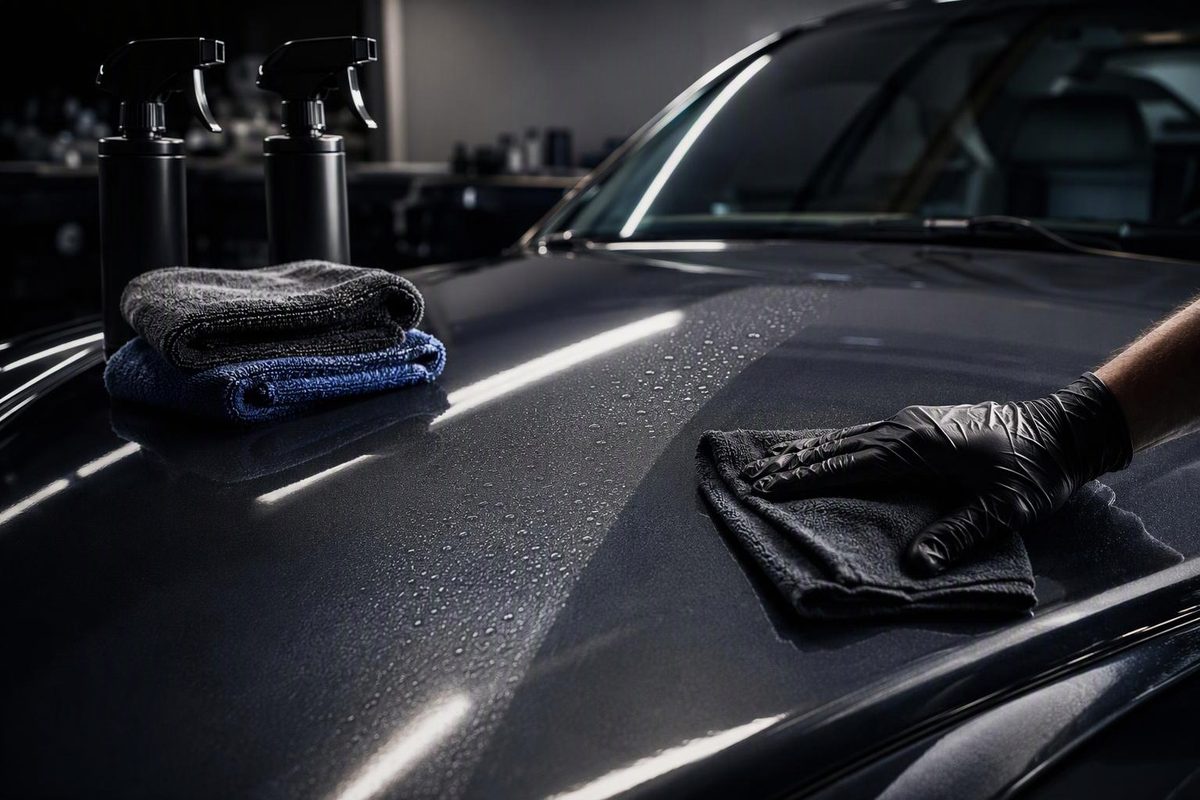
Car paint sealants commonly last about 3–6 months. Treat that as a planning range, not a guaranteed replacement date: the formula, application and maintenance all matter. Detailing retailer Detailed Image gives this range in its paint-protection guide, while SONAX and Gtechniq advertise the particular sealants discussed below with up to six months of durability.
A manageable routine is to record the application date, watch performance during maintenance washes and set an inspection reminder at around three months. That reminder is an editorial planning suggestion, not a manufacturer-mandated replacement interval. Follow the product’s own maintenance directions if they call for earlier attention.
Choose your wash-check results and product instructions to decide whether to inspect or reapply.
Sealant Renewal Check
No renewal indicated by this check
Performance remains satisfactory after suitable washing. Continue checking during maintenance washes; a calendar reminder alone does not require stripping and resealing.
This check cannot measure remaining sealant or predict months left. Weak beading alone does not prove complete removal.
Sources: Detailed Image sealant guide and Rodney Tatum’s strip-wash discussion; SONAX PolymerNetShield and Gtechniq C2 Version 4 directions. General range: 3–6 months; both product claims: up to 6 months.
Six Months Is a Product Claim, Not a Universal Lifespan
The useful distinction is between a general planning range and the claim for the bottle you actually used. A spray bottle is not automatically short-lived, and the word “ceramic” does not automatically mean years of protection.
| Product Example | Manufacturer’s Claim | Practical Meaning |
|---|---|---|
| SONAX PROFILINE PolymerNetShield | Up to 6 months | A months-long paint sealant claim. |
| Gtechniq C2 Ceramic Sealant, Version 4 | Up to 6 months | A ceramic spray sealant with a months-long claim. |
These are SONAX’s and Gtechniq’s published claims as of October 2026, not results from a comparative test. “Up to” describes an advertised upper estimate, not a promise that every application will reach it.
The matching six-month claims also do not show that these products perform identically. The draft’s sources provide no head-to-head durability measurement under the same preparation, weather and washing conditions. There is therefore no supported basis here for naming either one the longer-lasting sealant.
Match the claim to the exact product and version. The Gtechniq example is C2 Ceramic Sealant, Version 4; its stated lifespan should not be transferred to every Gtechniq product or every product marketed as ceramic. Likewise, PolymerNetShield’s claim is not a lifespan for the entire SONAX range.
If you are comparing a sealant with a multi-year coating, consider the different preparation and upkeep requirements in our DIY ceramic coating kit checklist. The two sealants above do not establish the durability of a separate coating system.
Exposure and Washing Can Shorten the Useful Interval
Gtechniq says C2’s performance depends on exposure and washing frequency, recommends hand washing for longevity, and warns that harsh chemicals may strip the sealant prematurely. These are Gtechniq C2 instructions, rather than quantified test results for all paint sealants.
That supports checking a heavily exposed car more frequently than one kept sheltered. It does not support subtracting a fixed number of months for outdoor parking, a particular wash frequency or one use of a strong cleaner. The sources do not supply those figures.
Use your maintenance history to decide when to inspect, not to calculate an unsupported expiry date. If the car’s exposure or cleaning routine changes, check the protection at the next suitable wash rather than assuming the original calendar estimate still describes its condition.
For C2, hand washing is the manufacturer’s stated longevity recommendation. That does not mean every hand wash preserves every sealant equally: the product’s warning about harsh chemicals still applies. Conversely, these sources do not establish a precise durability penalty for any other wash method.
The practical question is whether the sealant still performs satisfactorily after normal cleaning. Time since application supplies context. It cannot account for every difference in use, and it should not override an explicit instruction for the product you applied.
Application Directions Differ Between These Two Sealants
Start with clean paint and follow the exact instructions. Do not transfer one product’s wipe-off timing or wet-surface permission to another simply because both are called sealants.
SONAX PolymerNetShield: Apply to clean, dry paint, work in small areas and buff to a streak-free finish. Do not use it on hot surfaces or allow it to dry. These requirements come from the SONAX directions.
Gtechniq C2: Shake the product, wear gloves, avoid hot surfaces and direct sunlight, wipe on in small sections with a clean microfiber cloth, then buff with a second dry towel. It also permits use as a drying aid on wet paint, according to the Gtechniq directions.
The wet-paint option is specific to C2 in this comparison. It is not permission to apply PolymerNetShield to a wet panel; SONAX specifies clean, dry paint. Both products call for attention to surface conditions, but their application routes are not interchangeable.
Check any specified cure period before exposing fresh protection to rain or washing. There is no single application or cure rule for every sealant, and the sources used here do not establish one universal waiting time. Use the directions for the exact product rather than borrowing a time from another bottle.
If the original application did not follow those directions, the advertised maximum is a poor basis for a precise forecast. The available evidence does not tell us how many months an application mistake costs. Check the result after suitable cleaning and correct the process when renewing protection.
Check Water Behavior After Washing, Not on Dirty Paint
Water behavior is a useful maintenance signal, but it is not a measurement of how much sealant remains. Detailer Rodney Tatum explains that loss of beading does not establish complete removal, and that poorly rinsed residues from strong cleaners or strip-wash soaps can affect hydrophobic behavior in Detailed Image’s strip-wash discussion.
That distinction prevents two misleading conclusions: weak beading does not prove that all protection has disappeared, and a change in water behavior does not tell you the percentage of sealant left. The sources provide no conversion from bead shape or runoff speed to remaining months of protection.
Use a repeatable check rather than judging one dirty patch:
- Wash normally. Use a car shampoo suitable for the protection, diluted according to its label, with a clean wash mitt. For this check, avoid a shampoo that adds wax or sealant: you want to observe the existing protection, not a fresh layer.
- Rinse thoroughly before adding protection. Observe whether water beads or drains away less readily than after the original application. Check several panels rather than one patch.
- Stop if performance remains satisfactory. A calendar reminder is a reason to inspect, not automatically to strip and reseal.
- Reapply if performance stays noticeably weaker after washing, or when the product’s directions call for it. Prepare the surface as instructed rather than covering visible dirt or residue.
If you have already used a protection-adding shampoo or drying aid, do not treat the resulting water behavior as an isolated test of the older sealant. You have introduced another product into the observation. That wash can still serve its maintenance purpose, but it cannot answer the narrower question as cleanly.
Compare with what you observed after the original application where possible. Without that reference, describe the result as uncertain rather than declaring the sealant exhausted. A simple application note can record the date, exact product and whether water behavior after cleaning was satisfactory; it need not pretend to measure film thickness or remaining lifespan.
Weak Beading Alone Does Not Call for Stripping
Do not reach for strong cleaners, clay or polish solely to investigate weak beading. Those steps can change the protection you are trying to assess. A maintenance check should begin with suitable washing and thorough rinsing, not with an attempt to remove the existing layer.
If bonded contamination genuinely needs removal, use our clay mitt guide to decide whether mechanical decontamination is warranted, then plan to renew protection as needed. That is a surface-preparation decision, separate from using the calendar to judge sealant age.
If performance improves after normal washing and rinsing, there is no reason from that observation alone to declare the old sealant completely gone. If it remains noticeably weaker across the panels you checked, renewal is a reasonable maintenance choice. Neither outcome supplies a laboratory measurement of the protection remaining.
Also separate uncertainty from failure. If the car has not had a suitable wash, or a freshly added product obscures the comparison, the answer is “check again under suitable conditions,” not “the sealant lasted only this long.” This keeps an observation about the whole surface from becoming an unsupported verdict about one product.
Use Three Months as an Inspection Point, Not an Expiry Date
A three-month reminder gives you a practical point within the general 3–6-month range to review the surface. It is not evidence that protection stops at three months, and the advertised six-month maximum is not a reason to ignore weaker performance before then.
| Situation | Next Action |
|---|---|
| Reminder arrives; clean-paint performance is satisfactory | Keep monitoring during washes. |
| Paint is dirty or the rinse was incomplete | Wash and rinse before judging. |
| Performance stays weaker after suitable washing | Prepare and renew as directed. |
| Product instructions call for maintenance | Follow those instructions. |
At the advertised upper end, inspect rather than assuming either complete failure or guaranteed continued performance. A satisfactory wash check is useful, but it does not establish how much longer the sealant will last. The sources offer no supported extension in weeks or months beyond the claim.
For a car with an unknown application date, start with the product information you can identify and a suitable wash check. Do not manufacture an age estimate from beading alone. If you decide to renew, recording that application gives the next inspection a known starting point.
The decision is therefore specific: plan for roughly 3–6 months, check on clean paint, and reapply according to persistent performance loss or the product’s instructions. Use the exact product claim to set expectations, not to promise a replacement date that washing, exposure and application conditions may not support.