
What Determines Whether Your PPF Lasts Five Years or Approaches Ten
About five to ten years remains the most defensible practical estimate in commercial guidance, not an automatic replacement deadline.
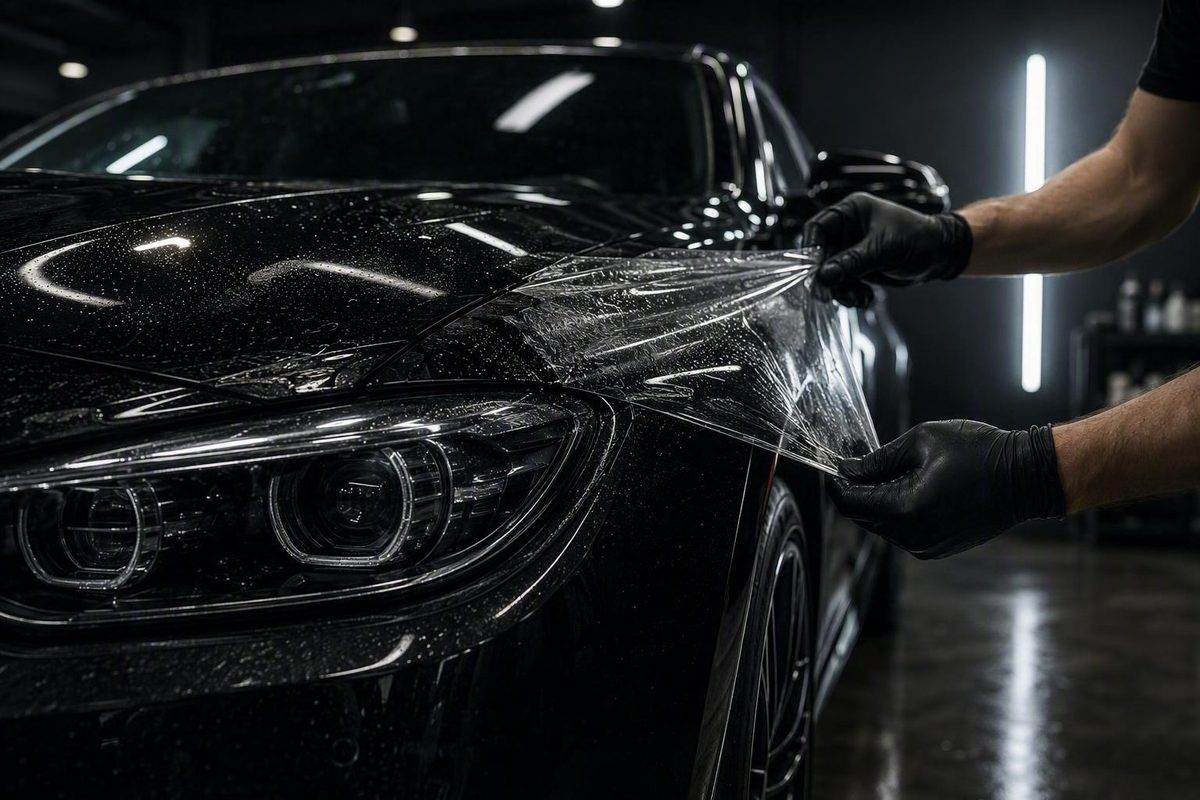
The short answer: expect roughly 5–10 years, not a fixed expiration date
Paint protection film typically lasts about 5–10 years from installation when the product is suitable, the surface is prepared correctly, the film is applied well, and the owner follows compatible care practices. That estimate appears throughout commercial guidance; Aaron’s Automotive Detailing, for example, gives a five-to-ten-year range dependent on film quality, installation, driving conditions, and maintenance.
Manufacturers make similar qualified claims. CovrGard places its premium film around 7–10 years or more, depending on care and environmental conditions, while also identifying installation, UV exposure, road use, and maintenance as important variables in its lifespan guidance.
These figures are best treated as a commercial planning range, not a scientifically established expiration date. The available sources come predominantly from businesses that manufacture, install, sell, or maintain PPF. They do not provide independent, long-term field studies proving that every installation should last five to ten years.
The range also does not promise that a film will remain equally clear, attractive, firmly adhered, and protective for its entire life. Strong sunlight, prolonged heat, repeated temperature changes, abrasive roads, persistent contamination, unsuitable chemicals, rough washing, or installation problems may produce deterioration sooner. Quality film on a carefully prepared, garage-kept vehicle with gentle maintenance has a better chance of approaching the upper end.
Premium products are often positioned toward that upper end and may carry longer warranties. Neither the word “premium” nor the warranty term proves that a film will look unchanged throughout the stated period. Product construction, installation, exposure, use, and care still matter.
Count the film’s age from its installation date and use that date as context for inspections. Once an installation is several years old, condition becomes more informative than the calendar. Isolated reports of films lasting beyond a decade—or failing unusually early—should not be treated as typical outcomes.
The practical question is therefore not simply, “How old is the PPF?” It is, “What condition are its surface, edges, adhesive, and damaged areas in now?”
What does it mean for PPF to “last”?
PPF longevity has several possible endpoints. Owners, installers, manufacturers, and warranty documents may use “last” differently, which helps explain why lifespan claims sometimes appear inconsistent.
Evaluate the film across four measures:
- Acceptable appearance. Is it still sufficiently clear, glossy, or evenly matte for the owner’s expectations? Yellowing, staining, haze, accumulated scratches, or texture changes may make film cosmetically unacceptable.
- Intact adhesion. Are the main surfaces, seams, corners, and edges still bonded? Peeling, spreading bubbles, contaminated edges, or suspected adhesive failure may require attention even when the center of a panel looks clear.
- Continued physical protection. Is the film intact enough to remain a sacrificial barrier against the minor road exposure it was designed to face? Cuts, punctures, cracks, severe gouges, and torn sections can compromise coverage locally.
- Warranty eligibility. Is the installation still within the applicable warranty term, and is the specific problem covered under the written conditions? This is a question of contractual coverage, not a direct measurement of physical condition.
These endpoints do not necessarily occur together. An owner may replace it because its appearance is no longer acceptable without claiming that every protective property has disappeared. The supplied evidence does not establish that cosmetic discoloration always means complete loss of physical protection.
The reverse is also possible. Those conditions deserve attention even if the installation still photographs well.
Self-healing behavior provides another condition indicator when the film was designed with that feature. Reduced healing is not, by itself, a complete diagnosis: clarity, adhesion, cracking, cuts, contamination, and the extent of the problem also matter.
It is useful to distinguish three kinds of service life:
- Cosmetic service life ends when the owner no longer accepts the film’s color, clarity, gloss, texture, or visible wear.
- Physical service life ends when damage, cracking, peeling, or adhesion problems prevent acceptable coverage.
- Contractual life ends when warranty coverage expires or the issue falls outside the written terms.
The best replacement rule follows from that distinction: use years since installation to set expectations, but make the decision from current condition. An older installation does not automatically need replacement, and a newer one should not be ignored if it is bubbling, lifting, cracking, or deeply damaged.
The factors that move PPF toward five years or toward ten
PPF lifespan is shaped by four broad groups of variables: product and installation, environmental exposure, vehicle use, and maintenance. No single favorable practice guarantees the upper end of the range, and the available evidence does not support assigning an exact number of additional years to garage storage, professional installation, a coating, or a particular wash routine.
| Factor | Why it matters | Can the owner control it? | Appropriate response |
|---|---|---|---|
| Film quality and specification | Adhesive, topcoat, construction, finish, chemical compatibility, and self-healing behavior vary by product. | Before purchase | Record the exact product and compare its data, care instructions, and warranty. |
| Surface preparation | Residue, contamination, damaged paint, or an unsuitable surface can interfere with a clean bond. | Partly | Ask how the paint will be inspected and prepared, especially on repaired panels. |
| Installer workmanship | Alignment, stretching, contamination control, and edge treatment affect appearance and adhesion. | Partly | Choose an experienced installer and inspect the work after the stated curing period. |
| UV and prolonged heat | Sustained exposure can accelerate visible aging and changes in clarity or elasticity. | Partly | Use covered or shaded parking when practical and inspect outdoor-kept film more often. |
| Extreme temperatures and cycling | Repeated environmental stress can challenge the film, adhesive, seams, and edges. | Partly | Follow product-specific care instructions and monitor complex curves and leading edges. |
| Coastal air and winter road chemicals | Salt and road treatments increase contamination and cleaning demands. | Partly | Rinse contamination with film-compatible methods rather than allowing buildup. |
| Bird droppings, insects, sap, and tar | Persistent deposits may stain or mark the top surface. | Mostly | Soften and remove them promptly without scraping or strong solvents. |
| High mileage and road debris | More road time creates more opportunities for impacts and contamination. | Partly | Inspect high-impact panels frequently and address cuts or tears early. |
| Gravel, construction, off-road, or track use | Repeated abrasive exposure can produce concentrated panel damage. | Often | Inspect the affected areas and seek an assessment when damage is deep or extensive. |
| Wash technique | Abrasive tools, harsh chemicals, and concentrated spray at an edge can damage the surface or bond. | Yes | Use compatible shampoo, clean microfiber materials, light pressure, and gentle drying. |
| Product compatibility | Some cleaners, solvents, waxes, sealants, and coatings may be unsuitable for a particular topcoat. | Yes | Use products permitted by the film manufacturer or installer. |
| Early inspection | Small edge or surface changes may spread or collect contamination if ignored. | Yes | Check edges, seams, bubbles, tears, and discoloration during washing. |
Product and installation
“Premium” is not a complete specification. Films sold under the same broad marketing description may have different topcoats, adhesives, finishes, thicknesses, activation conditions, care requirements, and warranty terms. Obtain the complete product and series name rather than accepting “premium PPF” as sufficient documentation.
Installation matters because film must conform to curves, openings, seams, and painted edges while maintaining a clean bond. Careful preparation and correct application reduce avoidable risks, but professional installation cannot prevent every future impact, contaminant stain, edge problem, or material defect.
Commercial guidance consistently identifies product quality, installation, environment, driving conditions, and maintenance as directional influences. It also identifies strong UV exposure, temperature extremes, gravel roads, construction areas, and coastal salt air as conditions associated with faster wear.
Environmental exposure
Hot and sunny conditions increase UV and thermal exposure. Coastal environments add salt-laden air, while snowy regions may add road salt, deicing chemicals, grit, and frequent dirty spray.
These are risk factors, not countdown formulas. The evidence does not justify saying that a particular climate subtracts a set number of years or that garage storage adds a specific amount. Exposure varies with parking, mileage, season, shade, wash practices, and which panels are covered.
Vehicle use
A low-mileage weekend car and a heavily used commuter do not place the same demands on film. Gravel, off-road routes, construction zones, salted highways, and track use may concentrate damage on bumpers, mirror caps, rocker panels, wheel arches, and leading edges.
PPF is sacrificial. A cut or gouged section may indicate that the film absorbed wear that otherwise could have reached the finish, but the damaged area still needs inspection. Repeated abrasive use without checking the film can allow a localized problem to spread.
Maintenance
Good maintenance cannot stop aging, but it can reduce avoidable stress. The priorities are simple:
- Wash with compatible products and nonabrasive materials.
- Remove persistent contaminants gently and promptly.
- Avoid strong solvents and aggressive scrubbing.
- Keep concentrated high-pressure water away from edges and seams.
- Inspect the film when it is clean and well lit.
- Seek help when lifting, bubbling, cloudiness, or deep damage persists.
More frequent washing is not automatically better if every wash uses contaminated towels, rough brushes, unsuitable chemicals, or excessive pressure.
Real-world scenarios: garage-kept car, outdoor daily driver, and harsh-use vehicle
Parking, climate, and driving habits should change expectations directionally, not produce unsupported vehicle-specific promises.
Garage-kept, gently driven vehicle
Consider a vehicle with quality film that is driven moderately on paved roads, stored in a garage, and washed with compatible products. Reduced sunlight, heat, airborne contamination, and road exposure make the upper end of the general lifespan estimate more plausible.
That does not guarantee ten years. Garage-kept vehicles can still encounter stone impacts, leaks, humidity, chemical contamination, wash damage, or installation defects. The advantage is reduced cumulative exposure, not immunity from aging.
Occasional-use vehicles still need inspection. Long periods between washes may allow sap, insects, water deposits, or edge changes to remain unnoticed.
Outdoor-parked daily driver
An outdoor daily driver faces sustained sun, temperature changes, precipitation, dust, organic contamination, road grime, and frequent debris exposure. Visible aging may therefore appear sooner than on an otherwise comparable garage-kept vehicle.
The response should be closer observation rather than an arbitrary early replacement date. Remove contamination before it remains on a warm surface for extended periods, inspect exposed edges and horizontal panels, and compare clarity over time.
Some installers publish location-specific estimates based on local experience. Dynamic Detailing, for example, discusses sunlight, heat, hard water, contamination, driving frequency, and garage storage while acknowledging a broad real-world lifespan range. Such reports should not be converted into universal regional forecasts.
Harsh-use vehicle
A vehicle regularly driven on gravel, construction routes, off-road trails, salted roads, or a track may develop concentrated impact damage even while most of the installation remains clear and securely attached.
One damaged section does not prove that every covered panel has reached the end of its life. Ask the installer to assess:
- Whether the damage penetrates the film or exposes paint
- Whether the affected section can be removed separately
- Whether adjacent film has aged enough to create a visible mismatch
- Whether replacing the section would alter seams or edges
- Whether the same film and finish remain available
- Whether nearby panels show broader deterioration
Product availability, installation age, panel boundaries, and appearance expectations should determine the scope of work.
Climate changes risk, not the calendar
Hot, sunny, coastal, and snowy climates introduce different stresses. Strong sun and heat increase UV and thermal exposure; coastal air brings salt; and winter driving can expose film to deicing chemicals and grit.
The available commercial evidence identifies these exposures as risks but does not establish dependable regional lifespan adjustments. Actual parking, annual mileage, road type, washing, and contamination can matter more than the location on a registration document.
Does premium or self-healing PPF last longer?
Commercial sources often position premium and self-healing films near the upper end of claimed lifespan ranges. That is plausible when a more capable topcoat helps preserve acceptable appearance, but the supplied material does not include independent head-to-head testing proving that every premium film retains adhesion or physical protection longer than every standard product.
Self-healing generally describes a topcoat response. Under conditions approved for the specific product, warmth can reduce the appearance of light swirls and minor surface scratches. An installer’s comparison describes an elastomeric topcoat intended for light abrasions rather than deep damage.
By reducing visible light marks, self-healing may help film remain cosmetically acceptable for longer. That does not prove that the adhesive underneath lasts longer or that the film retains its physical integrity for additional years. Appearance, adhesion, and physical condition remain separate measures.
Self-healing PPF should not be expected to repair:
- Deep scratches
- Cuts or slices
- Punctures
- Gouges
- Severe rock impacts
- Burns
- Chemical etching
- Tears
- Collision damage
A deep mark requires inspection rather than an attempt to activate healing with improvised heat.
Self-healing capability is not universal, and activation conditions vary. Some products may respond to ambient warmth, warm water, or controlled heat. Follow the exact manufacturer’s instructions instead of assuming all films behave alike.
When comparing products, ask for:
- The complete product and series name
- The gloss, matte, satin, or colored-film specification
- Whether self-healing is included
- Approved cleaning and decontamination products
- Approved conditions for activating self-healing
- The written product-warranty term
- Separate installer workmanship coverage
- Exclusions involving staining, impacts, edges, and maintenance damage
Choose based on documented construction, finish, support, warranty terms, and suitability—not merely the labels “premium” or “self-healing.”
How to tell when PPF needs cleaning, repair, or replacement
Inspect PPF when it is clean, dry, cool, and under diffuse daylight if possible. View the surface from more than one angle so that haze, texture changes, bubbles, and edge lift are easier to see.
| Condition | First response | When to seek assessment |
|---|---|---|
| Surface dirt or light traffic film | Wash gently with compatible shampoo and clean microfiber materials. | If apparent staining or haze remains afterward. |
| Bird droppings, insects, sap, or tar | Soften and remove with a film-approved method; do not scrape. | If a stain, shadow, rough patch, or etching remains. |
| Persistent yellowing or discoloration | Confirm that the change is not removable contamination. | When color remains after appropriate cleaning or affects several panels. |
| Haze or loss of clarity | Clean with approved products and inspect under consistent light. | If cloudiness persists, spreads, or changes the vehicle’s appearance. |
| Small isolated bubble | Photograph it; do not puncture or press it without installer instructions. | If it grows, returns, multiplies, or appears near a lifting edge. |
| Widespread bubbles | Avoid improvised pressing, puncturing, or heating. | Arrange professional assessment promptly. |
| Lifting edge or peeling | Keep concentrated spray and agitation away from it. | Seek advice before dirt and water collect beneath the film. |
| Crack or brittle area | Avoid bending, scraping, or aggressive washing. | Have it assessed because broader aging may be present. |
| Tear, puncture, or deep scratch | Do not expect self-healing to close it. | Check both the film and underlying finish. |
| Reduced self-healing | Verify that the product has the feature and follow its instructions. | Seek advice if light marks persist or other aging signs are present. |
| Suspected adhesive failure | Do not pull the film to investigate. | Let an installer determine whether repair, replacement, or removal is appropriate. |
The difficult distinction is between removable contamination and permanent deterioration. The supplied evidence does not provide a definitive at-home test. Start with film-compatible washing or decontamination permitted by the product instructions. If discoloration, haze, bubbles, cracking, or lifting remains, seek professional assessment instead of escalating to stronger chemicals or abrasive polishing.
Commercial aftercare guidance identifies peeling, bubbling, tears, discoloration, cloudiness, yellowing, and cracking as changes that warrant attention, with professional help recommended for large peeling areas, widespread bubbles, and substantial deterioration.
The extent of the problem should shape the remedy:
- Ordinary surface contamination: Clean first with a compatible process.
- One damaged area: Assess repairability or replacement of that section.
- One visibly aged panel: Compare localized replacement with the possibility of a mismatch.
- Similar deterioration across several panels: Broader replacement may produce a more consistent result.
- Brittle, cracked, or heavily bonded film: Plan removal with an experienced professional.
Replacement can be cosmetic as well as functional. An owner may reasonably replace hazy, scratched, or yellowed film because it no longer meets appearance expectations, even before broad peeling occurs. Conversely, discoloration alone should not be presented as proof that every protective property has failed.
Avoid puncturing bubbles, applying uncontrolled heat, pulling loose edges, or using strong solvents on widespread deterioration. Old film also should not be assumed to have damaged the paint beneath it.
A PPF-safe care schedule from the first week onward
A useful care schedule begins with the installer’s curing instructions and develops into a repeatable wash-and-inspection routine. Instructions for the exact film and installation always take precedence over general advice.
Immediately after installation
During the stated curing period:
- Do not wash the vehicle until the installer’s approved waiting period has passed.
- Do not puncture bubbles, trim film, press edges, or pull at the installation.
- Ask the installer what temporary curing-related observations are expected.
- Photograph and report spreading bubbles, lifting edges, trapped contamination, or other concerning changes promptly.
- Retain the invoice, installation date, product name, coverage details, and warranty documents.
- Photograph the settled installation for future comparison.
Several commercial providers recommend waiting approximately five to seven days before the first wash, although the exact interval remains product- and installation-specific. Vortex Detail, for example, gives a five-to-seven-day waiting period.
The first wash
Once the approved curing period has passed:
- Wash in the shade on a cool surface.
- Rinse loose grit before touching the vehicle.
- Use a mild, pH-neutral automotive shampoo approved for the film.
- Use clean, soft microfiber wash materials.
- Apply light pressure instead of scrubbing.
- Rinse thoroughly before detergent dries.
- Dry gently with clean microfiber towels or another approved method.
- Inspect seams, corners, wrapped edges, and high-impact areas.
Do not use the first wash to experiment with aggressive decontamination, polishing, strong solvents, or an unfamiliar coating. Contact the installer if adhesive residue, a persistent installation mark, a growing bubble, or an edge problem is present.
Routine washing
Commercial wash-frequency advice varies, which is one reason not to impose a universal schedule:
- Some manufacturer guidance recommends washing every one to two weeks under its stated care program.1
- Other installer guidance suggests every two to four weeks, depending on use and exposure.2
- Another provider recommends cleaning at least monthly, with more frequent washing in harsh or dirty conditions.3
Adjust the interval according to outdoor or covered parking, mileage, road conditions, dust, pollen, snow, salt, insects, bird droppings, visible contamination, and the film maker’s instructions. Safe technique matters more than following an arbitrary date.
Remove bird droppings, insects, tree sap, and tar promptly and gently. Do not rub dried deposits aggressively. Soften them using a compatible cleaner or wash solution, observe the permitted dwell time, do not let the product dry, and lift the contamination away with minimal pressure.
Avoid:
- Abrasive brush washes
- Rough sponges and contaminated towels
- Household cleaners
- Strong acidic or alkaline chemicals
- Bleach, ammonia, acetone, and harsh solvents
- Dry scraping
- Aggressive scrubbing
- Unapproved polishing compounds
- Concentrated pressure directed at an edge
- Allowing detergent or foam to dry on the film
Pressure washing and spray technique
Pressure washers require particular care around edges, seams, existing lift, and damaged areas. Some commercial sources advise keeping the nozzle at least 12 inches away and avoiding direct spray into film edges, but that distance is not a universal specification for every machine or product.4
Follow the film manufacturer’s limits. A narrow jet used close to an edge presents a different risk from a broad rinse pattern used farther away.
For general washing principles, Car Cleaning Zone’s guide to spray patterns, pressure, and working distance explains how nozzle choice changes the force at the vehicle. It is general wash guidance, not a substitute for product-specific PPF instructions.
Periodic inspection
Inspect the film during each careful wash and perform a more deliberate check periodically. Look for:
- Yellowing or color variation
- Haze, cloudiness, or reduced clarity
- Changes in gloss or matte texture
- New or growing bubbles
- Cracks or brittle-looking areas
- Lifting or contaminated edges
- Tears, cuts, punctures, and deep scratches
- Exposed paint
- Stains remaining after compatible cleaning
- Reduced healing in films designed with that feature
Take dated photographs under similar lighting and from similar angles. They can help show whether a bubble is spreading, an edge is lifting further, or clarity is changing.
Compatible waxes, sealants, or coatings may be permitted or recommended for some films. Compatibility is product-specific, and the supplied evidence does not prove that applying one adds a particular number of years to PPF service life.
Warranty length, film lifespan, and end-of-life removal are different issues
A warranty is written coverage subject to stated terms, exclusions, procedures, and time limits. It should not be treated as direct proof that film will retain unchanged appearance, adhesion, self-healing behavior, or physical condition throughout the stated period.
Owners may receive separate documents from the film manufacturer and installer. A manufacturer’s document may address specified product defects, while an installer may offer separate workmanship coverage. Do not assume what either covers: consult the actual written terms for the exact product and installation.
Warranty length can still be a useful comparison point. In an article published in August 2025, Global Hi-Tech Films stated that its own PPF carried a ten-year manufacturer warranty; that dated marketing statement applies only to the company’s products and does not establish current terms or the lifespan of other films.5
Before buying, obtain written answers to the following:
- What product defects are covered?
- Are yellowing, haze, staining, cracking, or loss of clarity covered?
- Who handles edge lift: the manufacturer, installer, both, or neither?
- Are impacts, punctures, scratches, collision damage, and chemical damage excluded?
- Does coverage include removal labor?
- Does it include replacement film and installation labor?
- Are exposed and wrapped edges treated differently?
- Are particular cleaners, waxes, sealants, or coatings required or prohibited?
- Must an authorized installer perform the work?
- Is product or warranty registration required?
- What records and photographs are needed for a claim?
- Is coverage transferable to another owner?
- What happens if the original installer closes or moves?
- Is partial replacement covered, and how are matching concerns handled?
PPF does not automatically require replacement on the day its warranty ends. Inspect clarity, color, adhesion, edges, physical damage, and self-healing behavior where applicable. Film outside warranty may remain serviceable, while film still under warranty may need attention because of an excluded impact or maintenance-related problem.
Removal is a separate consideration. Commercial sources commonly state that suitable film can be removed from sound original paint using appropriate heat, tools, and technique, but that should not be interpreted as a guarantee for every vehicle. Aaron’s Automotive Detailing makes the claim specifically in the context of proper removal from an original finish.
Removal may be more complicated when:
- Film is brittle, cracked, or separating into pieces
- Adhesive has aged or bonded unusually firmly
- Panels have been repainted or repaired
- The condition of the underlying finish is uncertain
- Edges have collected substantial contamination
- The film and installation history are unknown
Have an experienced installer or removal specialist assess those situations before work begins. Disclose refinishing, body repairs, touch-up paint, and previous film work. Avoid pulling aged film from a cold panel without a product-appropriate removal plan.
Keep the installation date, complete product name, covered areas, invoice, written warranties, registration confirmation, maintenance records, and periodic photographs. Those records help distinguish age from condition and identify which business should address a problem.
Ultimately, about five to ten years remains the most defensible practical estimate in the supplied commercial guidance, not an automatic replacement deadline. Use compatible washing, inspect clarity and edges regularly, and arrange professional assessment when yellowing, haze, cracks, bubbles, lifting, peeling, deep damage, or adhesion problems appear. The best decision combines age with actual appearance, adhesion, and physical condition.
Frequently asked questions
Can paint protection film last longer than 10 years?
Yes. Some installers report film remaining serviceable beyond ten years, especially on well-maintained, garage-kept vehicles, but those reports are commercial observations rather than independent durability findings. Dynamic Detailing describes a range extending beyond a decade while also acknowledging substantial variation in real-world PPF longevity.
Plan around the broader commercial estimate rather than assuming extended life. If older film remains clear, securely bonded, and free from significant damage, have it inspected and continue monitoring it instead of replacing it solely because of age.
Should PPF be replaced as soon as its warranty expires?
No. Warranty expiration changes contractual coverage; it does not prove that the film has physically failed.
Evaluate clarity, color, adhesion, edges, cracks, bubbles, deep damage, and overall integrity. Serviceable film may remain in use after coverage ends, while visible deterioration may need attention before the warranty expires. If a potentially covered defect is already present, review the written claim procedure and deadlines promptly.
How long does PPF last on a car parked outside every day?
The general commercial expectation remains about five to ten years, but continuous outdoor exposure makes earlier visible aging more plausible than it would be for an otherwise comparable garage-kept vehicle. UV exposure, heat cycling, precipitation, airborne contamination, and road use all influence the result, as summarized in manufacturer lifespan guidance.
There is no dependable outdoor-only lifespan without knowing the film, climate, mileage, parking conditions, installation, and maintenance. Inspect outdoor-kept film frequently and remove contamination before it remains on the surface for an extended period.
Can self-healing PPF repair rock chips and deep scratches?
No. Self-healing is intended for light swirls and minor topcoat abrasions under the conditions approved for the specific film. It should not be expected to repair deep scratches, cuts, punctures, gouges, severe rock impacts, burns, chemical etching, tears, or collision damage, according to an installer’s comparison of self-healing and standard film.
Have deep damage inspected for penetration of both the film and the underlying finish. Do not apply improvised heat when the product and its temperature limits are unknown.
How soon after PPF installation can I wash the car?
Several commercial care guides recommend waiting approximately five to seven days, but the exact film manufacturer’s and installer’s curing instructions take precedence. Vortex Detail is one provider that specifies a five-to-seven-day delay before the first wash.
After the approved period, begin with a gentle wash on a cool surface using compatible pH-neutral automotive shampoo, clean microfiber materials, thorough rinsing, and light drying pressure. Keep concentrated spray away from film edges, and report bubbles or lifting rather than manipulating them yourself.
-
Global Hi-Tech Films, PPF maintenance guidance. ↩
-
Dynamic Detailing, PPF care and lifespan guidance. ↩
-
Chicago Auto Pros, PPF care regimen. ↩
-
Super Shine Solutions, PPF pressure-washing advice. ↩
-
Global Hi-Tech Films, PPF maintenance article published August 2025. ↩