
Choose the Right Matte PPF Coverage and Care
Compare matte PPF coverage choices, finish-matching risks, warranty limits, installer questions, and safe washing methods for satin protection film.
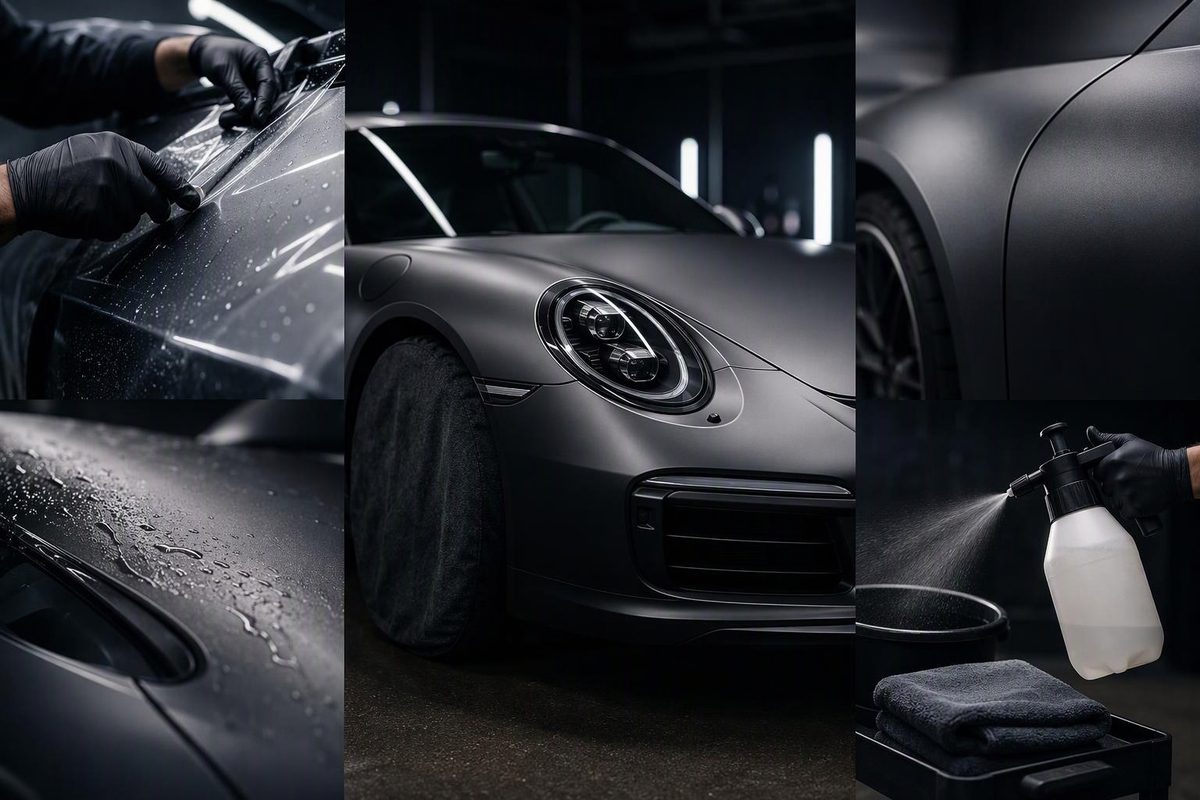
Matte paint protection film (PPF) is a transparent polyurethane film with a satin or low-gloss surface. It can preserve factory matte paint or turn glossy paint satin while adding a sacrificial protective layer. For a uniform conversion on gloss paint, cover every visible painted panel. On factory matte paint, partial coverage works only if a sample convincingly matches the uncovered finish.
Choose the car’s current finish and your goal to see the appropriate coverage decision.
Matte PPF Coverage Selector
Select the existing paint and intended result. For factory matte paint, include the sample-match result.
Choose full-body coverage.
A uniform satin conversion on gloss paint normally requires every visible painted panel to be covered.
Source note: Decision guidance is summarized from the cited 3M, XPEL, PPG and STEK materials. The exact film maker’s instructions and the paint supplier’s approval control.
Matte PPF Adds Protection and Changes the Finish
A representative matte PPF construction includes polyurethane film, a protective topcoat and pressure-sensitive adhesive. Its clear satin surface allows the underlying color and metallic flake to remain visible. According to 3M’s technical data sheet, its satin film is intended to protect against stone chips, scratches, bug damage, tar and stains while changing the finish.
“Matte” is not a standardized gloss level. Products described as matte are often closer to satin, and the amount of sheen differs among films. STEK says DYNOmatte has slightly more sheen than some flatter alternatives and matches a range of factory matte finishes—not every finish exactly (STEK DYNOmatte specifications).
That distinction becomes noticeable in direct sun and beneath overhead lighting. A close but imperfect match can be obvious where protected and unprotected panels meet. Product names alone cannot establish whether a film will match a particular frozen, frost, satin or other low-gloss factory finish.
Gloss Paint Needs Full Coverage for a Uniform Conversion
Choose full-body coverage if the objective is a consistent satin conversion. A matte hood beside glossy fenders creates an intentional two-finish design; it is not an invisible partial installation. XPEL similarly describes STEALTH as a satin film that can convert glossy paint to a matte appearance (XPEL STEALTH).
A full wrap also avoids a film line across the middle of a hood. It does not eliminate every edge or seam. Panel shape, available film width, badges and the installer’s pattern determine where edges remain.
Partial matte PPF can still make sense on gloss paint when the contrast is deliberate. A matte hood, roof or front section becomes a styling choice as well as protection. It should not be presented as a seamless satin conversion of the entire vehicle.
Factory Matte Paint Requires a Sample Match
Partial coverage is practical on factory matte or satin paint only when the film’s sheen convincingly matches the uncovered paint. Before approving a front-end package, have the installer apply a sample to the actual car.
Compare that sample outdoors and under workshop lighting, from several angles. Wait until installation moisture has cleared and the installer says the sample is ready to assess. A film that looks close in diffuse shade may appear glossier or flatter in direct light.
If the difference remains visible, the defensible choices are full-panel or full-vehicle coverage, another film, or no film. A mismatched partial installation can leave adjacent panels with permanently different-looking sheen.
Factory matte paint also limits conventional correction. PPG advises against abrasive products, mechanical polishing and vigorous rubbing because they can burnish a low-gloss finish and create a permanent shiny spot (PPG matte-finish care guide).
PPF provides a replaceable wear layer over that difficult-to-correct surface. It does not remove the need for careful installation and removal. Poor technique can still leave expensive paint or finish problems.
Repainted Panels Need Approval Before Film Installation
Do not install matte PPF merely because fresh paint feels dry. The paint supplier or body shop must approve film-installation timing for the repair system used on that vehicle.
3M says to follow the paint supplier’s recommendation. Its FAQ notes that many installers wait at least 30 days, but that is not a universal cure period (3M PPF FAQ). The applicable paint system, repair and shop instructions control the decision.
Our guide to cleaning after body repair explains why approval for a gentle wash does not automatically approve PPF or another bonded product.
Matte PPF Reduces Wear but Does Not Make Paint Invulnerable
Matte PPF is a sacrificial barrier against ordinary road wear. Depending on the product, its topcoat may resist staining and allow minor marks in the film to level with heat. “Self-healing” does not mean torn film, deep cuts or damaged paint will repair themselves.
A long warranty is not a promise of chip immunity. XPEL’s 10-year ULTIMATE PLUS and STEALTH warranty covers specified manufacturing defects such as yellowing, cracking, blistering and delamination. It excludes stains, scratches, water spots, improper-wash damage and impacts from rocks or road debris. Professional installation and proof of purchase are also part of the terms (XPEL warranty information).
Read the current warranty for the exact film before buying. Confirm who registers it, what documentation you must retain and whether labor for removal or replacement is covered. For realistic service-life planning, see how long paint protection film lasts.
Installation Quotes Should Define Coverage, Edges and Repairs
A quote that says only “matte PPF” does not identify the finish, coverage or installation method. Ask each installer to put these points in writing:
- Exact manufacturer, product line and finish
- Panels covered and any planned seams
- Whether panel edges will be wrapped or left exposed
- Whether badges, trim, lights or handles will be removed
- Paint-condition inspection and responsibility for existing defects
- Treatment of rock chips, touch-up paint and repainted panels
- Film and labor warranty terms, registration requirements and exclusions
- Price to replace one damaged panel later
- Post-installation wash delay and approved maintenance products
Inspect completed matte installations rather than judging an installer only by gloss-film work. Look along edges, around parking sensors and badges, and across stretched recesses. Check for debris, bubbles, lifted edges and inconsistent sheen.
View the work in diffuse shade and direct light. Matte-film quality is not only about clean edges: a visibly inconsistent sheen can undermine an otherwise tidy installation.
Wash Matte PPF According to the Exact Film’s Instructions
The film manufacturer’s care sheet takes priority. Do not automatically apply factory matte-paint instructions to the film, and do not assume generic PPF instructions apply to every satin topcoat.
- Confirm the no-wash period. Published instructions vary. XPEL says 48 hours in its STEALTH-care section, while 3M documents say 72 hours and a current 3M product page says one week. Follow the requirement for the exact product and obtain the installer’s instruction in writing (XPEL product care; 3M product information).
- Work on a cool vehicle in shade. Pre-rinse loose grit before making contact with the film.
- Use an approved shampoo and clean, soft mitt. Wash from cleaner upper panels toward dirtier lower sections, rinsing the mitt frequently.
- Rinse completely and dry promptly. Use a clean plush microfiber drying towel or a clean air blower rather than allowing mineral-rich water to evaporate.
- Soften contamination instead of scrubbing. 3M recommends soaking tree sap for several minutes with hot, soapy water, then rinsing and drying. It warns that rough scrubbing and abrasive tools can scratch the film (3M PPF care guide).
- Keep high-pressure water away from edges. XPEL warns that spraying near film edges can lift or damage the film. Use only the pressure, nozzle and distance permitted for the exact product.
- Do not polish matte film. Avoid compounds, abrasive cleaners and gloss-enhancing waxes unless the film manufacturer explicitly approves the product for that satin film.
Remove bird residue, bugs, sap and hard-water droplets before they dry or stain. Use the film maker’s approved spot cleaner and method rather than immediately reaching for a strong solvent. If contamination remains—or cleaning changes the sheen—stop and ask the installer to assess it.
Defects Need Inspection, Not Aggressive Correction
After washing, examine the film in good light. Seek the installer’s advice for:
- Edges that remain raised after the initial curing period
- A bubble that grows or contains debris
- A cut or impact that penetrates the film
- Brown, yellow or glossy patches that do not clean away
- A seam that collects persistent dirt
- Film lifting around badges, sensors or tight curves
Do not attack a shiny patch with polish or try to flatten a lifted edge with a household heat gun. The appropriate repair may be replacement of one film section. That is safer than turning a film defect into paint damage or a permanently uneven matte finish.