
Paint Correction Starts Around $350 to $1,600+, Depending on Scope
Advertised starts run about $350–$600 for one-step, $600–$1,100 for two-step and $900–$1,600+ for multi-stage paint correction.
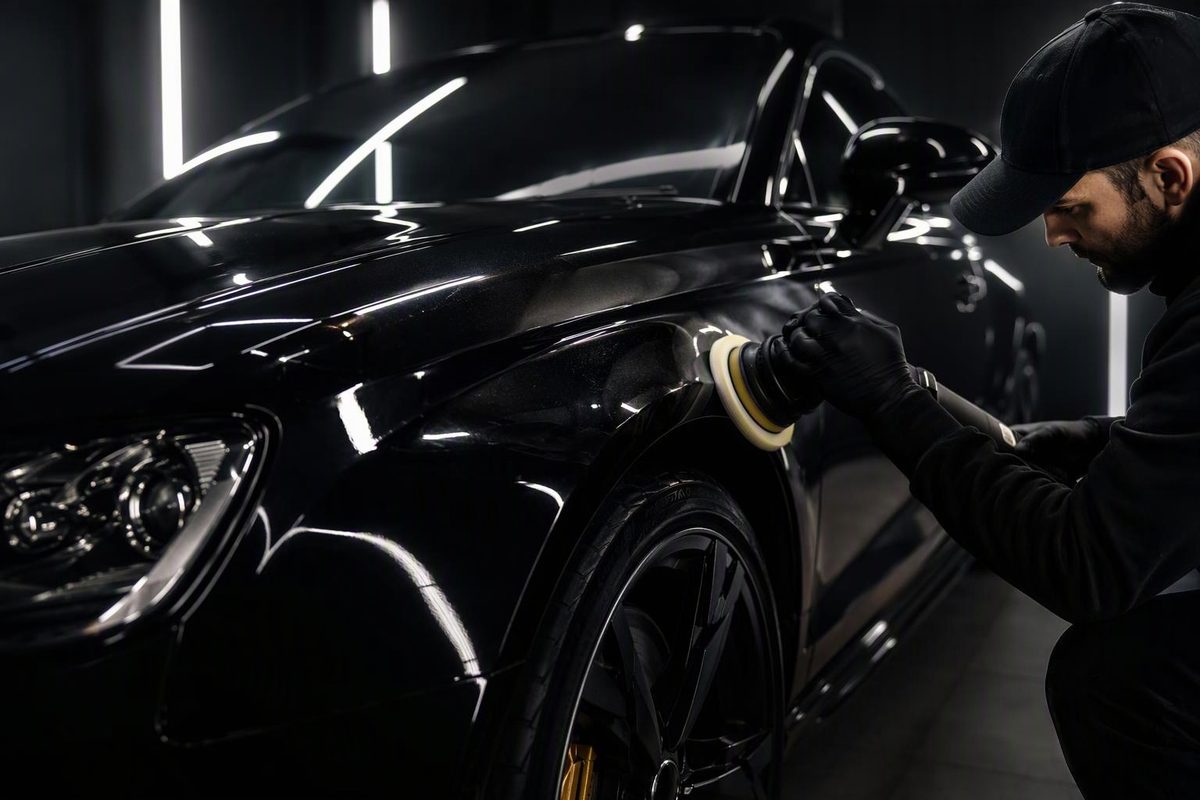
As of September 2026, a useful U.S. starting-price range is about $350–$600 for one-step paint correction, $600–$1,100 for two-step work, and $900–$1,600 or more for extensive multi-stage correction. Those are advertised starting prices, not guaranteed totals.
Current menus illustrate the spread. One-step and two-step services start at $400 and $750 in Chicago, $450 and $700 in Orlando, and $600 and $1,100 in Carlsbad, California (Chicago Car Detailing Company, Black V Protect, Knox Mobile Detailing). A Philadelphia shop lists three-stage correction from $1,500 for a sedan and $1,600 for an SUV or truck (Luxury Auto Detailing).
| Service level | Advertised starting-price range found | Typical aim |
|---|---|---|
| One-step correction | About $350–$600 | Improve gloss and reduce light swirls, wash marks and haze |
| Two-step correction | About $600–$1,100 | Compound and refine moderate defects |
| Full or multi-stage correction | About $900–$1,600+ | Pursue greater improvement on heavily marked or neglected paint |
| Localized wet sanding | Usually assessed separately | Address selected defects that polishing cannot safely improve |
A professional detailer writing for Detailed Image gives higher general expectations—about $500–$800+ for reputable one-stage work and $1,000–$2,000+ for two or more stages—and notes that location, panel complexity and paint behavior can substantially change the labor required (Detailed Image). Treat a low menu price as the start of a scope discussion, not proof that a complete job will cost that amount.
What the price should describe
Paint correction uses abrasives to remove a small amount of the paint system’s upper surface, leveling defects so they scatter less light. It does not refill a scratch or simply conceal it with wax or glaze.
A quote should identify which of these are included:
- Exterior wash
- Chemical and mechanical decontamination
- Inspection under focused lighting
- Paint-thickness readings and a test spot
- One or more machine-polishing stages
- Final inspection
- Wax, sealant, coating or no protection
These details matter because preparation and protection are not handled identically by every shop. The Carlsbad packages include washing and decontamination but make ceramic coating an optional upgrade, while the Orlando packages include a sealant and offer coating separately (Knox Mobile Detailing, Black V Protect). Mechanical decontamination can also leave marring that must be considered in the polishing plan; see how a clay mitt complements traditional clay.
“Step,” “stage” and “level” are not standardized package names. One shop may use “one-step” for a quick gloss improvement, while another allows substantially more polishing time. A two-step service generally compounds first and then uses a finishing polish to remove compounding haze and restore clarity (Detailed Image). Compare the written work and expected result, not the package name alone.
Why the final quote changes
Vehicle size and complexity
A large SUV or truck has more painted area than a coupe. Spoilers, narrow pillars, gloss-black trim and sharply shaped panels also slow machine polishing. One New Hampshire menu adds $50 for an SUV, truck or 4x4: its prices range from $399.99 for a sedan or crossover one-step to $949.99 for full correction on a larger vehicle (Zaks Auto).
Paint condition and the requested result
Reducing ordinary wash swirls is a different assignment from chasing every mark on neglected dark paint. Ask for an observable target, such as “reduce light swirls across all painted exterior panels,” rather than “restore perfection.” Percentage-correction claims are estimates whose appearance changes with paint color, defect depth and lighting.
Paint behavior and previous repairs
Hard paint can demand more cutting time. Soft paint may correct readily but take longer to refine without visible haze. Repainted or unusually thin panels can limit how aggressive the correction should be; Detailed Image describes correction times ranging from several hours to 20–30 hours or more as paint condition, behavior and requested coverage change (Detailed Image).
A paint-thickness gauge can reveal variation and possible refinishing, but common gauges used on metal panels measure the total coating system rather than the clear coat alone. Visual inspection cannot reliably determine clear-coat thickness. DeFelsko therefore advises monitoring and minimizing material removal, particularly where coatings are thin or their layer thickness is unknown (DeFelsko). A reading should guide a cautious test spot, not support a promise that every scratch can be removed.
Work inside—or outside—the package
Check whether the quoted amount covers:
- Iron removal and mechanical decontamination
- Roof, painted pillars and gloss-black trim
- Spot sanding
- Chip repair or touch-up paint
- Wax or sealant
- Ceramic coating
- Sales tax, travel or mobile-service fees
Wet sanding deserves particular attention because it removes more material and may be billed separately. For example, Zaks Auto lists it at $50 per hour with a three-hour minimum, but that is one shop’s menu rather than a general market rate (Zaks Auto).
Correction and ceramic coating perform different jobs: correction improves the existing finish; a coating protects the finish afterward. Compare the complete installed figure with the help of our ceramic-coating cost guide, rather than comparing two unlike starting prices.
Get comparable written quotes
Give each detailer the same year, make, model, color, repaint history, direct-light photos and desired outcome. Then ask:
- Which painted panels and trim pieces are included?
- How many polishing stages are included?
- What wash and decontamination are included?
- Will the shop take thickness readings and perform a test spot?
- Which visible defects are expected to remain?
- Is spot sanding included, excluded or billed hourly?
- What protection is applied afterward?
- Is the figure fixed or only a starting price?
- How long will the shop keep the vehicle?
An in-person inspection before a firm price is reasonable because dirt and photographs can conceal or misrepresent defects. For context on where correction fits among other services, see the broader car detailing guide.
Know when correction is the wrong repair
Correction can improve clear-coat swirls, haze, oxidation and some shallow scratches or etching. It cannot replace missing paint, refill a stone chip or safely erase every deep scratch. DeFelsko warns that sanding and buffing may not remove deeper damage and that continuing to remove material raises the risk of paint failure (DeFelsko).
If a defect appears to reach primer or metal, obtain an estimate for touch-up or refinishing before paying for full correction. For a daily driver that mainly needs more gloss, a conservative one-step service may offer better value than removing extra clear coat to pursue every remaining mark.