
Choose a Vehicle Paint Sealant by Its Application Method
Choose a vehicle paint sealant, prepare gloss paint without unnecessary polishing, and follow the right dose, buffing time and surface restrictions.
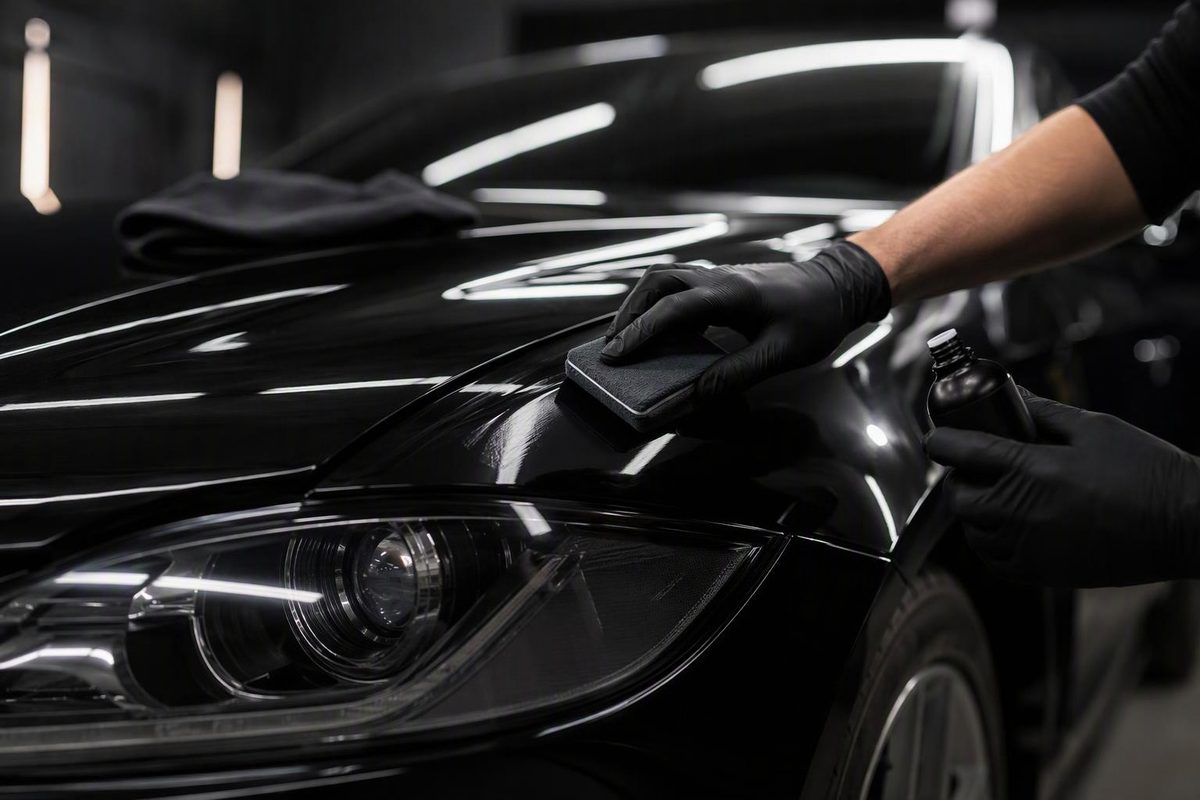
A vehicle paint sealant is a protective finishing product, not a substitute for washing or repairing paint defects. Synthetic-polymer products such as Meguiar’s M21 are formulated to add protection, gloss and water repellency. For a DIY owner, the useful buying question is whether the product’s preparation, application and drying instructions fit the time and space available.
The method below is for intact gloss paint. Other finishes need separate approval.
Choose by instructions, not the name alone
“Wax” and “sealant” are not cleanly separated on every bottle. Turtle Wax calls ICE Seal N Shine a spray sealant and describes its polymer formula; Autoglym calls Extra Gloss Protection a liquid wax but also uses “sealant” in its application directions. Neither name alone tells you how to apply it. (Turtle Wax, Autoglym)
Before buying, check four things:
- Surface approval: Is it intended for your paint finish? Do not assume approval for paint also covers glass, textured plastic, wraps or paint protection film.
- Application method: Does it go onto dry paint, wet paint or an applicator? Is it wiped off immediately, left to haze or rinsed away?
- Working and curing conditions: Can you meet the temperature, shade, drying and any water-avoidance requirements?
- Preparation: Does it require a particular cleaner or polish, or permit use over existing protection?
For a straightforward wash-day job, consider a spray-and-wipe sealant with directions you can meet. If you can allow a separate drying-and-buffing stage, a conventional liquid product is another option. These are workflow choices, not proof that one format always lasts longer.
Stop for an unusual finish. Matte or satin paint needs its own care instructions rather than a gloss-enhancing routine. Ford’s waxing guidance, for example, explicitly says not to wax matte paint. For recently refinished panels, get the repairer’s approval for the specific protection product; see cleaning a car after body repair.
Prepare only as much as the paint needs
Gather automotive shampoo, a clean wash mitt, drying towels, clean microfiber finishing towels and any applicator specified by the sealant. Work on cool panels in shade as a cautious default.
- Wash thoroughly. Use the shampoo’s stated dilution, remove loose dirt, complete the contact wash and rinse away cleaner before drying. Do not spread sealant over visible grit.
- Inspect clean, dry paint. Look for remaining spots and bonded contamination, then gently check whether the surface feels rough. Meguiar’s pre-wax preparation guidance recommends washing, drying and inspecting with both eyes and hands before deciding on further treatment.
- Address contamination selectively. Clay is intended for bonded above-surface contamination, not swirl removal, as Meguiar’s explains. If it is needed, use the clay system’s specified lubricant and inspect a small test area first. Our clay mitt guide explains the choice between a mitt and a small bar.
- Polish only if correction is wanted and appropriate. Do not make polishing an automatic requirement for applying protection. Autoglym explicitly says Extra Gloss Protection will not remove or improve scratches, swirls or dull paint; those need a separate preparation decision. (Product guidance)
Follow the selected sealant’s final preparation instructions. Do not add an alcohol wipe, stripping wash or another abrasive step merely because a different coating routine uses one.
Apply the exact product’s dose and timing
These two manufacturer methods, checked in October 2026, show why a universal sealant recipe is unreliable. Follow the label on your bottle if its directions differ.
| Product | Application directions | Removal or drying step |
|---|---|---|
| Turtle Wax ICE Seal N Shine | Wash and dry the car; spray two mists per exterior panel and rub in with a gentle microfiber cloth | Allow surfaces to dry |
| Autoglym Extra Gloss Protection | Shake; apply to a soft cloth and spread a thin, even layer on painted surfaces | Allow 30 minutes to dry, then buff with its specified finishing cloth |
Sources: Turtle Wax directions and Autoglym directions.
Neither method calls for dilution. Autoglym also excludes unpainted rubber and unpainted plastic trim. Do not transfer those directions—or Turtle Wax’s spray count—to another formula.
Start with a small area so you can check spreading and removal before committing to the whole vehicle. Inspect from different angles for streaks or missed residue, using a clean towel face. If removal becomes difficult, stop and check the dose, panel temperature and timing rather than scrubbing harder.
Keep drying before buffing separate from any curing or water-avoidance period on the label. A stated buffing time is not automatically permission to wash the car or expose it to rain.
Maintain it without stacking unnecessary products
Record the application date and continue regular washing with a compatible automotive shampoo. An extra wax layer is not compulsory: Autoglym says its High Definition Wax is unnecessary after Extra Gloss Protection. (Manufacturer guidance)
Use the product’s reapplication advice as a starting point, not a guaranteed service interval. For deciding whether to clean, decontaminate or renew protection, see how long sealants last on car paint.