
Ceramic Wheel Coating: Easier Cleaning Starts With Proper Prep
Choose a ceramic wheel coating by wheel finish, then follow a practical prep, application and maintenance method with product-specific timing.
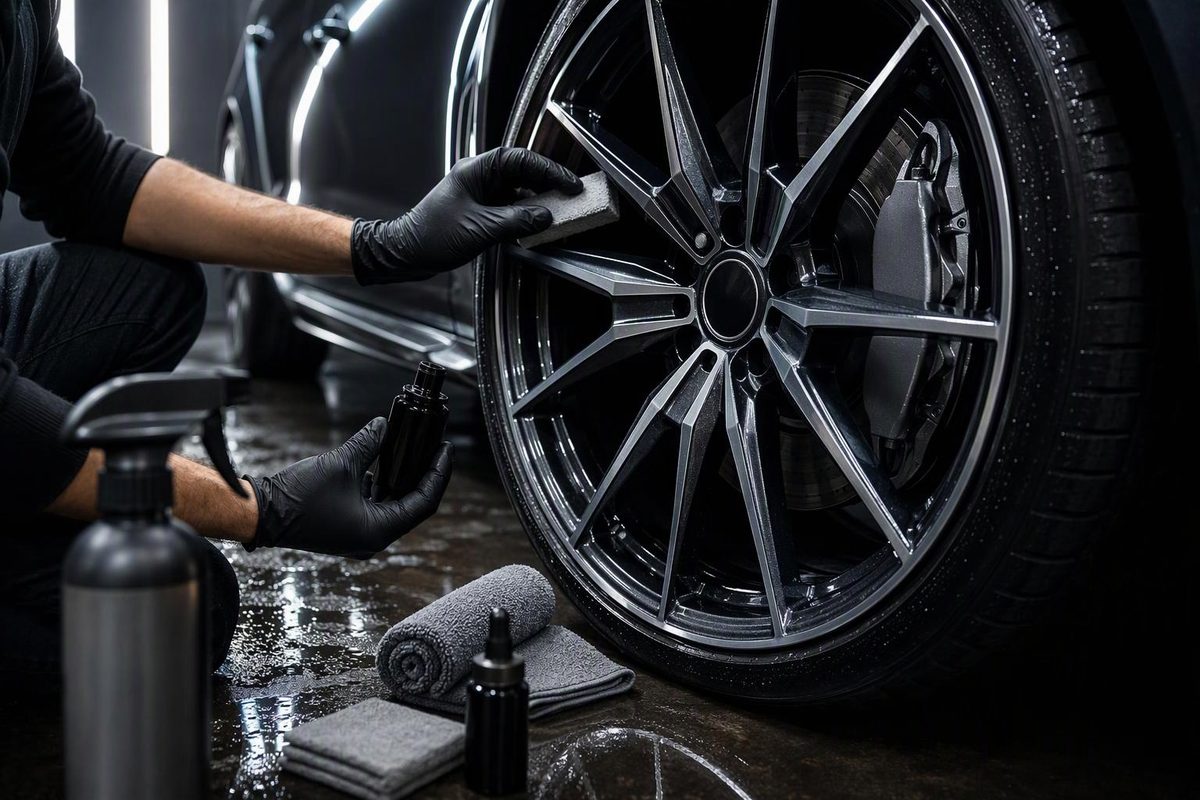
A ceramic wheel coating is worth considering when removing brake dust is a regular chore and you can thoroughly prepare the wheels before application. Buy it for easier cleaning—not dust-free wheels or a repair for curb rash. GYEON describes its wheel coating as limiting contamination bonding and reducing brake-dust buildup; its maintenance guidance still calls for washing. Source: GYEON Q² Rim EVO
The useful decision is not simply which bottle lasts longest. It is whether the coating suits your wheel finish, covers the areas you want protected and can cure under the conditions you have available.
Choose by finish, coverage and cure requirements
Identify the actual finish first: painted or clear-coated, powder-coated, matte or satin, chrome, or exposed polished metal. “Alloy wheel” identifies the underlying material, not necessarily the surface you will coat.
Manufacturer approvals differ. As of October 9, 2026, these two products list the following specifications:
| Check | Gtechniq C5 Wheel Armour | GYEON Q² Rim EVO |
|---|---|---|
| Finish compatibility | Gloss, satin, matte and chrome; excludes polished metals | Painted, powder-coated, anodised and polished wheels |
| Stated quantity | 15 ml for outer faces up to 17 inches; 30 ml for inside-and-out coverage up to 20 inches | Stated consumption of 15–20 ml per set |
| Advertised lifespan | Up to two years | Up to 18 months/45,000 km |
These are manufacturer specifications, not comparative test results or guaranteed service lives. The finish exclusions are more important than a longer advertised lifespan. Sources: Gtechniq C5, GYEON Q² Rim EVO
For matte or satin wheels, check the promised appearance and test an inconspicuous area before coating the whole wheel. GYEON describes Rim EVO as maintaining a neutral appearance without unwanted gloss. Do not assume every ceramic product behaves the same way.
Decide whether you want faces only or barrels and spoke backs too. Faces can be treated with the wheels installed if every target area is accessible. For full coverage, a wheels-off service may be more practical. If you are not equipped to remove and refit wheels safely, book that work rather than improvising vehicle support.
Prepare the wheels before opening the coating
Gather a finish-compatible cleaner, wheel-only brushes or wash tools, drying towels, the specified panel-preparation product, applicators and clean leveling towels. Read the coating label and safety data sheet first. For example, C5’s US safety data sheet classifies it as highly flammable and calls for good ventilation, protective gloves, clothing and eye protection, and keeping it away from ignition sources. Use the safety instructions supplied for your product and market. Source: C5 safety data sheet
- Start with cool wheels in a sheltered work area. Inspect for peeling clear coat, corrosion, damaged paint or recent refinishing. Stop and obtain finish-specific advice where the surface is damaged or its identity is uncertain.
- Wash and rinse one wheel at a time. Use the cleaner’s own dilution and contact time, gently clean accessible recesses and rinse thoroughly before moving on. Keep wheel tools separate from paint-washing tools.
- Remove remaining contamination and old protection. If iron contamination remains, use an iron remover approved for the finish. GYEON’s Iron REDEFINED instructions specify a cool surface, light agitation if needed, thorough rinsing and never allowing the product to dry. Follow the bottle for contact time. Rim EVO also requires removal of old protection before application; resolve any existing protection using a finish-compatible removal method before continuing. Sources: GYEON Iron REDEFINED, Rim EVO preparation instructions
- Dry completely, then perform the specified final wipe. GYEON requires an oil-free, dry surface, followed by Q²M Prep and a 15-minute wait. C5 specifies Gtechniq Panel Wipe but warns that it may strip paint on localised wheel repairs. A solvent wipe is therefore not automatically safe on every refinished wheel. Sources: Rim EVO instructions, C5 application instructions
If marks remain, distinguish contamination from finish damage before escalating. More cleaner will not repair missing paint. For cleaner selection, see choosing a wheel cleaner by finish.
Apply small sections and respect the cure window
Do not borrow wipe-off timing from another coating—even an older version with a similar name.
For C5, the published sequence is to shake the bottle, wear gloves, load the supplied applicator with several drops and spread over no more than half a wheel at once. Buff off residue within 30–60 seconds, then repeat. Keep the coating indoors for 12 hours before exposure to the elements. That initial protection window is not permission to disregard any additional washing restrictions on your bottle. Source: Gtechniq C5 instructions
By contrast, GYEON’s current Rim EVO directions call for removing excess immediately, within 10–30 seconds. Check its supplied manual for cure and first-wash requirements before starting. Source: GYEON Rim EVO instructions
Use good lighting to inspect spoke edges, recesses and the area around the valve for leftover residue before proceeding. If you cannot reach and level a section properly, leave it untreated rather than applying blindly.
Maintain it with ordinary washing first
Once the product’s washing restriction has passed, start routine cleaning with pH-neutral shampoo, gentle wheel-only tools and a thorough rinse, then dry. GYEON specifically recommends neutral shampoo and avoiding strong acidic or alkaline cleaners on coated wheels. Source: Rim EVO maintenance guidance
Use a compatible specialist cleaner only when ordinary washing leaves contamination behind. Do not make aggressive chemicals the default simply because the coating advertises chemical resistance; see the limits of acid wheel cleaning.
Judge the purchase by the job it was meant to improve: whether brake dust releases more readily during your normal wash. If you cannot provide clean, dry preparation and protected curing time, postpone the coating or choose a simpler protection product with instructions you can meet.