
Meguiar’s Ultimate Black Restores Faded Trim, but It Is Not a Permanent Repair
Use Meguiar’s Ultimate Black G158 on clean, dry exterior trim. Apply the hand-applied cream sparingly and expect maintenance, not permanent repair.
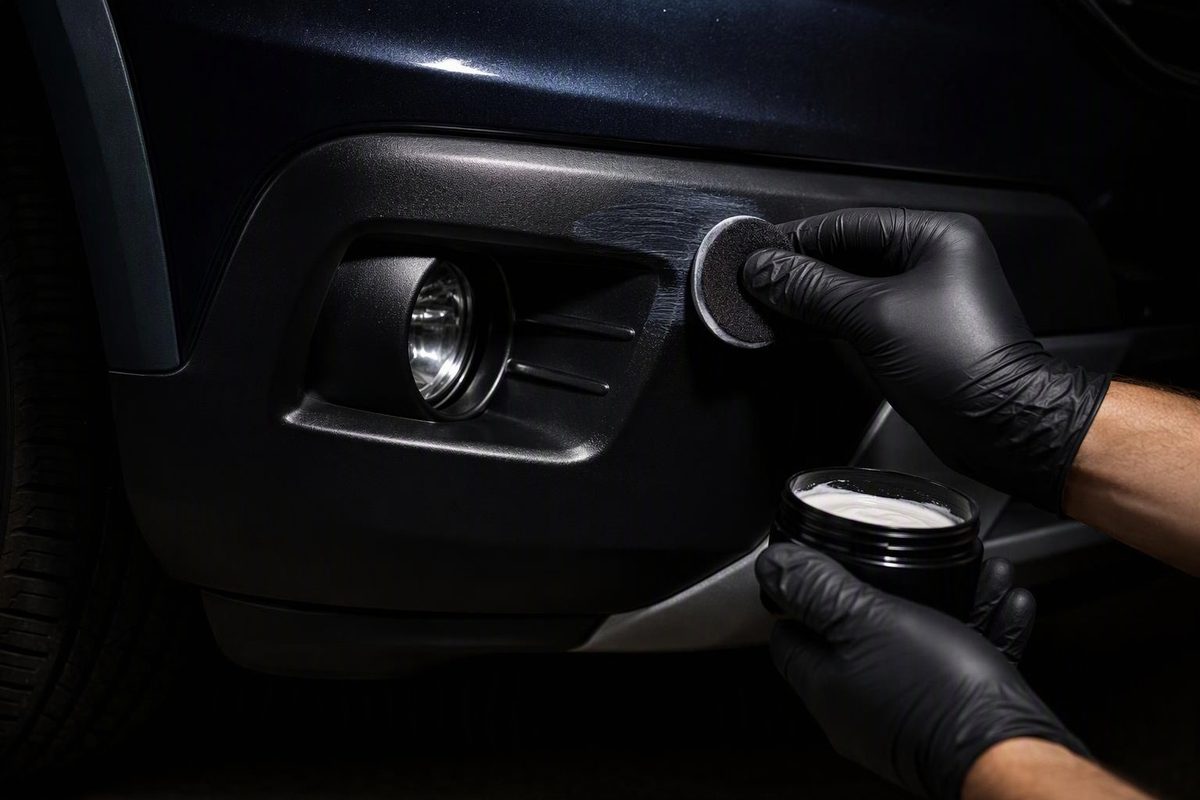
Meguiar’s Ultimate Black Plastic Restorer G158 is a hand-applied dressing for unpainted exterior plastic, vinyl and rubber trim. Meguiar’s lists bumpers, moldings, door handles, mirror housings and windshield cowls as suitable examples. It claims the product adds darkness, shine and UV protection, dries quickly and lasts for weeks through washing and rain (Meguiar’s G15812 product page).
That makes G158 useful for improving the appearance of sound but faded trim. It is not a permanent repair for cracked, flaking or otherwise deteriorated plastic.
Check which Ultimate Black product you have
The product code matters:
- G15812 and G15816: hand-applied cream covered by this guide.
- G16910: aerosol product with separate “spray and walk away” directions and a manufacturer claim of darkness and shine after 100 washes (Meguiar’s G16910 product page).
Do not apply the aerosol’s directions or durability claim to G158. For the cream, Meguiar’s makes the more limited claim that its appearance lasts for weeks.
Confirm that the surface is compatible
Use G158 on unpainted exterior trim. Do not assume every black component is bare plastic: gloss-black pillars, painted bumper inserts, wraps and coated metal can look similar. Check the vehicle manual or test a hidden area when the finish is uncertain.
Avoid clear lenses, glass and painted or wrapped panels because they are outside the product’s stated uses. Likewise, do not treat “plastic restorer” as permission to apply it to any plastic in the vehicle. Meguiar’s identifies G158 specifically as an exterior product for plastic, vinyl and rubber (Meguiar’s Canada G15812C page).
Stop if the trim flakes, cracks or leaves powder on the applicator during a test. A dressing can alter color and gloss, but it cannot rebuild missing material or repair a failed coating.
Clean and dry the trim first
An even result starts with a consistent surface:
- Wash away ordinary dirt with car shampoo.
- Remove old dressing or wax residue with a cleaner that explicitly permits use on the trim material. Follow that cleaner’s own dilution and contact-time instructions.
- Rinse thoroughly, including textured areas and seams.
- Dry the trim and its edges. Trapped water can emerge while the product is being spread.
- Work on cool trim out of direct sun so the cream does not dry before it can be spread evenly.
- Patch-test a hidden section and inspect it after drying.
Use dedicated applicators and towels so dressing residue is not later transferred to glass or paint. See our guide to sorting and washing car-cleaning cloths for a practical separation system.
Apply the cream sparingly
Read the directions and warnings on your bottle before starting; packaging and formulations can change.
The current US safety data sheet for G15812 and G15816 classifies the mixture as a Category 1 skin sensitizer and Category 2 reproductive toxicant. It says the product may cause an allergic skin reaction, is suspected of damaging fertility or an unborn child, and calls for avoiding vapors and skin contact, wearing protective gloves and keeping it away from children (Meguiar’s G158 SDS, issued October 2, 2025). Use it with adequate ventilation and follow the SDS and container label.
For a controlled application:
- Follow any shaking instruction on the bottle.
- Put a small amount on a suitable applicator rather than pouring it directly onto the vehicle.
- Spread a thin, overlapping layer across one trim section. Work it into texture without flooding seams.
- Remove accidental contact from adjacent paint or glass promptly with a clean towel and a cleaner suitable for that surface.
- Inspect from several angles and level any heavy patches with a clean towel.
- Let the section dry for the time stated on the container before judging the finish or exposing it to water.
A thicker layer does not establish better durability. It is harder to level and leaves more product available to collect dust or migrate from seams.
Correct an uneven finish before adding more
If the result is patchy, do not immediately add another coat. First check whether the trim was fully clean and dry. Residual dressing, wax, cleaner or water can all leave the surface inconsistent. Reclean one small section, allow it to dry, then repeat the patch test.
If the finish remains greasy or heavily glossy, remove and level the excess with a clean towel. If product runs from seams after rain, clean the residue from the trim and adjacent panels rather than letting it repeatedly dry there.
Reappearance of fading does not necessarily mean the product failed. Meguiar’s describes G158 as lasting for weeks, but exposure, washing and the condition of the trim affect when another application is useful. Reapply when clean trim has visibly lost the desired finish, following the bottle directions, rather than relying on a fixed calendar.
If a properly prepared test section shows little improvement, stop layering the product. The trim may need refinishing or replacement rather than another application of dressing.