
A Practical, Tap-by-Tap Guide to Diagnosing Mineral-Heavy Water
A properly performed hardness test on water from the relevant tap is usually the most useful result for that specific fixture.
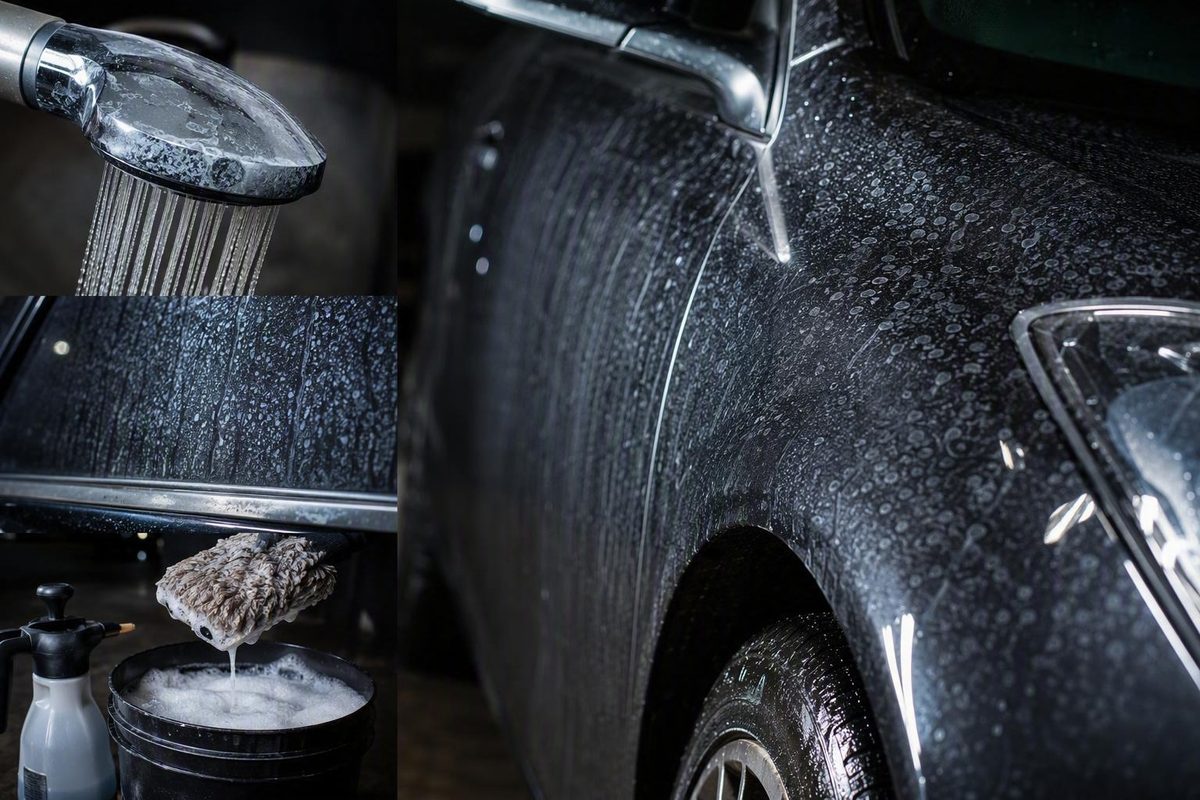
If you are wondering how to tell if you have hard water, look for a recurring pattern rather than relying on one symptom. White scale, mineral film, weak soap lather, soap scum, and stubborn water spots can make hardness likely, but they do not prove it.
The dependable answer is a hardness-specific measurement of water from the tap that matters—such as the kitchen faucet, shower, laundry connection, or outdoor hose bib. Utility information and a soap-bottle screen can help, but neither replaces a properly performed, tap-specific test when you need a household result.
The fastest way to find out if your water is hard
Use this four-step diagnostic path:
- Inspect for recurring clues. Look for white crust on faucets and showerheads, scale on glass, filmed dishes, soap scum, weak lather, or stiff-feeling laundry.
- Check current utility information, if applicable. Search your public water supplier’s latest Consumer Confidence Report for “hardness,” “calcium,” “magnesium,” or “calcium carbonate.” If hardness is not listed, ask the utility directly.
- Run an optional soap-bottle screen. Use plain, detergent-free liquid soap and treat the outcome only as a rough indication.
- Measure water from the relevant tap. Use a hardness strip or kit with an appropriate range, or arrange laboratory analysis when you need documented results or have broader water-quality concerns.
Regional maps, ZIP-code tools, and citywide estimates indicate what may be common in an area. They cannot account for the exact source serving your property, household plumbing, treatment equipment, or fixtures that bypass treatment. A properly performed hardness test on water from the relevant tap is therefore usually the most useful result for that fixture.
Quick decision tree
- Public-water customer: Check the latest utility report. If it lists hardness, use the number as background information. Test your tap if you need to investigate cleaning problems, compare fixtures, or evaluate treatment.
- Private-well owner: Arrange your own hardness test. If the concern extends beyond hardness, ask your state or local health department about a laboratory certified or accredited for the analyses you need.
- Renter: Obtain available utility data, test the actual tap with a non-installation strip or kit, and record the date, fixture, result, and units. Report separate plumbing or maintenance concerns to the property owner or manager.
- Home with a softener: Compare a known or suspected untreated tap—often an outdoor hose connection—with a softened indoor cold tap. Test suspected bypassed fixtures separately.
- Car owner investigating water spots: Test the hose bib or other rinse-water source used for washing. Do not assume the kitchen tap has the same hardness.
A hard-water result is a diagnosis, not a purchase instruction. Whether treatment is worthwhile depends on the measured level, affected fixtures, cleaning and maintenance priorities, existing equipment, and household preferences.
What hard water is—and why it leaves clues
Hard water contains elevated concentrations of dissolved minerals, principally calcium and magnesium. Water can acquire these minerals as it moves through mineral-bearing soil and rock, including limestone and dolomite. Because geology and water sources vary, both municipal supplies and private wells can contain hard water.
That is a general tendency, not a prediction for an individual property: a surface supply can be hard, and a particular well may be softer than expected. A review of water-hardness chemistry describes the roles of calcium and magnesium, groundwater contact with mineral deposits, and the distinction between different forms of hardness.
Hard water leaves clues through two main mechanisms:
- Evaporation leaves dissolved material behind. Water evaporates from a faucet, shower door, dish, or vehicle panel, while minerals may remain as spots, film, or scale.
- Hardness minerals interact with soap. Calcium and magnesium can reduce traditional soap’s lathering and cleaning behavior, leading to residue or a need for more product to achieve the expected result.
Heat can make deposits more noticeable. Hardness scale forms more readily in hot water than in cold water, so buildup may be particularly apparent around showerheads, hot-water faucets, kettles, or water-heating equipment, according to utility guidance from the Madison Metropolitan Sewerage District.
You may also encounter two technical terms:
- Temporary, or carbonate, hardness is associated with hardness minerals and alkalinity. Boiling can reduce some of it.
- Permanent, or non-carbonate, hardness is not removed by boiling.
The distinction can matter when analyzing water chemistry or comparing treatment approaches, but you do not need to identify the type for a basic household diagnosis.
Hard-water signs: useful clues versus inconclusive symptoms
The strongest reason to test is not one isolated mark. It is a recurring combination of pale scale, mineral film, and poor soap performance across relevant fixtures.
At faucets, sinks, and showerheads
Look for:
- Chalky white crust around faucet outlets
- Scale coating or blocking showerhead openings
- Pale rings where water repeatedly pools
- Film that returns after ordinary cleaning
- Soap scum around sinks, tubs, or showers
White scale is compatible with minerals left behind as water evaporates. Even so, cleaning-product residue and other dissolved material can produce a similar appearance. The faster a pale deposit returns after cleaning—and the more fixtures on which it appears—the stronger the reason to test.
On shower doors and bathroom surfaces
Repeated pale film, rough deposits, or spots on glass and tile support a hardness hypothesis, especially when the same pattern appears on taps and dishes. Deposits that are more obvious around hot-water fixtures are also consistent with hardness, but they still do not prove a particular concentration.
Dry-feeling skin or hair and brittle-feeling nails are much less specific. Soap formulation, climate, personal-care products, skin conditions, and washing habits can all change how skin and hair feel. Record these observations if useful, but do not use them to assign a hardness category.
On dishes and glassware
Possible clues include:
- White spots where droplets have dried
- Cloudy or chalky film
- Residue that repeatedly returns after washing
- More spotting when dishes air-dry
Dishwasher detergent, rinse-aid settings, water temperature, drying method, machine condition, and food residue can also influence the result. Compare hand-rinsed and machine-washed items before concluding that water hardness is responsible.
During washing and cleaning
Hard water becomes more plausible when traditional soap produces limited lather and leaves residue. You may also notice:
- Persistent bathtub or sink scum
- A filmy sensation after handwashing
- Cleaning product that seems difficult to rinse away
- Laundry that repeatedly feels stiff, rough, or dull
Soap behavior is more useful when considered alongside visible pale scale. Weak foam by itself can result from the product, dosage, oily contamination, or a dirty container.
In plumbing and appliances
Low flow, recurring fixture blockage, or appliance trouble may appear alongside mineral scale, but none is a hardness test. Low pressure or flow may instead result from sediment, corrosion, a partly closed valve, a plumbing defect, a leak, or another obstruction. Investigate the plumbing problem separately rather than assuming hardness caused it.
Existing scale is historical evidence. Deposits can remain after the water source changes, treatment is installed, or a softener is repaired. Old buildup does not necessarily describe the water reaching the fixture today.
What colored stains may mean
Do not classify every stain as hardness:
- White or pale crust is compatible with mineral scale.
A hardness strip cannot identify what caused a colored stain. If unusual color, odor, particles, or taste persists, choose testing designed for that concern rather than relying on a hardness result.
What vehicle water spots can tell you
Spots that repeatedly appear after rinse water evaporates are a reasonable prompt to test the hose or rinse-water source. This is especially useful when an outdoor connection may bypass an indoor softener.
The spots themselves do not establish a hardness concentration. Test the actual rinse water, record its hardness and units, and dry the vehicle before droplets evaporate when practical. For broader wash-equipment guidance, see this guide to spray nozzles for car cleaning.
Printable hard-water inspection checklist
Use one row per observation. Recheck surfaces after cleaning so that you can distinguish recurring deposits from old buildup.
| Check | What to record |
|---|---|
| ☐ White scale on faucets | Fixture, room, hot or cold, and how quickly it returns |
| ☐ Showerhead crust | Blocked openings, recurrence, and supply if known |
| ☐ Shower-door film | Location, texture, and response to cleaning |
| ☐ Spotted dishes or glassware | Hand-washed or machine-washed; air-dried or towel-dried |
| ☐ Soap scum | Product used, location, and frequency |
| ☐ Weak soap lather | Product, water temperature, and fixture |
| ☐ Stiff or dull laundry | Detergent, wash temperature, and recurrence |
| ☐ Low flow | One fixture or whole home; hot or cold; sudden or gradual |
| ☐ Colored stains | Exact color, fixture, odor, and presence of particles |
| ☐ Vehicle water spots | Hose bib or rinse source used and time before drying |
| ☐ Existing scale | New or old; before or after source or treatment changes |
| ☐ Treatment equipment | Softener present and whether the fixture is treated or bypassed |
If several relevant boxes are checked, move to measurement. Do not keep adding symptoms in place of testing.
How to run the soap-and-bottle test
The soap-and-bottle method is an inexpensive preliminary screen. It cannot determine hardness in parts per million, milligrams per liter, or grains per gallon.
Supplies
You need:
- A clean, clear bottle with a secure cap
- Water from the specific tap being investigated
- A few drops of plain, detergent-free liquid soap, such as unscented Castile soap
Avoid fragranced, dyed, moisturizing, antibacterial, or detergent-containing formulations when possible. Many dishwashing liquids are designed to create suds under varied water conditions, which can make hard water appear softer than it is.
Procedure
- Wash and rinse the bottle thoroughly.
- Rinse it once more with a small amount of the water you will test.
- Fill the bottle approximately one-third full from the relevant tap.
- Add a few drops of plain liquid soap.
- Secure the cap.
- Shake for several seconds.
- Set the bottle down and allow the contents to settle briefly.
- Examine both the foam and the water beneath it.
A bottle filled about one-third full and mixed with a few drops of pure liquid soap is a commonly published screening method; detergent-containing products may lather regardless of hardness (soap-bottle testing instructions).
Interpret the result cautiously:
- Plentiful, loose foam over relatively clear water: suggests softer water.
- Limited foam with cloudy or milky water: suggests some degree of hardness.
Do not translate foam height into a numerical result.
Why the result is only approximate
There is no universal household standard for the amount of water, number of soap drops, shaking force, settling time, or acceptable foam height. Soap formulations also vary. The screen may strengthen or weaken a suspicion, but it cannot reliably separate moderately hard water from hard or very hard water.
Troubleshooting unclear results
Check for these common problems:
- Dirty bottle: Oil, food, or cleaner residue can change foam formation.
- Soap left from an earlier attempt: Residual product changes the soap-to-water ratio.
-
Detergent-containing cleanser: It may foam readily even when the water is hard.
-
Excessive soap: Too much product can overwhelm the difference being observed.
- Inconsistent shaking: More vigorous shaking naturally produces more bubbles.
- Different taps: Fixtures may be connected to different treated or bypassed lines.
To compare two taps, use identical clean containers and the same small quantity of soap. If the screen suggests hardness—or household clues persist despite an unclear result—proceed to a hardness-specific strip, kit, or laboratory test.
How to confirm hardness at your tap
Choose a method based on the question you need answered. A utility report provides supply-level context. A strip or titration kit can provide a fixture-specific range or number. Laboratory analysis is appropriate when you need documented results, a broader water assessment, or confirmation of inconsistent findings.
| Method | Best use | What it tells you | Main limitation |
|---|---|---|---|
| Utility report | Public-water overview | Hardness or related mineral data for the supply or distribution area, if reported | May not match a particular household tap |
| Direct utility inquiry | Clarifying omitted or variable public-supply data | Current information applicable to the service area | Still not a measurement inside the property |
| Soap-bottle screen | Quick preliminary comparison | Rough indication of softer or harder behavior | Not standardized or numerical |
| Hardness strip or home kit | Tap-specific confirmation | A range or numerical result, depending on the product | Range, timing, and precision are product-specific |
| Qualified laboratory analysis | Private wells, out-of-range results, or broader concerns | Documented hardness and any additional parameters ordered | Requires correct test selection and sampling |
For municipal-water customers
Find the current Consumer Confidence Report on your supplier’s website. Search within it for:
- Hardness
- Total hardness
- Calcium
- Magnesium
- Calcium carbonate
- CaCO₃
If hardness is absent, contact the utility and ask for its latest information for your service area. Public-water reports may contain hardness or mineral data, while private wells are not covered by municipal reporting.
Treat the utility number as context rather than a guaranteed reading at your faucet. A supplier may report a range or serve different areas from different sources. Household treatment and plumbing can also change what reaches a particular fixture.
How to use a hardness strip
Always follow the instructions supplied with the strip. A typical process is:
- Choose the tap you want to evaluate.
- Use cold water unless the instructions specify otherwise.
- Collect the sample in a clean glass or cup.
- Immerse the strip for the stated time.
- Remove it without wiping the reaction pad.
- Wait for the exact development time given by the manufacturer.
- Compare the result with that product’s chart under neutral lighting.
- Record the result, units, tap, date, and time.
Do not hold the strip under running water. Do not borrow a chart from another brand or assume that one color has a universal meaning. Official utility guidance confirms that strips should be dipped into a collected sample rather than held under a flowing tap.
Strip designs differ substantially. One may report broad ppm ranges, while another may show grains per gallon. A low-range strip intended to distinguish softened from unsoftened water may simply reach its maximum when used on naturally hard water. In that case, the result does not reveal how far above the range the sample falls.
They still require strict adherence to the supplied procedure.
For private wells
A private-well owner must arrange testing independently. A hardness-specific kit can answer the narrow question, “How hard is this water?” It cannot establish whether the well is microbiologically or chemically safe.
Laboratory analysis is reasonable when:
- The well needs a broader safety assessment
- Home results remain inconsistent after careful repetition
- A strip reads at or beyond its stated range
- The water has persistent unusual color, odor, taste, or particles
- There is concern about possible contamination
- A documented analytical result is required
Choose a laboratory certified or accredited for the requested analyses. State or local health departments can help identify appropriate laboratories and advise which tests address local concerns. Ordering hardness alone will not produce results for unrelated contaminants.
For renters
A renter can investigate without modifying the plumbing:
- Download the current utility report if the property uses public water.
- Test the actual kitchen, bathroom, or laundry tap with a hardness-specific strip.
- Photograph the strip beside its own chart within the required reading window.
- Record the date, fixture, units, and result.
- Repeat an unexpected reading.
- Document recurring scale, blocked aerators, low flow, leaks, or other maintenance concerns.
- Raise relevant property-maintenance issues with the owner or manager.
Keep the discussion precise. A measured hardness result is not the same as evidence of plumbing damage, poor water pressure, contamination, or a drinking-water safety problem.
How to read ppm, mg/L, and grains per gallon
Hardness is commonly reported as:
- Milligrams per liter (mg/L) as calcium carbonate equivalent
- Parts per million (ppm) as calcium carbonate equivalent
- Grains per gallon (gpg)
Check whether the result is expressed as calcium carbonate equivalent before comparing a laboratory report with a strip chart.
The approximate conversion is:
1 gpg ≈ 17.1 mg/L
Use these formulas:
- gpg = mg/L ÷ 17.1
- mg/L = gpg × 17.1
For example:
171 mg/L ÷ 17.1 ≈ 10 gpg
The conversion of approximately 17.1 mg/L per grain per gallon is used in published household hardness guidance (hardness units and conversion).
A commonly cited interpretation scale is:
| Classification | Hardness as mg/L or ppm | Approximate hardness as gpg |
|---|---|---|
| Soft | 0–60 | 0–3.5 |
| Moderately hard | 61–120 | About 3.6–7 |
| Hard | 121–180 | About 7.1–10.5 |
| Very hard | 181 or more | Above about 10.5 |
These calcium-carbonate-equivalent categories use boundaries of 0–60, 61–120, 121–180, and 181 mg/L or more (hardness classification).
Not every chart uses identical boundaries. A borderline number may receive different labels on different charts. Record the actual result and units instead of relying only on the category name.
Borderline, inconsistent, or out-of-range readings
If a result is close to a category boundary:
- Repeat the test at the same tap.
- Use a clean container.
- Confirm that the strip is unexpired and was stored as directed.
- Follow the immersion and development times exactly.
- Compare the result only with the supplied chart.
- Record both readings rather than inventing an average from visually estimated colors.
If the strip reaches its highest color, record the result as “at or above the strip maximum.” Do not report the maximum as though it were an exact measurement. Use a wider-range kit or suitable laboratory analysis to quantify the sample.
Why different taps may give different results
Fixtures may connect to treated, untreated, or bypassed plumbing lines. An outdoor hose bib may bypass a softener, while indoor fixtures receive softened water. The exact layout cannot be diagnosed from test results alone; it may require inspection or tracing of the plumbing.
Comparison protocol for a home with a softener
Collect separate samples from:
- A suspected untreated source, such as an outdoor hose bib believed to bypass treatment
- A softened indoor cold tap
- Any fixture suspected of bypassing the softener
- A second indoor cold tap, if the first comparison is unexpected
Label the containers before sampling. Use the same strip product, procedure, timing, and lighting for every sample.
If the taps are confirmed to be upstream and downstream of an ion-exchange softener, the downstream result would generally be expected to show reduced hardness. How clearly the strip displays that reduction depends on its range, the system’s design and settings, regeneration status, and correct identification of the plumbing paths. The comparison alone does not prove that the equipment is operating correctly.
Outdoor connections deserve particular attention when investigating vehicle water spots. A hose line may be intentionally untreated, so a softened indoor reading may say little about the water used to rinse a car.
Assessing a suspected softener problem
Record:
- Untreated hardness
- Treated hardness
- Date and time
- Fixture locations
- Whether the system recently regenerated
- Any visible bypass-valve position or error display
- The strip or kit range
Compare measured results rather than judging the system only from lather or water spots. Soap formulations vary, and old mineral deposits can persist after treatment begins.
Hot-water deposits may also lag behind current conditions. Fresh buildup merits investigation, but old crust does not prove that today’s cold-water sample is hard.
Troubleshooting conflicting readings
When results do not make sense:
- Use clean, separately labeled containers.
- Check the strip’s expiration date and storage condition.
- Verify that both samples fall within its measurement range.
- Follow immersion and development times precisely.
- Repeat the test at the same tap.
- Test another fixture believed to share the same plumbing line.
- Confirm whether a softener, bypass, separate supply, or other treatment serves either fixture.
- If a public-water result differs materially from the current report, ask the utility whether more current or service-area-specific information is available.
Persistent differences may justify contacting the utility, landlord, plumber, treatment-system provider, or laboratory. Choose the contact according to the unresolved question: public-supply information, property maintenance, plumbing layout, equipment performance, or analytical confirmation.
Hardness, drinking-water safety, and practical next steps
Keep three questions separate:
- Is the water hard?
- Is the water safe for its intended use?
- Would treating hardness be worthwhile for this household?
A hardness measurement answers only the first question. Hard water is generally regarded as a cleaning and household-maintenance concern rather than a known health hazard. A scientific review reports that the World Health Organization found no known adverse health effect from hard water, while also noting that studies of specific health associations have produced inconsistent findings (review of potential health effects).
A hardness-only test does not establish whether water is free of:
- Lead
- Bacteria
- PFAS
- Nitrates
- Iron
- Other chemical or microbiological contaminants
Broader test kits and laboratory analyses must be selected for the substances of concern; a hardness result alone does not establish overall drinking-water safety (testing scope and limitations).
Do not treat “hard” as a synonym for unsafe, or “soft” as proof of safety. An older home, an untested private well, unusual water characteristics, or a known local concern may justify testing beyond hardness without implying that hardness caused the problem. Private-well users and people with broader drinking-water concerns should consult their state or local health department and use a laboratory qualified for the requested analyses.
What does—and does not—remove hardness
Dissolved calcium and magnesium generally remain after:
- Ordinary sediment filtration
- Typical carbon filtration
- Disinfection
- Letting water stand
Those processes may address particles, certain tastes and odors, or microorganisms depending on the technology, but they should not be assumed to soften water.
Boiling can reduce some temporary carbonate hardness. It does not remove permanent hardness and is not a practical way to treat an entire household supply.
The main treatment categories work differently:
- Ion-exchange softeners remove hardness ions through an exchange process and may add sodium or potassium to treated water.
- Salt-free conditioners aim to alter scale-forming behavior rather than removing calcium and magnesium in the same manner.
- Other mineral-reduction technologies may be suitable in particular circumstances, depending on the system and water chemistry.
Treatment decisions should account for the measured hardness, affected fixtures, household water use, maintenance demands, wastewater or salt considerations, plumbing compatibility, and any relevant health constraints. There is no universal hardness number at which every household must install a softener.
Use this measured next-step sequence:
- Save the numerical hardness result and units.
- Repeat any surprising or borderline reading.
- Identify which taps are affected and which are treated or bypassed.
- Keep hardness separate from staining, pressure, odor, and safety concerns.
- Investigate additional concerns with the appropriate testing.
- Only then compare cleaning changes, equipment service, maintenance, or treatment options.
Do not diagnose hard water from one symptom. Use recurring scale and soap-performance clues as a reason to test, consult current utility information where available, and measure water from the tap that matters.
Frequently asked questions
Can I tell that I have hard water just by looking at white scale or spotted dishes?
No. White scale, recurring film, spotted dishes, soap scum, and weak lather are useful clues, especially when several appear together. They cannot determine the hardness concentration or exclude cleaning residue, dishwasher settings, sediment, or other dissolved material. Confirm the suspicion with a hardness-specific test from the relevant tap.
Can I use ordinary dish soap for the bottle test?
Plain, detergent-free liquid soap, such as unscented Castile soap, is a better choice. Many dishwashing liquids contain detergents and other ingredients designed to produce suds under varied water conditions, which can make the screen misleading.
Even with suitable soap, the bottle method produces only a rough indication. It cannot provide a numerical hardness result.
Is a municipal water report accurate enough for my home?
It is useful background information, but it may not describe a particular tap exactly. A report can reflect a supply area, distribution zone, range, or reporting period, while your property may have household treatment or a fixture that bypasses it.
Use the current utility number as a reference. Test the actual tap when you need to compare fixtures, assess a softener, investigate outdoor rinse water, or obtain a current household measurement.
Does hard water mean my tap water is unsafe to drink?
No. Hardness describes mineral content, primarily calcium and magnesium; it does not establish overall drinking-water safety. Hard water is generally treated as a cleaning and scale issue rather than a known health hazard.
A hardness-only test does not detect the full range of chemical or microbiological contaminants. Use appropriate laboratory testing and local health guidance if you have broader safety concerns.
Can hard water cause water spots on my car?
Mineral-containing rinse water can leave spots or residue when droplets evaporate, so recurring spots are a reasonable prompt to test the outdoor hose bib or rinse-water source.
The spots alone do not prove that the water is hard or reveal its hardness category. Test the water and consider other contributors, including soap residue, dust, sprinkler water, and contamination already present on the surface.