
How to Match a Looped Towel to the Job—Without Buying on Hype
Looped construction, not cotton content, defines terry cloth. The right choice turns on the job, fiber blend, lint tolerance, edges and care limits.
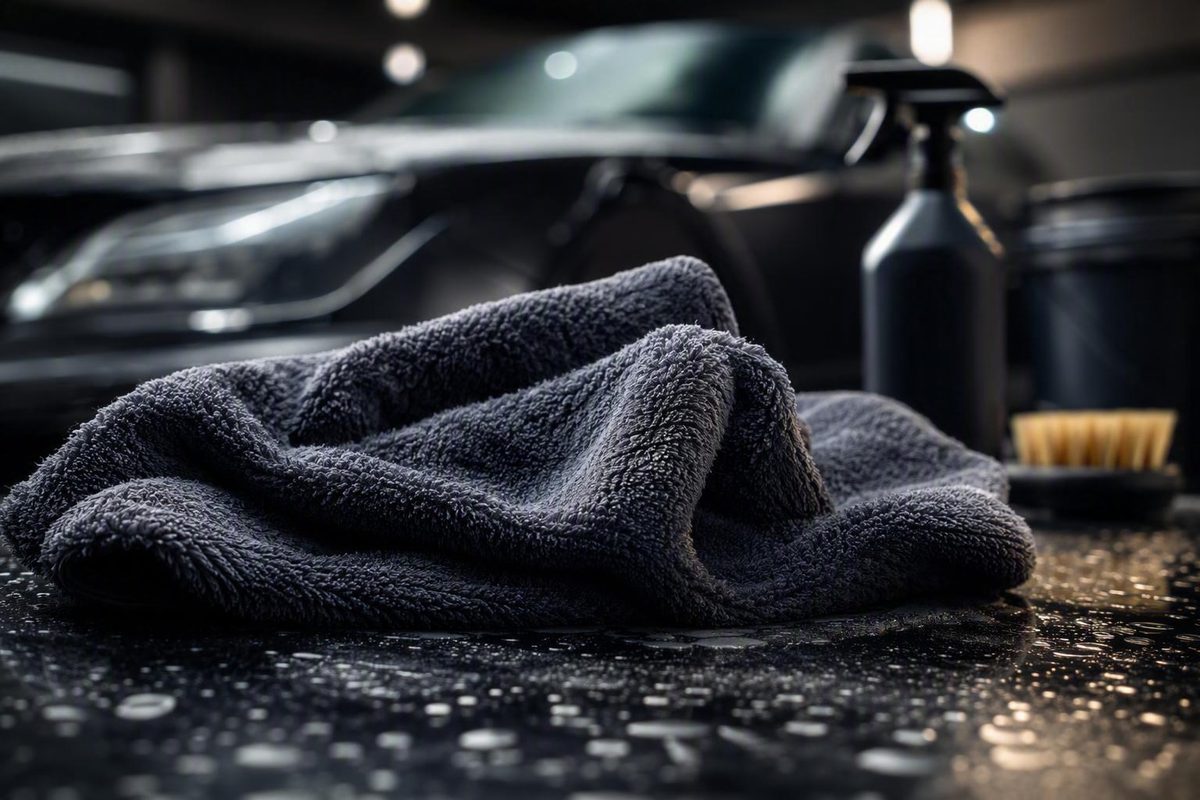
A terry cloth towel is defined by its loops—not by a particular fiber, weight, quality level, or intended use. That distinction explains how a plush bath towel, a striped bar mop, and an economy shop rag can all be terry while performing very differently.
Start with the job. Then compare fiber content, dimensions, loop structure, edges, stitching, lint tolerance, laundering requirements, and delivered cost.
Treat broad performance claims as questions to verify, follow the product care label, and test a small sample when lint, shrinkage, dye transfer, or surface compatibility matters.
What makes a towel terry cloth?
Terry cloth is a woven or knitted fabric with protruding, uncut yarn loops on one or both surfaces. Those loops add surface area and spaces that can take up and hold moisture, which is why terry construction is widely used for towels and other absorbent goods. Conventional towel terry is commonly woven, although terry can also be knitted. The defining feature is the looped pile—not a universal absorption rating or a promise that every terry product performs alike. An overview of terry cloth construction also distinguishes its loops from a flat fabric surface.
“Terry” therefore describes construction, not a guaranteed fiber. It does not automatically mean:
- 100% cotton
- Soft or plush
- Heavyweight
- Low-lint
- Preshrunk
- Colorfast
- Durable
- Safe for delicate surfaces
- Suitable for institutional laundering
Cotton is common, especially in bath and utility towels, but polyester may be added, and other fibers or blends also appear in products sold as terry. Verify the sewn-in fiber-content label or complete technical specification rather than inferring composition from “terry,” “terry cotton,” or a product photograph.
Loop length and density may affect how full the surface feels and how it picks up moisture. More loop yarn can produce a plusher surface, while short or sparse loops may feel flatter. The available evidence does not establish that longer or denser loops always make a towel faster-drying, stronger, less linty, or better value. Treat pile structure as one specification to examine and test rather than a quality score by itself.
The same caution applies to broad absorption figures. Without a controlled method comparing towels at equal weight, size, conditioning, and wash history, a universal capacity number is not useful. For purchasing, the practical question is not “How absorbent is terry cloth?” but “How well does this specific towel handle the liquid, surface, and laundering cycle involved?”
Towel terry, French terry, and the formats buyers encounter
Woven towel terry is the familiar loop-pile material used for bath towels, washcloths, robes, bar mops, and cleaning cloths. It may have loops on both faces or a construction in which one side differs from the other.
French terry commonly has loops on the inside and a smoother exterior. It is associated primarily with clothing such as sweatshirts, shirts, and pants rather than conventional bath or cleaning towels. It may be cotton or a blend. Seeing “French terry” in a garment description does not mean that the fabric will behave like a double-sided bath towel.
Terry velour is another term used by sellers for a terry variant. The name alone does not establish absorbency, softness, polishing ability, or durability. Check the product’s actual construction and intended use.
Buyers commonly encounter terry construction in:
- Bath towels and bath sheets
- Hand and fingertip towels
- Washcloths and wash mitts
- Spa, salon, gym, and pool towels
- Restaurant and bar mops
- General cleaning rags
- Polishing cloths
- Automotive utility towels
- Commercial and institutional towels
Cleaning formats cover a particularly broad range of dimensions. Retail catalogs have listed examples measuring 12 by 12, 14 by 17, 15 by 18, 16 by 19, 17 by 19, and 20 by 20 inches. These are examples of market availability, not fixed industry standards, and stock changes over time. A bulk terry towel catalog illustrates how one seller divides products by size, package format, condition, and suggested industry.
A plush guest towel and an economy rag can share the same looped construction while differing substantially in:
- Dimensions and fabric weight
- Fiber blend
- Loop uniformity
- Surface finish
- Dye and color consistency
- Decorative borders
- Hem and edge construction
- Lint behavior
- Shrinkage
- Laundering limits
- Appearance after repeated use
- Unit and replacement cost
They do not independently prove absorbency, durability, sanitation, environmental superiority, or value. “Irregular,” for example, may be acceptable for a utility rag but unsuitable where consistent dimensions and presentation matter. “Prewashed” does not reveal how the towel will respond to your detergent, equipment, temperatures, or drying process.
Choose the towel by job, not by the terry label alone
The quickest way to narrow the field is to specify what the towel will touch, what it must remove, how often it will be washed, and whether customers will see it.
| Job | Priorities | Questions to ask | Common reason to reject |
|---|---|---|---|
| Bath and guest use | Dimensions, feel, fiber content, colorfastness, appearance, care | Is every required size and color fully specified and priced? | Vague “luxury” claim with incomplete specifications |
| Spa or gym | Repeat washability, drying logistics, inventory rotation, color coding | Can the laundry process handle the towel and its care limits? | Impractical turnaround or inconsistent replacement supply |
| Restaurant and bar cleanup | Manageable size, secure hems, repeat washing, unit cost | Is it easy to wring, stack, sort, and replace? | Weak edges or an impractical size |
| General spill pickup | Liquid pickup, hand fit, lint tolerance, washability | Does lint matter on the surface being cleaned? | Too bulky, too small, or incompatible with the residue |
| Commercial cleaning | Task colors, package consistency, laundering cost | Can clean and contaminated stock be kept separate? | Unclear pack count, blend, or care instructions |
| Healthcare or institutional use | Facility protocol, traceability, compatible laundering | Does it meet the institution’s documented process? | Retailer use claim without supporting documentation |
| Metal polishing | Surface compatibility, low residue, clean edges | Does the compound or finish call for a particular cloth? | Lint, rough hems, or embedded residue |
| Automotive utility work | Task separation, cleanliness, edge condition, replacement cost | Will it touch paint, wheels, glass, jambs, or only utility areas? | One towel pool used for every vehicle surface |
Bath and guest use
For a household bathroom, hotel room, or customer-facing setting, prioritize verified dimensions, fiber content, hand feel, colorfastness, appearance after washing, and the care process. Check the price of the actual size and color you need. A collection page may display a low “from” price that applies to the smallest variant rather than a bath towel or bath sheet.
Words such as “luxury,” “premium,” and “super pile” are positioning language unless accompanied by useful specifications and comparable testing. Top-seller badges and small review samples do not establish long-term softness, absorbency, or durability.
Spa, gym, and hospitality operations
In a high-turnover operation, a towel is part of a laundry and inventory system. Consider how much wet stock accumulates, whether the washer and dryer can process the load, how quickly towels return to service, and how many inventory levels are required to prevent shortages.
Customer-facing towels may need consistent color, dimensions, softness, and hems. Back-of-house utility cloths may place more emphasis on laundering practicality and replacement cost. Buying one towel for both roles can create an unnecessary compromise.
Color can support task separation or inventory control, but the system works only if staff follow it and the laundry process preserves the separation. Dye stability and care restrictions must still be checked for the specific towel.
Restaurant, bar, and general cleaning
A manageable cloth is often more useful than the largest or plushest option. It should fit the hand, wring out reasonably, stack efficiently, and withstand the intended wash rotation.
Secure stitching and reinforced edges are reasonable specifications to request when cloths will be handled and laundered frequently. However, descriptions such as “reinforced,” “strong,” or “heavy duty” remain seller claims unless the listing provides meaningful construction details or test results.
Procedures for sorting, collection, laundering, and storage must support the color system.
Healthcare and institutional settings
A retailer may list healthcare, schools, hospitality, or another industry under suggested applications. That classification is not proof that the towel meets a sanitation protocol, procurement specification, chemical-resistance requirement, or specialized standard.
Institutional procedures, infection-control requirements, contracts, equipment instructions, and the towel manufacturer’s directions take precedence over generic household advice. Where compliance matters, ask for the required documentation rather than inferring suitability from “commercial,” “heavy duty,” or an industry filter.
Polishing and automotive utility work
Cotton terry towels are sold for spill pickup, dirty vehicle areas, restaurant cleanup, and metal polishing. One retailer describes its cotton terry product as having reinforced edges and strong stitching for those tasks, but these are seller-designated uses and construction claims, not independent surface-safety tests.
Before polishing, identify the material and finish. Bare metal, coated trim, gloss paint, glass, and interior displays do not necessarily call for the same cloth or process. Follow the instructions for the polish, cleaner, coating, or surface involved.
The specifications that matter before you buy
A useful listing should answer more than “terry cloth” and price. Work through this checklist before ordering.
Fiber content and blend percentage
Look for the exact fiber composition—for example, 100% cotton or a stated cotton-polyester blend. “Cotton rich,” “terry cotton,” and similar wording may not reveal the percentage.
Do not infer performance from the generic fiber name alone. Ask for the blend and test the finished product under the intended laundering and use conditions.
Finished dimensions
Confirm whether the listed size is nominal, measured before laundering, or expected after laundering.
For operational buying, consistency can matter as much as nominal size. Ask whether irregular or recycled products may vary from piece to piece.
Fabric weight or GSM
It can help distinguish lighter and heavier towels when measurements are reported consistently, but it does not independently prove quality, softness, absorbency, drying speed, or service life.
A heavier towel contains more fabric mass for the same area, but that does not settle whether it is practical for a particular washer, dryer, storage system, or task. Fiber, yarn, loop structure, finish, hems, and actual wash performance remain relevant.
Loop construction
Check whether loops appear on one or both sides and whether the surface looks uniform. Consider pile height, density, and exposure to snagging in relation to the job. If the towel will be used around rough hardware or sharp edges, test whether its loop structure remains practical.
Edges, hems, and stitching
Inspect how the edges are finished. Wide decorative borders may suit guest towels but reduce the working pile area. Thick, rough, loose, or damaged seams warrant caution when the towel will touch a delicate surface.
For frequent commercial laundering, ask for precise information about the edge finish and stitching rather than relying on “durable” or “commercial grade.” Check the defect and return policy as well.
Color and colorfastness
Color affects presentation and task coding. Ask whether the supplier provides colorfastness information relevant to the temperatures and laundry products you intend to use.
If no useful data are available, test a sample before combining it with other stock or placing a full order into service.
Lint tendency
Do not assume “low lint” or “lint free” from the fiber or fabric name. Ask whether the claim applies when the towel is new, after laundering, or under a defined test.
Lint tolerance depends on the task. A small amount may be acceptable for floor spills but unsuitable on glass, dark paint, polished metal, or customer-facing surfaces.
Expected shrinkage
Ask for expected shrinkage after a stated number of wash and dry cycles. If the supplier provides no figure, measure a sample before and after laundering it according to the label.
The useful question is not merely whether shrinkage can occur, but whether the towel remains within acceptable dimensions for its intended job.
Washability and care limits
Confirm:
- Maximum wash temperature
- Approved drying method and heat setting
- Bleach restrictions
- Detergent or additive restrictions
- Whether colors must be separated
- Whether the towel is approved for the intended commercial process
- Whether laundering changes the warranty or return rights
Package quantity and consistency
Verify the actual piece count, whether assorted sizes or colors can be mixed in a case, and how much variation is possible with irregular products. For weight-based cases, ask for a credible count range and typical piece weight.
Many listings omit GSM, blend percentage, origin, shrinkage, controlled lint results, or measured absorbency. Request the missing information rather than filling the gap with assumptions based on “plush,” “premium,” “luxury,” or “heavy duty.”
When lint, shrinkage, dye transfer, or surface compatibility matters, order a small quantity first if the return terms permit it. Measure, launder, dry, and use the sample under realistic conditions before buying a case. Read the return policy before washing anything because some sellers do not accept laundered returns.
Terry cloth versus microfiber: choose by surface and task
Terry and microfiber are broad product categories, not uniform materials.
Terry towels commonly use cotton-based loop pile, although blends and other fibers exist. Microfiber towels are generally made from very fine synthetic fibers, often polyester and sometimes blended with nylon or polyamide. Both categories include different weights, pile structures, edge treatments, and quality levels.
Commercial guides often position terry for body drying, spills, and general utility work, while recommending microfiber for lint-sensitive cleaning or polishing. These are market conventions and seller recommendations, not standardized comparative results.
The available commercial sources also disagree about which category is more absorbent. They provide no controlled, equal-weight comparison using matched conditioning and laundering. “Which material absorbs more?” is therefore too broad to answer responsibly.
| Task | Conditional starting point | What could change the choice |
|---|---|---|
| Body drying | Cotton-rich terry is conventional | Feel, weight, drying logistics, care limits, preference |
| Spill pickup | Terry may suit general utility work | Residue, lint tolerance, cloth dimensions |
| Glass | Low-lint microfiber is often recommended | Verified low-lint alternatives, contamination, edge design |
| Polishing | Purpose-selected microfiber is a common starting point | Finish type, product instructions, pile, edges |
| General cleaning | Either may work | Soil type, lint tolerance, laundry process |
| Vehicle work | Use task-specific towels rather than one universal material | Surface, contamination, seams, pressure, wash process |
No universal winner
Choose the specific towel around the surface and process:
- For skin, evaluate feel, dimensions, laundering, and drying practicality.
- For a large spill, consider usable capacity, wringing, and replacement cost.
- For glass, examine lint and residue.
- For polishing, follow the finish or chemical manufacturer’s instructions.
- For heavily soiled work, prioritize task separation and economical replacement.
- For delicate surfaces, inspect the edges and keep the towel clean.
Do not presume that every microfiber towel is lint-free or safe for every sensitive surface. Likewise, do not presume that every cotton terry towel is highly absorbent, durable, or suitable for polishing. Those claims depend on the specific product and how it is evaluated.
Environmental tradeoffs
A single material attribute does not establish environmental superiority. Conventional cotton cultivation can involve substantial agricultural inputs, while synthetic microfiber uses petrochemical feedstocks and may contribute to microplastic shedding. A commercial comparison summarizes these cotton and microfiber sourcing concerns, but it does not provide a complete lifecycle assessment.
A fuller comparison would need to examine sourcing, manufacturing, dyeing, verified recycled content, service life, laundering, drying, shedding, transport, and end-of-life handling. Labels such as “natural,” “recycled,” and “reusable” address only part of that picture.
Using terry towels around a vehicle without treating softness as a safety guarantee
Cotton terry towels are sold for automotive cleaning, dirty utility areas, spills, metal polishing, and sometimes vehicle drying. That does not mean every terry towel should touch every part of a car.
Softness in the hand is not a scratch-safety test. A car-care retailer specifically warns that a dropped towel may collect dirt capable of scratching a vehicle surface and recommends keeping towels clean and separated by task. That is seller guidance rather than controlled testing, but it supports a practical precaution: do not return a dropped or visibly contaminated towel directly to paint work. See the retailer’s terry-versus-microfiber guidance.
Potential concerns to check before paint contact include:
- Grit or visible debris trapped in the pile
- Residue from wheels, brakes, metal polish, or engine-bay work
- Rough, loose, or damaged edges
- Hardened product or laundry residue
- A dirty working face
- The instructions and condition of the surface being cleaned
Build a task-based towel system. Keep paint-contact towels separate from towels used on wheels, tires, exhaust tips, engine bays, door jambs, and heavily soiled interiors. Colors can help, but labels and separate containers make the assignment easier to maintain.
Before a towel touches paint, glossy trim, a display, or another delicate finish:
- Check both faces under good light.
- Look and feel gently for grit or hardened residue.
- Inspect seams and borders for damage.
- Look for stains that indicate persistent contamination.
- Fold the towel so a clean working face is exposed.
- Rewash, reassign, or retire it if its condition is uncertain.
Remove loose dirt before contact and maintain lubrication during contact washing; the Car Cleaning Zone guide to spray patterns and wash technique addresses those general rinse-and-wash principles, not towel testing.
For drying, use a clean towel with enough usable area to avoid repeatedly using a visibly soiled section. Follow any instructions supplied for the vehicle finish or drying product. If the towel begins to collect visible soil, stop and reassess the cleaning process.
Neither cotton terry nor microfiber is universally paint-safe or always superior. The towel’s condition, edge design, intended use, and contamination history matter alongside material choice.
Compare packs, cases, and pallets by usable cost
Package price alone obscures the real comparison. Start with:
Delivered cost per towel = (product price + applicable shipping and fees) ÷ known towel count
For example, if a case contains 300 towels, add the product price and known order-level costs, then divide by 300. If shipping or fees apply across several cases or products, allocate them consistently.
A piece-count case allows direct unit-cost calculation. A case sold only by weight does not. For a 40-pound case, you need a credible average towel weight or count range. Otherwise, a claimed per-rag figure is only an estimate and may not be directly comparable with a 300-count case.
In the supplied retail snapshot, for which no observation date was provided, a bulk catalog listed a 300-count case of 12-by-12-inch economy cloths at $127.95, or approximately $0.43 each; shipping and current availability require live verification. The seller’s bulk catalog contains the package and price figures.
A separate retailer snapshot listed 14-by-17-inch products at approximately $0.33 to $0.66 per towel, depending on the item and package. The displayed availability was localized, and prices, inventory, delivery terms, and package counts may change. The Home Depot terry-cloth category supplied those package-dependent examples.
Unit price is only the first calculation. A cheaper towel may offer poorer value if it:
- Sheds more lint than the job permits
- Shrinks below a useful size
- Transfers color
- Fails at the hem
- Retains incompatible residue
- Requires extra sorting or laundry handling
- Becomes unsuitable after fewer service cycles
Ideally, compare:
Cost per serviceable use = delivered unit cost ÷ acceptable uses before retirement
Reliable service-life data are often absent. Seller statements such as “built to last” do not provide a wash count, test conditions, or failure criterion. A controlled sample trial within your own process is therefore more useful than a speculative durability claim.
When each purchase format makes sense
Small packs may be appropriate when:
- You are testing lint, shrinkage, dye transfer, or surface compatibility.
- Consumption is low.
- Storage is limited.
- You need several specialized towel types.
- Return restrictions make a full case risky.
Cases may make sense when:
- Usage is predictable.
- You have adequate laundering and storage capacity.
- Staff need consistent dimensions or colors.
- Delivered unit cost is favorable.
- A sample has passed evaluation.
Pallets are primarily an operational decision. They require sufficient consumption, dry storage, receiving capacity, cash flow, stock rotation, and confidence in the specification. A low advertised unit cost does not help if the inventory cannot be stored properly or the towel fails the intended task.
Before ordering, verify the live price, exact package contents, nominal or finished dimensions, stock, localized availability, shipping eligibility, fees, and return restrictions. One supplied bulk catalog also contained an unexplained inconsistency in a weight-based recycled-towel price, illustrating why an unusually favorable figure should be confirmed with the seller before purchase.
Wash, dry, store, and troubleshoot terry towels
The product care label should control because fiber content, dye, finish, construction, and intended use vary. Institutional procedures and equipment instructions may add requirements that generic domestic guidance does not address.
Before first use
Several sellers recommend washing new terry towels before use, commonly to address initial lint or manufacturing residue. This is recurring commercial guidance, not an independently tested rule for every towel.
Before laundering an entire order:
- Inspect the shipment for size, color, edge, and construction problems.
- Read the return policy.
- If permitted, test one towel or a small sample.
- Record dimensions if shrinkage matters.
- Wash and dry according to the label.
- Check lint, dye transfer, shape, hems, and performance.
One vendor advises customers to test only one item because it does not accept used or laundered returns, while also recommending a pre-use wash. Its return and first-wash guidance should be understood as applying to that seller’s products and policies.
Detergent, softener, and dryer sheets
Use a detergent compatible with the towel label, the soil being removed, and the washing machine. If performance declines, detergent dosage and rinsing are reasonable variables to review, but the available vendor evidence does not establish one universal cause.
Multiple towel sellers discourage fabric softener and dryer sheets, saying that deposited coatings can reduce moisture pickup. The supplied evidence does not independently quantify that effect across all terry products, so treat avoidance as a common vendor recommendation unless the towel or laundry-system manufacturer directs otherwise.
If absorbency seems low:
- Check the care label.
- Review whether softener or dryer sheets were used.
- Verify detergent dosage.
- Confirm that the washer was loaded and operated according to its instructions.
- Rewash according to the approved care process before deciding the towel is defective.
There is no universal wash temperature
Commercial care recommendations range from cold or warm water to 60°C, depending on towel color, fiber, product type, and the manufacturer’s guidance. One retailer generally recommends 60°C for certain towels while discussing lower temperatures for colored items, illustrating why temperature advice varies by product and color.
Use a temperature that satisfies the care label and the actual cleaning or hygiene requirement. For healthcare, food service, or another controlled setting, follow the institution’s validated process rather than adapting household advice.
Separate colors where dye transfer is a concern. Keep heavily contaminated automotive or industrial towels away from bath, kitchen, and guest linens, and use separate task loads when required by the facility’s process.
Bleach guidance conflicts
Some sellers discourage chlorine bleach because they say it may weaken fibers or alter colors. Other commercial guidance allows bleach-containing detergent for suitable white towels. These positions apply to different products and should not be converted into a universal rule.
Check:
- The towel’s care label
- Fiber and dye information
- Whether the towel is white or colored
- The laundry product’s instructions
- Washer and dispensing-system instructions
- Institutional sanitation requirements
Vinegar, baking soda, peroxide, oxygen bleach, and other additives also appear in seller care advice. Do not assume that a suggestion for one towel applies to another. Use only products compatible with the towel label, laundry-product directions, and appliance instructions.
Drying
Towels should be completely dry before enclosed storage. Wet stock should not remain compressed in a hamper, cart, bag, or sealed bin; provide airflow until it can be laundered and dried.
Low-to-moderate tumble heat is common vendor guidance, generally intended to limit overdrying, wear, and shrinkage. Use the label-approved setting and avoid extending the cycle unnecessarily. Air drying uses less dryer energy but may leave towels feeling firmer.
If shrinkage is a problem:
- Check whether the towel was exposed to wash or dryer heat outside its care limits.
- Compare its dimensions with the prewash sample.
- Review the washer and dryer instructions.
- Ask the supplier for a stated shrinkage tolerance before reordering.
Lint
New cotton terry may release lint during initial laundering. Seller guidance commonly recommends washing it separately from lint-sensitive items and cleaning the dryer lint filter as required by the appliance manufacturer.
If lint remains unacceptable after the planned wash process, the towel may be unsuitable for glass, dark finishes, polished surfaces, or customer-facing use. Reassign it rather than assuming every terry towel can be made low-lint through additional washing.
Stiffness and low absorbency
If a towel becomes stiff or performs poorly, review the care label and compare the affected item with a clean control sample. Possible variables to examine include detergent dosage, softener or dryer-sheet use, washer loading, rinsing, and drying conditions. These are troubleshooting checks, not proof of a particular cause.
Persistent low absorbency may mean the product or its construction is not suitable for the intended task. If a correctly laundered sample still fails the requirement, replacement or reassignment may be more practical than repeated treatment.
Musty odors
For musty towels, start with the basic process:
- Wash them according to the label.
- Use an appropriate detergent and cycle.
- Ensure the cycle completes properly.
- Dry the towels fully.
- Improve airflow before laundering and during storage.
- Maintain the washer according to its manufacturer’s instructions.
Some retailers suggest vinegar, baking soda, or peroxide for odor or residue. Treat those as seller-specific suggestions. The towel label, laundry-product directions, and appliance instructions should determine whether an additive is suitable.
Pulled loops, damaged hems, and retirement
Do not pull a snagged loop. One retailer says a pulled loop may be trimmed instead, but that advice may not suit every fabric construction or warranty. Check the manufacturer’s directions before cutting, and avoid damaging surrounding yarn.
Rotate bulk inventory so the same towels do not receive all the wear. During folding or sorting, inspect edges, hems, stains, embedded debris, odors, and loop damage. Retire or reassign a towel when it remains contaminated, frays, sheds excessively, loses useful dimensions, or no longer suits its original task.
Frequently asked questions
Is a terry cloth towel always made from cotton?
No. Cotton is common in towel terry, but “terry” describes the looped construction rather than a mandatory fiber. Products may contain polyester or other fibers, so verify the fiber-content label and blend percentage.
Should a new terry cloth towel be washed before its first use?
Many sellers recommend washing before first use to address initial lint or manufacturing residue. Follow the towel’s care label and read the return policy first because laundering may make an item nonreturnable. For a bulk order, test one towel before washing the entire case.
Why is fabric softener commonly discouraged for terry towels?
Several towel sellers say softener and dryer-sheet coatings can interfere with moisture pickup. The supplied evidence does not independently quantify the effect across all terry products, but avoiding these products is a common commercial care recommendation. The towel’s label and laundry-system instructions remain controlling.
Is terry cloth or microfiber better for drying a car?
Neither is universally better. The available commercial sources disagree about comparative absorbency and provide no controlled equal-weight test. Evaluate the specific towel’s cleanliness, lint, pile, dimensions, edges, and condition, along with the vehicle surface and drying process.
Can a terry cloth towel scratch automotive paint?
Material alone cannot guarantee scratch safety. A car-care seller warns that a dropped towel may pick up dirt capable of scratching a vehicle surface and recommends keeping towels clean and separated by task. Treat that as contamination-aware seller guidance rather than proof that any material is universally safe. The warning appears in its automotive towel comparison.
Keep paint-contact towels separate, inspect them before use, and rewash, reassign, or retire towels that are dropped, visibly contaminated, or damaged. Follow the vehicle finish and product manufacturer’s instructions.
The practical takeaway
Choose a terry cloth towel by starting with the surface and job, then verifying fiber content, dimensions, loop construction, edges, care limits, package quantity, and delivered unit cost. “Terry cloth” is only the starting specification.
For vehicle work, use task separation and inspect towel condition before contact. For laundering, follow the care label, equipment directions, and any applicable institutional process. When lint, shrinkage, dye transfer, surface compatibility, or long-term value matters, test a small quantity before committing to a case or pallet.