
How to Clean Perforated Leather Seats Without Soaking Them
Vacuum the holes, patch-test a seat-safe cleaner and wipe with minimal moisture. Learn how to clear debris and when to stop before soaking the padding.
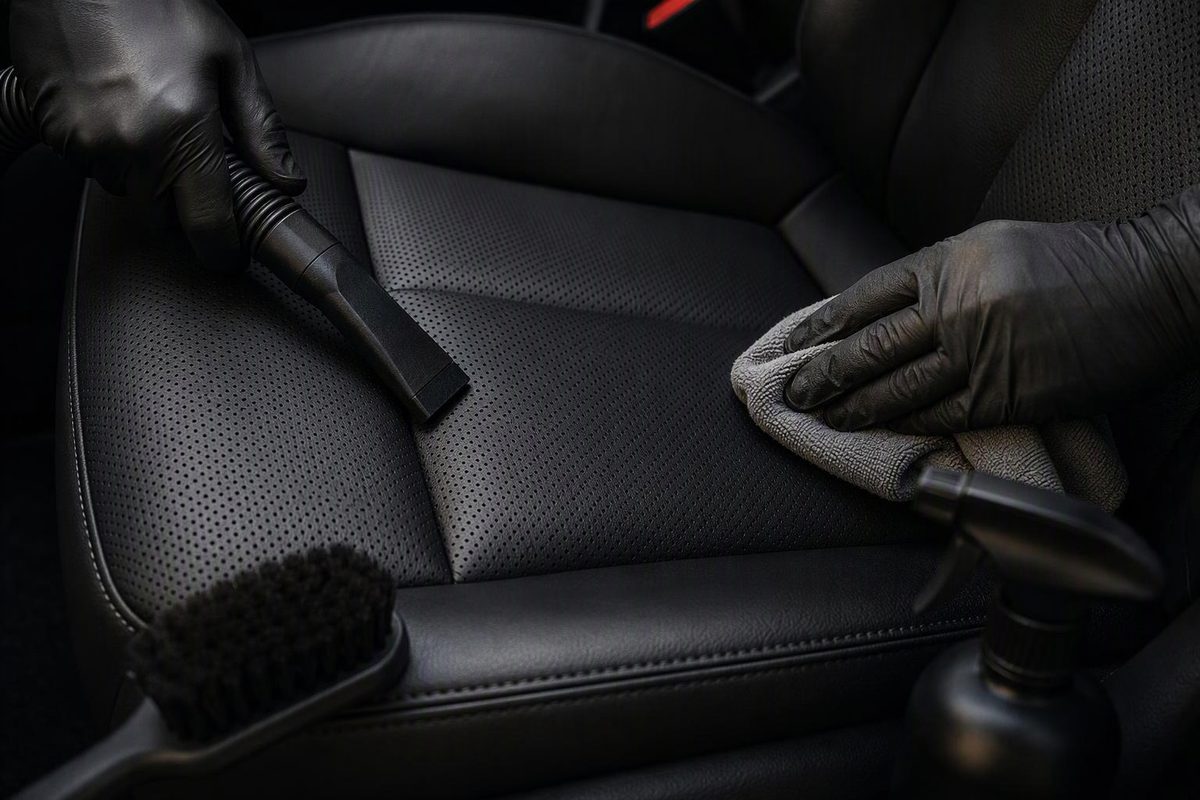
Vacuum first, apply a compatible cleaner to a cloth—not the seat—and clean small sections with minimal moisture. Wipe away residue and dry each section before moving on. The aim is to lift dirt off the surface without sending cleaner through the perforations into the padding.
Too much liquid can seep through the holes, while excess care product can leave residue in them. Swissvax’s perforated-leather guidance specifically warns about both problems.
Check the seat and cleaner first
Look up the upholstery-care instructions for your model and year. A perforated panel may be genuine leather or a synthetic leather-look material; the holes alone do not identify it. If the surface is suede-like, use a suede or microfiber upholstery method instead.
Do not assume foaming leather cleaner is always the safest choice. This Ford leather-seat care page explicitly prohibits foam cleaning products on perforated leather. Follow your own manual if it imposes a similar restriction.
Gather:
- A vacuum with a clean, soft upholstery attachment.
- Several clean, soft microfiber cloths.
- A very soft interior brush for loose, dry debris, if needed.
- Water and the cleaner permitted by your vehicle’s care instructions.
Choose a ready-to-use cleaner where appropriate, or dilute a concentrate exactly as its label directs for that upholstery. There is no universal leather-cleaner dilution. Avoid household stain-removal mixtures, alcohol and aggressive all-purpose cleaners unless your vehicle’s instructions specifically permit them.
Stop before wet cleaning if the finish is peeling, the hole edges are torn, or a spill has already soaked the cushion. Blot any liquid still on the surface with a clean cloth rather than adding cleaner.
Clean in this order
1. Remove loose dirt from the holes
Vacuum the cushion, backrest, seams and perforated panels before wiping. Keep the attachment clean and avoid dragging a hard nozzle across the finish. Swissvax recommends a vacuum with a soft nozzle to remove loose debris before cleaning.
For crumbs sitting at the openings, lightly sweep across the surface with a dry, very soft brush, then vacuum again. Work across the holes rather than pushing bristles down into them.
Do not use needles, toothpicks or other pointed tools to dig out plugs. If debris will not lift with gentle brushing and vacuuming, stop trying to excavate it; seek a leather-care professional’s assessment rather than forcing it deeper.
2. Patch-test the cleaning method
Apply a little of the permitted cleaner to a cloth and test an inconspicuous area with the same gentle wiping method you intend to use. Remove residue as directed, dry it and inspect before proceeding.
Stop if the upholstery’s color transfers to the cloth, or the test area becomes tacky, discolored or visibly different in sheen. The Ford care page also instructs owners to test cleaners on an inconspicuous area and avoid soaking any surface.
3. Wipe one small section
Start with a lightly damp cloth if the manual allows it. For remaining grime, put a small amount of compatible cleaner onto a fresh cloth or approved applicator—never spray directly into the perforations.
Use light pressure and short passes. The cloth should be damp, not dripping; there should be no liquid pooling over the holes. Refold it frequently so you are lifting dirt rather than spreading it.
Clean and remove residue section by section rather than leaving the whole seat wet. If a specialist cleaner specifies a contact time, follow that instruction only where the vehicle permits the product and method. Do not extend dwell time to chase a stubborn stain.
4. Remove residue, then dry
If the cleaner requires a damp follow-up wipe, use a separate cloth wrung out thoroughly. This is a controlled wipe, not a water rinse. Follow with a dry, soft cloth, blotting around seams and holes.
Inspect the perforations for remaining residue. Do not flood them to flush it out. Leave the seat to finish drying with ordinary cabin airflow. Avoid a hair dryer: Tesla’s Model X seat-care instructions explicitly say not to blow dry. Swissvax advises against steam cleaners on perforated leather.
Conditioner is not an automatic final step
Check the manual before adding any conditioner or protectant. The Ford care page warns against oil-, petroleum- and silicone-based leather conditioners; Tesla’s Model X instructions do not recommend conditioners or protectants for its vegan-leather seats.
Where a care product is permitted, use the specified amount on an applicator and avoid leaving deposits in the openings. See the broader leather cleaning and conditioning guide for that decision.
If a stain remains after gentle cleaning, do not respond with more liquid or harder scrubbing. Persistent odor, wet padding or contamination lodged beneath the cover needs assessment beyond surface cleaning. For a milk spill, use the milk-odor guide rather than repeatedly wetting the perforated panel.