
Clean Mold Off Car Seats Without Soaking the Cushion
Choose a seat-safe surface-cleaning method, remove residue and dry thoroughly—with stop points for contaminated foam, recurring mold or flood damage.
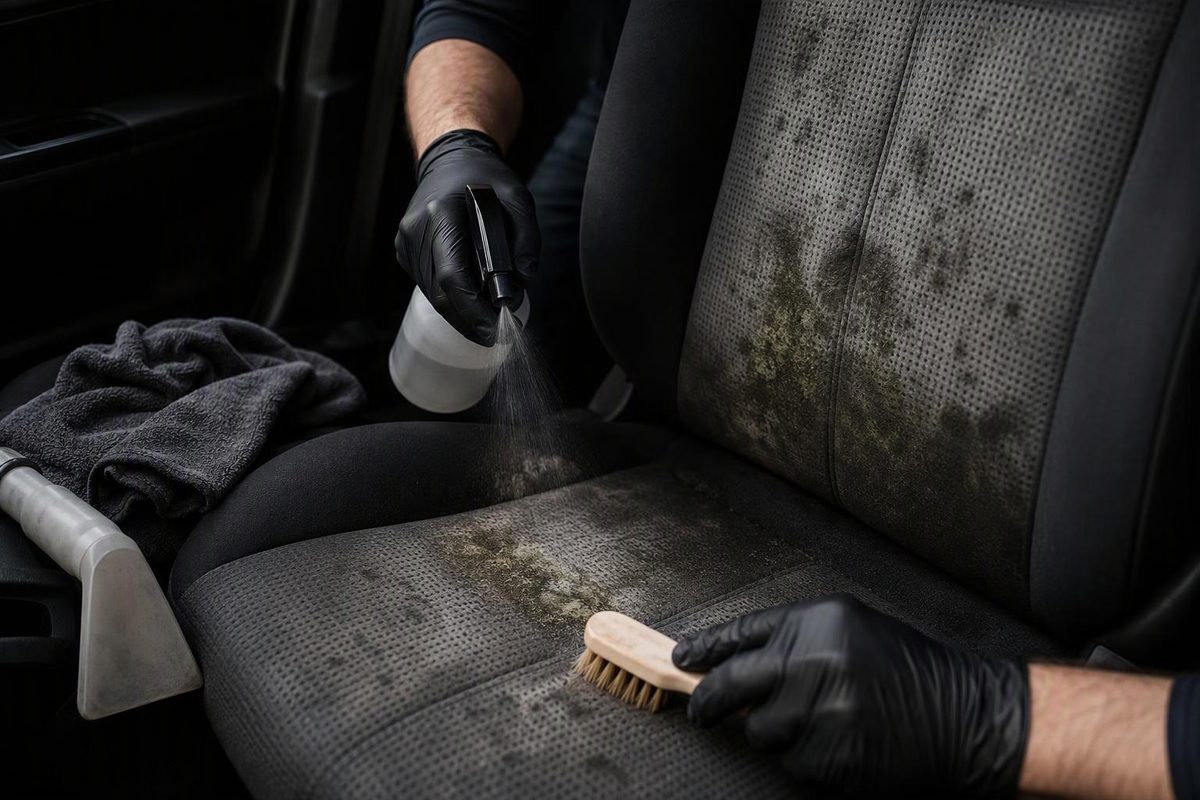
For a small surface patch, use a cleaner approved for the seat material, lift the contamination with damp cloths, remove cleaner residue and dry thoroughly. Do not start by dry-brushing mold or vacuuming it with an ordinary household or shop vacuum.
The important limit is what lies beneath the upholstery. Cleaning the visible cover does not establish that the seat foam is clean. EPA warns that mold can penetrate porous materials and may be difficult or impossible to remove completely; affected materials sometimes need replacement. That matters especially with cloth seats and soaked cushions. EPA mold-cleanup guidance
1. Decide whether this is a surface-cleaning job
Wear the protection described below before inspecting or disturbing mold. Check the seat seams, accessible underside, nearby carpet and floor mats without dismantling the seat. Look for dampness and growth beyond the original patch. Identify the moisture source: a spill, an open window, a leak or previous cleaning that never dried.
Stop and arrange professional assessment if:
- Several seats, the carpet or the headliner are affected.
- The cushion was soaked, remains damp, or has growth visible underneath.
- Mold returns after cleaning, or a musty smell persists despite drying.
- Floodwater, sewage or other contaminated water entered the cabin.
- You suspect growth inside the ventilation system. Keep that system off pending assessment.
Use an automotive restoration or upholstery specialist with mold-cleanup experience, not simply an odor-removal service. Ask whether the cover and foam can be salvaged and how hidden moisture will be checked. EPA recommends experienced professionals for contaminated-water damage and suspected hidden mold, and advises against running a suspected contaminated HVAC system. These are building-cleanup principles applied cautiously to a vehicle—not a square-footage allowance for cleaning car seats. EPA guidance on cleanup and hidden mold
2. Protect yourself and prepare
Work in a dry, well-ventilated location with the engine off and doors open. Keep other people away from the cleaning area.
Wear a properly fitting NIOSH Approved N95 respirator, protective gloves and goggles without open ventilation holes. CDC advises that people with allergies, asthma, COPD, immune suppression or underlying lung disease should not perform mold cleanup. CDC mold-cleanup precautions
Gather:
- A cleaner approved by the vehicle manual for the upholstery.
- Several clean, soft microfiber cloths.
- Clean water for residue removal, where the cleaner requires it.
- Bags for contaminated disposable wipes or materials.
Skip the routine vacuum-first step used for ordinary seat dirt. EPA warns that wet vacuums used on dry moldy material may spread spores and recommends HEPA vacuuming for final cleanup after drying and removal of contaminated material. An ordinary shop vacuum is not a substitute. EPA cleanup methods
3. Choose the method by seat material
Finished leather, vinyl or synthetic leather
Check the manual rather than assuming one leather cleaner suits every imitation-leather finish. For example, Ford recommends mild soap and water for routine leather care, wiping with a soft cloth and then drying; it warns against household cleaners and alcohol solutions. Those are material-care instructions, not a promise to remediate mold. Ford leather-seat care
- Patch-test the approved cleaner on a hidden area. Let it dry and check for color transfer, haze, tackiness or texture changes.
- Apply cleaner to a cloth where its directions permit, rather than flooding the seat.
- Gently lift the surface contamination, folding to a clean cloth face frequently. Do not scrub aggressively or push liquid into perforations and seams.
- Remove residue as directed, using a separate barely damp cloth if required.
- Dry promptly with another soft cloth.
Stop if the finish flakes, cracks or transfers color. Suede-like upholstery, unfinished leather and damaged finishes need specialist advice. For routine care after the mold problem is resolved, see our leather-seat cleaning guide.
Cloth seats
Cloth and cushion foam are porous. If there is reason to suspect penetration below the surface, do not attempt to solve it with repeated shampooing. Have the seat assessed for cleaning, restoration or replacement.
For a tiny, localized surface patch with no soaking history or signs of deeper contamination, a cautious surface-cleaning attempt follows ordinary fabric-care principles:
- Patch-test an automotive upholstery cleaner approved for the fabric.
- Follow its dilution, application and contact-time instructions exactly. There is no universal mold-cleaning ratio or dwell time.
- Work a small section gently with a damp microfiber cloth; avoid dry brushing.
- Blot away loosened contamination and excess cleaner with fresh cloths. Remove residue according to the label without saturating the cushion.
- Allow thorough drying before use.
Toyota describes upholstery-cleaner application, gentle agitation, damp-cloth blotting and thorough air drying for fabric seats. This is cover cleaning, not a verified mold-remediation method, and it does not establish removal from foam. Toyota fabric-seat instructions
4. Dry, fix the moisture source and recheck
Once visible contamination has been removed, ventilate the cleaned area in dry conditions. Do not direct a fan across untreated mold: fans can spread existing mold. FEMA drying precautions
Do not close up or use a damp seat; if you cannot dry it thoroughly, stop adding liquid and seek professional help. EPA notes that fully drying upholstered furniture within 48 hours can be difficult. A dry-looking cover alone does not establish that the cushion is dry. EPA drying guidance
Repair the leak or address the spill that caused the problem. For future wetting, aim to dry affected materials within 24–48 hours—a prevention target, not a guarantee that an already moldy seat is safe. Recheck shortly after cleanup and after the next rain. Recurring growth or persistent mustiness warrants further assessment. EPA moisture-control guidance
Do not substitute bleach, vinegar, fragrance or steam for removal and drying. EPA does not recommend biocides such as bleach as routine mold cleanup and notes that dead mold can still cause allergic reactions. Never mix bleach with other cleaners. If staining remains, do not keep escalating chemicals: mold can leave cosmetic damage even after removal. EPA cleanup and biocide guidance