
Plan Your Detail Without Underestimating the Appointment
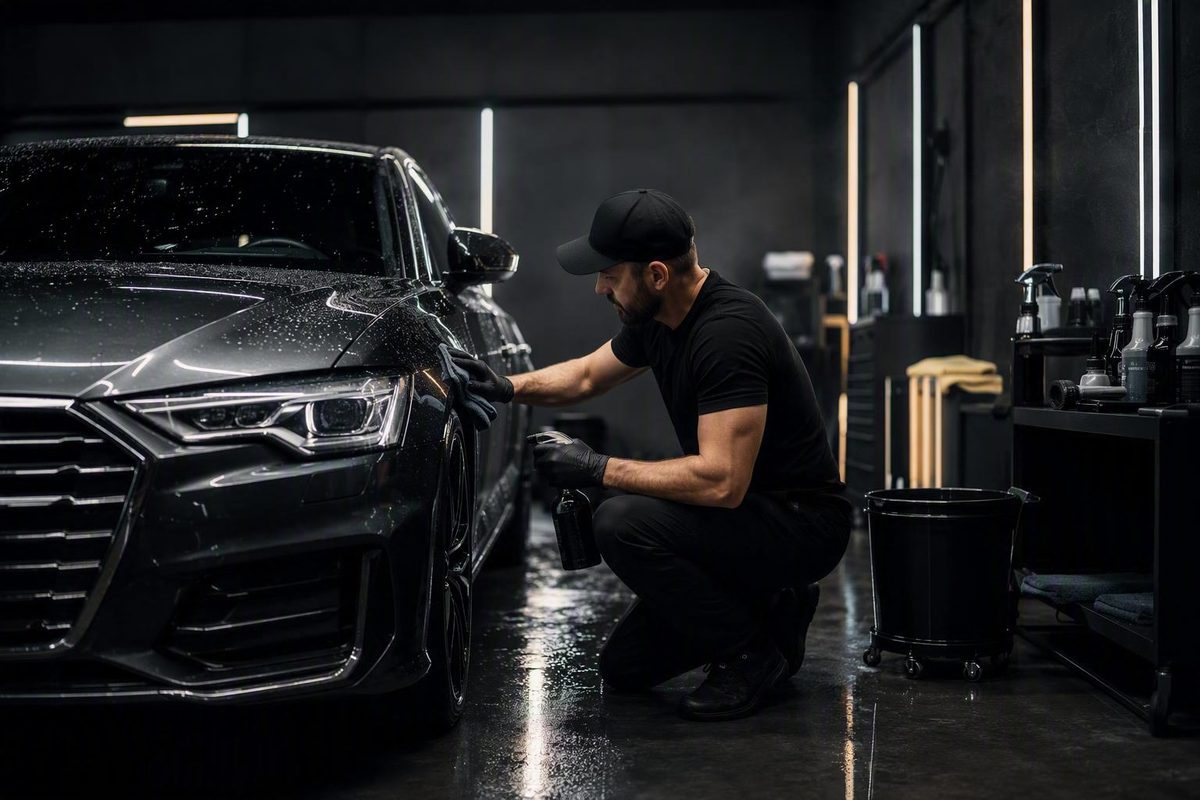
Plan your detail without underestimating the appointment.
Editorial method: This guide synthesizes published estimates from detailing businesses and uses forum experience only as anecdotal context. These sources do not constitute standardized industry time-and-motion research. Car Cleaning Zone says its coverage draws on hands-on experience and that contributor Marco has detailed cars professionally for a decade (about Car Cleaning Zone).
The short answer: allow about half a day for a routine full detail
If you are wondering how long detailing a car takes, the most useful planning answer is to reserve roughly half a day for a routine full interior-and-exterior detail.
Provider-published estimates place many standard appointments within about 2–8 hours, with a routine full detail commonly estimated at approximately 3–6 hours. L&M Car Detailing publishes both ranges, although it notes that vehicle condition and the selected package affect the result (see its detailing-time breakdown).
That is a planning allowance, not a guaranteed completion time. Boise’s Best Auto Detail, for example, estimates 4–8 hours for a full detail. Its broader estimate illustrates how package scope can change the appointment: one provider’s “full” service may be thorough cleaning with basic protection, while another may include extraction, decontamination, paint correction, or other labor-intensive work (compare its express and full-detail definitions).
Use the following ranges only as starting estimates:
| Service type | Planning estimate | What the estimate may cover |
|---|---|---|
| Light express detail or wash-and-vacuum | About 30–120 minutes | Wash, dry, light vacuuming, and limited surface cleaning |
| Exterior-only detail | About 1–3 hours | Washing, wheels, drying, and basic decontamination or protection |
| Ordinary interior-only detail | About 1–4 hours | Vacuuming and surface cleaning, sometimes with limited stain treatment |
| Routine full interior-and-exterior detail | Commonly about 3–6 hours | Thorough interior and exterior work without extensive restoration |
| Heavily soiled deep cleaning | Potentially 6–8 hours or longer | Embedded debris, severe staining, pet hair, odors, or extensive decontamination |
| Paint correction, coatings, PPF, or restoration | From several hours to multiple days | Preparation, correction, application, curing, installation, or specialized restoration |
The table combines overlapping provider estimates. Shamrock Detailing lists 1–2 hours for a basic wash-and-vacuum, 3–6 hours for a full detail, and 6–8 hours or longer for heavily soiled or more extensive work. Hugo’s Auto Detail estimates 1.5–3 hours for exterior detailing and 2–4 hours for interior detailing. Together with L&M’s estimates, these figures support the broader planning ranges above, but not a universal standard (review Shamrock’s service estimates; compare Hugo’s estimates).
The distinction between heavily soiled cleaning and advanced work matters. A difficult interior might still be completed during a long working day. Multi-step paint correction, ceramic-coating preparation, paint-protection-film installation, or restoration can extend well beyond that window and may require overnight or multi-day scheduling.
For the most reliable completion estimate, compare the provider’s itemized package with your vehicle’s actual condition. Ask whether the quoted time includes drying, paint correction, coating preparation, curing, final inspection, and indoor storage. The package name alone is not enough.
Why the words express and full detail do not define the job
Detailing package names are not standardized. “Express,” “mini,” “complete,” “full,” and “premium” are labels chosen by individual businesses, not fixed definitions of work. Two providers can sell packages with the same name while promising substantially different tasks.
A light express service might include:
- An exterior wash and dry
- Wheel and tire cleaning
- A light cabin vacuum
- Dusting or spot wiping
- A quick spray wax or sealant
A deeper full detail might add:
- Chemical paint decontamination
- Clay treatment
- Carpet or seat shampooing
- Hot-water extraction
- Leather cleaning and conditioning
- Machine polishing
- Wax, sealant, or another protective product
- Detailed cleaning of crevices, vents, jambs, trim, and cargo areas
An express detail is therefore not necessarily a full detail performed faster. It is often a deliberately limited maintenance service intended for a vehicle that is already in manageable condition. Adding deep stain removal, extraction, extensive contamination removal, and machine polishing would change both the service and its duration.
Even the word express can describe a relatively broad job. In an industry-forum discussion, an experienced contributor estimated about four hours for a package covering wheels, tires, fender wells, the engine bay, washing and drying, exterior protection, glass, door jambs, vacuuming, interior surfaces, and leather care. The contributor suggested that the work could take about three hours when completed exceptionally quickly with equipment prepared in advance. This is anecdotal experience rather than an industry benchmark, but it demonstrates why package names are weak predictors of time (read the forum task breakdown).
Before comparing prices or turnaround times, verify these inclusions and exclusions:
- Trunk or cargo area: Is it vacuumed and wiped, or excluded unless emptied?
- Door jambs: Does cleaning mean a quick wipe or detailed agitation?
- Wheels and fender wells: Are only the wheel faces cleaned, or are barrels and arches included?
- Carpet or seat extraction: Is wet extraction included, optional, or unavailable?
- Pet-hair removal: Does the package include embedded hair or only ordinary vacuuming?
- Paint decontamination: Does it address iron deposits, tar, sap, bugs, or other bonded material?
- Clay treatment: Is mechanical decontamination included, and on which surfaces?
- Machine polishing: Is the paint actually polished, or is a product merely applied by machine?
- Wax or sealant: What protection is applied, if any?
- Engine bay: Is it included, available as an add-on, or excluded?
- Odor treatment: Does the service address the source or only apply a separate deodorizing treatment?
The itemized list—not the word full—tells you what the technician must accomplish. It also shows whether a short and a long estimate are genuinely competing offers or fundamentally different services.
Where the hours go during interior and exterior detailing
A detailing appointment consists of many smaller stages. The order varies with the provider, vehicle, workspace, products, and selected services, but an illustrative workflow could include:
- Inspection, condition notes, and setup
- Wheels, tires, and fender wells
- Pre-rinse and exterior wash
- Chemical or mechanical decontamination
- Drying and work around jambs and crevices
- Interior vacuuming
- Cleaning panels, controls, trim, and other surfaces
- Treating stains, carpet, seats, or upholstery
- Machine polishing, if selected
- Applying exterior or interior protection
- Cleaning glass
- Final inspection and touch-ups
No individual stage necessarily consumes an afternoon. The appointment grows because every stage involves access, tools, product application, agitation, removal, inspection, and sometimes repeated passes.
Exterior time
Provider estimates place ordinary exterior-only detailing at roughly 1–3 hours before substantial machine correction. L&M, for example, estimates 1–2.5 hours for exterior detailing and gives stage-level examples of 20–40 minutes for washing and drying and 20–45 minutes for paint decontamination or claying. These are one provider’s estimates, not universal task standards (see the exterior timing examples).
The important point is how quickly the stages accumulate. A wash may be relatively brief, but detailed wheel cleaning, treatment of fender wells, removal of bonded contamination, careful drying, protection, and final inspection can turn it into a multi-hour exterior service.
Drying may also involve more than passing a towel across flat panels. Water can remain around mirrors, badges, trim, grilles, seals, handles, and jambs. Applying protection adds further work. If polishing is selected, the process may also involve paint inspection, masking, test spots, machine passes, residue removal, and a final panel check.
Those are not equivalent tasks and should not be expected to take the same amount of time.
Interior time
An ordinary interior-only detail is reasonably planned at approximately 1–4 hours based on overlapping provider estimates. A light service may sit near the lower end, while Hugo’s Auto Detail estimates 2–4 hours for interior detailing and notes that pet hair, spills, odors, and embedded debris can lengthen the process.
A surface-level interior service may involve:
- Removing loose debris
- Vacuuming accessible carpet and seats
- Wiping the dashboard, console, and door panels
- Cleaning interior glass
- Applying limited dressing or protection
A deeper service may instead involve:
- Repeated vacuuming and agitation of embedded debris
- Detailed cleaning between seats and around rails
- Shampooing or steam cleaning
- Carpet and upholstery extraction
- Set-in stain treatment
- Leather cleaning and conditioning
- Cleaning vents, seams, switches, and tight trim
- Finding and treating an odor source
Extraction is not merely another cleaning step. Carpet or upholstery may remain damp and need additional drying before the vehicle is comfortable to use.
Ask whether the pickup estimate assumes that cleaned materials will be dry, mostly dry, or still completing the drying process. A provider may finish active cleaning before the vehicle is ready for normal use.
The scheduling lesson is straightforward: combining several modest tasks changes the nature of the appointment. Washing, wheel cleaning, decontamination, vacuuming, stain treatment, protection, glass cleaning, and inspection can reasonably occupy half a day even when no single stage appears unusually long.
The factors that can move your car outside the typical range
A useful estimate considers four groups of variables: the vehicle, its condition, the requested scope, and the operating conditions under which the work will be completed.
Vehicle factors
A larger exterior creates more area to wash, decontaminate, dry, polish, and protect. A larger cabin creates more carpet, upholstery, glass, trim, and cargo space to clean.
Configuration can matter as much as overall dimensions. Time may be affected by:
- Third-row seating
- Folding seat systems
- Deep cargo wells
- Multiple consoles or storage compartments
- Narrow gaps around seat rails
- Running boards
- Complex wheel designs
- Large amounts of interior glass
- Limited access around installed accessories
There is no dependable universal time penalty for an SUV or truck. Providers publish different vehicle-class estimates because their packages, staffing, tools, and procedures differ. Size matters, but it should be treated as one input rather than a fixed stopwatch adjustment.
A two-row SUV with an empty, maintained cabin may be more straightforward than a small hatchback filled with belongings and debris around folding seats. A clean pickup cab presents a different job from a pickup that also requires work on a muddy bed, tool storage, or heavily used rear seating.
Vehicle condition
Condition often outweighs size. A neglected compact car can take longer than a maintained SUV because the technician must spend more time loosening, collecting, treating, and rechecking contamination.
Common time-extending conditions include:
- Embedded pet hair
- Sand in carpet, seams, and seat tracks
- Food crumbs and compacted debris
- Set-in stains
- Persistent odors
- Mud in footwells and wheel arches
- Road salt residue
- Dried bugs
- Tar or sap
- Heavy brake dust
- Oxidation
- Scratches and swirl marks
- Bonded paint contamination
The extent and location of the problem matter. A small amount of pet hair on a rubber cargo mat is different from hair woven through carpet and fabric. One stain on a removable mat is different from old staining across seats, carpet, and other materials.
Photos can improve a preliminary estimate, but they may not reveal embedded contamination, difficult access, paint defects, or the full depth of a stain. A hands-on inspection can therefore change both the quoted scope and the completion window.
Service scope
Cleaning, correction, and protective installation are different categories of work.
Time generally rises as the request moves from removing loose dirt toward correcting, restoring, or applying products to prepared surfaces. Significant additions can include:
- Chemical and mechanical decontamination
- Carpet or upholstery extraction
- Paint enhancement or correction
- Ceramic-coating preparation and application
- Paint-protection-film installation
- Headlight restoration
- Engine-bay work
- Detailed wheel treatment
- Wheel removal
- Odor-source treatment
- Localized restoration
A full detail may include some of these services, all of them, or none of them. The provider should inspect the vehicle, define the intended result, and identify optional work before making a firm time commitment.
Operating conditions
The same itemized job can require different amounts of elapsed time under different operating conditions. Relevant variables include:
- Number of technicians
- Technician experience
- Equipment and product setup
- Tool organization
- Indoor or outdoor workspace
- Lighting
- Access to water and power
- Temperature, wind, rain, and humidity
- Mobile setup and packing time
- Shop scheduling and vehicle movement
- Quality-control procedures
However, there is no universal conversion between labor hours and pickup time. Workers may divide tasks differently, share equipment, wait for access to the same area, or perform some stages sequentially.
Avoid relying on fixed add-ons for every stain, patch of pet hair, or larger body style. A vehicle-specific estimate based on the extent and location of the work is more credible than a universal promise detached from condition and scope.
Three realistic planning scenarios
These scenarios are illustrative planning examples derived from overlapping provider estimates. They are not quoted packages or guaranteed completion times.
Scenario 1: Maintained sedan with light cleaning needs
Illustrative scope: Exterior wash, wheels, drying, light vacuuming, interior surface cleaning, glass, and basic paint protection.
Planning estimate: Roughly 2–4 hours, assuming the vehicle is maintained and does not need extraction, extensive decontamination, or machine correction. A provider that defines a typical detail as exterior washing and waxing, interior vacuuming and shampooing, and glass cleaning publishes the same 2–4-hour general range (see the provider’s estimate).
This appointment may fit comfortably into a morning or afternoon. Same-day pickup is plausible if the provider confirms the scope and schedule. Waiting nearby may also be practical, although you should leave flexibility beyond the earliest estimate.
“Basic protection” should be defined before booking. Applying a quick spray product is not the same process as preparing paint for a ceramic coating.
Scenario 2: Typical sedan receiving a thorough full detail
Illustrative scope: Complete wheel and exterior cleaning, interior vacuuming and detailed surface work, attention to jambs and crevices, limited stain treatment, specified decontamination, glass cleaning, and ordinary protection.
Planning estimate: Approximately 3–6 hours, so reserve half a day. This is a provider-published estimate for a full interior-and-exterior detail under normal conditions, not a guaranteed industry-wide turnaround.
Same-day pickup is a reasonable planning possibility, but avoid arranging an inflexible commitment immediately after the earliest quoted completion time. Inspection may uncover embedded debris, bonded exterior contamination, or stains requiring repeated treatment.
Scenario 3: SUV with embedded pet hair, stains, and soiled carpets
Illustrative scope: Exterior detailing, extensive vacuuming, agitation of embedded debris, stain treatment, carpet or upholstery extraction, detailed cargo-area cleaning, and drying.
Planning estimate: Roughly 5–8 hours or longer, depending on the severity of the contamination and whether extraction and drying are required. This is a synthesis of a provider’s 4–8-hour full-detail estimate and its warning that pet hair, spills, odors, and embedded debris can extend the work (compare the condition and duration guidance).
Arrange transportation unless the provider confirms a reliable same-day pickup. The vehicle may require most of the working day, and pickup readiness may depend on how quickly the cleaned materials dry. Severe odor work, extensive paint correction, or restoration would move the project beyond this scenario.
These examples show why size is not decisive. A maintained three-row SUV receiving a maintenance service may be completed before a smaller sedan with pet hair woven through fabric, sand beneath seat rails, set-in spills, and heavily contaminated paint.
Routine cleaning and protection can often be planned as same-day work. Extensive correction, coating preparation, curing, paint-protection film, or restoration may require overnight or multi-day scheduling. Revise every scenario after the provider reviews the vehicle or clear condition photos.
When paint correction or protection turns the job into a multi-day project
Routine detailing generally centers on cleaning, presentation, and relatively straightforward protection. Paint correction, ceramic coatings, paint-protection film, wheel removal, and restoration are separate or additional processes that can change both labor requirements and vehicle downtime.
Paint correction itself covers a wide range of work. A light gloss enhancement may take only a few hours, while multi-step correction can require roughly 12–20 labor hours. Shamrock Detailing publishes estimates of 2–4 hours for gloss enhancement, 6–10 hours for one-step correction, and 12–20 labor hours for two-step correction, with the last category commonly spread across multiple calendar days (see the paint-correction breakdown).
Comprehensive projects can require still more coordination when they combine compounding, polishing, ceramic coating, wheel treatment, wheel removal, interior work, or paint-protection film. In the industry-forum discussion cited earlier, one contributor estimated 12–20 labor hours for a broad correction-and-coating project and said that it would typically be scheduled over at least two to three days. That remains an anecdotal example rather than a universal standard (review the advanced-work example).
When discussing advanced service, ask for four separate measures:
- Hands-on labor time: The cumulative time technicians actively work on the vehicle.
- Elapsed appointment time: The clock time from drop-off until scheduled work is complete.
- Drying or cure time: The period during which cleaned materials dry or applied products remain undisturbed.
- Total vehicle downtime: The full period during which you cannot use the car normally.
These figures are not interchangeable. The relationship will not be perfectly predictable because some stages can overlap while others must be completed in sequence.
Ceramic-coating estimates require particular care. A short application estimate may describe only the act of applying and leveling the product. It may exclude washing, chemical decontamination, clay treatment, paint inspection, machine correction, panel preparation, indoor holding time, inspection, and curing.
Before booking, ask whether the coating quote includes:
- Initial wash
- Chemical decontamination
- Clay treatment
- Paint inspection
- Machine correction or enhancement
- Panel preparation
- Coating application
- Treatment of wheels, trim, or glass
- Indoor holding time
- Initial cure period
- Final inspection
Also ask when the vehicle can be driven and when it can be exposed to water. Do not assume that “application complete” means the entire process is complete or that all normal use can resume immediately. Follow the installer’s instructions for the specific product and conditions.
How to get an accurate estimate without encouraging rushed work
A useful estimate begins with an honest description of the vehicle and a precise definition of the requested result. Before asking, “How fast can it be done?” give the detailer enough information to assess the work.
What to disclose before booking
Tell the provider about:
- Vehicle type, body style, and seating configuration
- Third-row seating or a large cargo area
- Current interior and exterior condition
- Pet hair and where it is concentrated
- Stains, spills, or sticky residue
- Odors and any known source
- Sand, road salt, or mud
- Child seats
- Pet barriers, cargo liners, or accessories
- Visible scratches, oxidation, or paint defects
- Requested services and add-ons
- Any hard deadline for pickup
If an in-person inspection is unavailable, send clear photos of the complete exterior, wheels, cabin, carpets, seats, cargo area, and each problem spot. Include both wide views and close-ups in good lighting.
Photos can improve the preliminary estimate, but the provider may still revise it after inspecting embedded contamination, fabric condition, paint defects, or access limitations in person.
Remove personal belongings before the appointment so the technician can see and reach the relevant areas. Ask how the provider wants child seats and pet accessories handled. Policies differ, so do not assume that a shop or mobile technician will remove, reinstall, or clean around them.
Questions to ask the detailer
Use this checklist before confirming the booking:
- What exact tasks are included?
- What is specifically excluded?
- Does the trunk or cargo area count?
- Is pet-hair or odor work included?
- Is extraction included?
- Does the pickup estimate allow for drying?
- Is paint decontamination included?
- Does “polish” mean machine correction or product application?
- How many technicians will work on the vehicle?
- Is the estimate stated in labor hours or elapsed time?
- Are preparation, application, curing, and indoor storage included?
- Could weather, utility access, or shop workflow change the schedule?
- When will the final pickup window be confirmed?
- What result will count as completion for stains, odors, scratches, or other problem areas?
Mobile detailing saves the customer a trip, but it does not necessarily shorten the work. The technician may need to unload and organize equipment, connect to permitted utilities, manage limited space, and adjust for weather. Under favorable conditions, mobile service can be convenient and efficient; under poor conditions, setup or interruptions may increase elapsed time.
Speed alone is not a reliable measure of quality. An unusually short estimate might reflect a limited package, a maintained vehicle, efficient equipment, or multiple technicians. It does not automatically indicate poor work. Likewise, a long appointment does not prove superior workmanship.
What matters is whether the available time matches the promised scope. An automotive trade article warns that unrealistic pressure can contribute to skipped finishing steps, chemical or wax residue, wet carpets, and paint swirls. The same discussion notes that slower work does not necessarily guarantee better quality (read the trade article on speed and process control).
Agree on the scope and completion criteria before optimizing for turnaround. If a stain may improve without disappearing, establish that expectation. If carpets will be extracted, clarify their expected condition at pickup. If paint correction is being performed, define the intended level of improvement rather than assuming that every visible defect will be removed.
Frequently asked questions
Can a full car detail be completed in one day?
Yes, many routine full details can be planned as same-day appointments. Provider estimates of approximately 3–6 hours or 4–8 hours generally fit within a working day, but that is an inference from commercial estimates rather than a guarantee.
One-day completion becomes less likely when the work includes severe contamination, extensive extraction and drying, multi-step paint correction, coating preparation and curing, paint-protection film, wheel removal, or restoration. Confirm the pickup window after inspection.
How long does interior-only car detailing take?
Plan approximately 1–4 hours for an ordinary interior-only detail. A light vacuum and surface cleaning may sit near the low end, while detailed work on seats, carpet, crevices, trim, and glass may take longer.
Embedded pet hair, sand, set-in stains, odors, extraction, and difficult access can push the service beyond that ordinary range. Ask whether drying is included in the stated appointment time.
How much longer does it take to detail an SUV or truck?
There is no dependable fixed surcharge in minutes or hours. SUVs and trucks may take longer because they can have more exterior area, cabin space, glass, cargo room, seating, or difficult access points.
Condition can outweigh size. A maintained SUV may take less time than a compact car with severe pet hair, stains, sand, or bonded contamination. Request an estimate based on photos or an inspection rather than body style alone.
Is mobile detailing faster than taking the car to a shop?
Not necessarily. Mobile detailing eliminates your trip to and from the shop, but it does not inherently shorten the detailing process.
On-site setup, access to water or power, workspace limitations, temperature, wind, and rain may increase elapsed time. Compare total inconvenience and vehicle downtime rather than assuming that the mobile option involves fewer working hours.
Does ceramic-coating time include paint preparation and curing?
Only if the quote explicitly says so. Some estimates describe coating application alone, while others include washing, decontamination, correction, panel preparation, application, inspection, indoor holding, and curing.
Ask for separate figures for hands-on labor, elapsed appointment time, cure time, and total vehicle downtime. Also ask when the vehicle can be driven and exposed to water.
The practical booking rule
For an ordinary full detail, reserve roughly half a day. Treat that allowance as a starting point rather than a guaranteed completion time.
The reliable estimate comes from the vehicle’s condition and the itemized task list—not the package name. For extraction, severe contamination, paint correction, coatings, paint-protection film, or restoration, ask separately about labor, drying or curing, confirmed pickup time, and total vehicle downtime before booking.